Liz Alig: Indianapolis Fair Trade Fashion

Liz Alig logo and dress

Sometimes I feel like I’m pretty on top of the fair trade game. Then I find out something like this: There’s a fair trade fashion line that is designed in Indianapolis that I knew nothing about! Mind = blown. Liz Alig is a clothing company committed to fashion-forward designs and ethical manufacturing practices.

I got in touch with founder Elizabeth Roney and she kindly answered my questions about how Liz Alig got started and what its mission and products are all about.

Tell us the story of how you started Liz Alig.

The starting of Liz Alig did not really happen overnight. I had the opportunity to visit several factories in developing countries where I first put a face behind the people who make our clothes.  This got me interested in fair trade and eco fashion, but as a designer I had trouble finding clothing that I wanted to wear that was made ethically. So, I decided to experiment recycling fabric (because fair trade fabric was hard to find) and designing my own very small line of dresses.

Isabella dress from Liz Alig

Describe your design process. Are your designs influenced by the upcycled fabrics you use? By the capabilities of your producer groups?

Some of the items I design are inspired by the fabrics and other times the design idea comes first, but absolutely the capabilities of the producer groups we work with come into play. The fabrics, machines, and skills of the groups we work come into play in every area of the design process. For example some groups do not have access to zippers so we have to get creative with other forms of closures.

What’s one of your favorite pieces from your most recent collection, and why?

I love the ikat plaid fabric that is woven in Guatemala. Our Fall 2014 collection has some crop pants in this fabric. Look for the Andrea Pants this Fall!

Maggie shorts from Liz Alig

I loved reading the stories of your global partners. How do you manage your relationships with all of these groups and measure the positive impact you have on them?

The groups that we choose to work with each have their own social impact engrained in their mission. We could not do what we do without these groups, because we can not have a separate facility in all these locations. We manage our relationship mainly by email, but sometimes we visit the organization to help train them on new designs or techniques. Our orders help to sustain these groups as well as give them advanced training.

Chinna skirt from Liz Alig

How do people in Indiana usually react when you explain your business model? Have you encountered any fair trade skeptics, or are people generally supportive?

Most people are very supportive. There has been a growing interest for eco-based and giving back companies, this helps with the initial understanding of the idea. There is a little bit of a learning curve in understanding fair trade and what this means and why it is important.

Are you a member of any fair trade organizations or certifications?

Member of the Fair Trade Federation.

Pieced leggings from Liz Alig

What’s next for Liz Alig?

We are having conversations with a few big box retailers, which is exciting!  Also, we are considering expanding into an accessories market.

—

Liz Alig products are available on their website and at boutiques across the country. I’m excited to track down some of their stuff! (I love the teal skirt shown above. Pockets for the win!)
The Inside Scoop about the Fair Trade Federation Conference

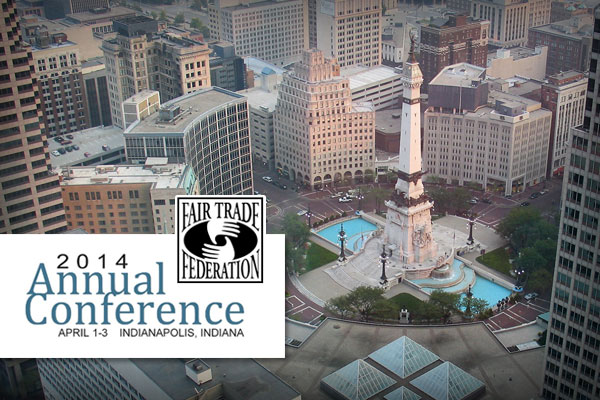
The Fair Trade Federation Annual Conference in Indianapolis is rapidly approaching! To get all the details on the event, which will be held downtown from April 1-3, I interviewed Suzanne Cotter from the Fair Trade Federation.

Fair Trade Federation 2014 Annual Conference | April 1-3, Indianapolis, IN | Photo of Indianapolis downtown Monument Circle

Fair for All: A main focus of the conference is on the business side of fair trade. What would a person who is not part of a fair trade business get out of the conference?

Suzanne Cotter: First and foremost, the Conference is always a wonderful opportunity for those newer to the industry to meet a special group of people who are doing the very best work in fair trade… the kind of direct, in-depth work the Fair Trade Federation stands for! There’s really no other gathering of fair trade businesses quite like this and the learning and networking opportunities are boundless. We recommend the Conference to anyone interested in working with artisans in specific regions, staring their own fair trade business one day, working in fair trade product design and development, or anything else that falls under the fair trade umbrella… many Conference attendees this year have had foundational roles in bringing the fair trade movement to the U.S.

Who are some of the speakers and presenters you’re excited to have at the conference?

This year we’re thrilled for our plenary speaker Jonathan Rosenthal, Executive Director of Cooperative Coffees, consultant at Just Works Consulting, and co-founder of Equal Exchange and Oke USA. We’re also excited for the expanded list of sessions for businesses working primarily in agriculture — like the agricultural pricing roundtable which will include Michael Skillicorn of Dean’s Beans, Bena Burda of Maggie’s Organics, Kim Lamberty of Just Haiti Coffee, Jonathan Rosenthal of Cooperative Coffees, and Stacey Toews of Level Ground Trading. There will also be an expanded list of sessions for retail stores, including a session on building sales with a regular special events schedule with Rich Howard-Willms of Plowsharing Crafts. We’re also offering some exciting sessions for wholesalers like developing producer empowerment and involvement with Pushpika Freitas of Marketplace: Handiwork of India.

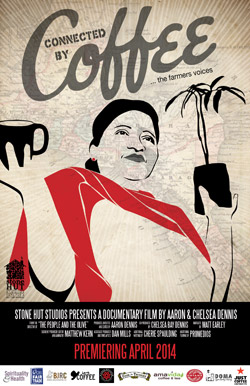
Tell me about the film premiere of “Connected by Coffee.”

Connected by Coffee movie posterConnected by Coffee is a great documentary film covering the lives of coffee farmers and the benefits of fair trade relationships. The film — by Aaron and Chelsea Dennis of Stone Hut Studios — aims to show how coffee farmers and coffee drinkers can work together to create a more just trading future.

The screening during the Conference will be the world premiere, which is really exciting for us! We’ll be hosting it at the Athenaeum Theatre in downtown Indianapolis — a beautiful historic space that’s really walkable for locals. The event is open to the public (we’ll be selling tickets for $8 at the door) and we’ll have a Q&A panel afterwards. This event is another a great opportunity for folks who can’t commit to attending the full Conference to meet some of the attendees and participate in he Q&A; we’ll have the filmmakers, the FTF Executive Director Renee Bowers, Jonathan Rosenthal of Cooperative Coffees, and Matt Early of Just Coffee.

How is the conference partnering with local Indianapolis fair trade organizations?

We’re working closely with local FTF members Global Gifts, Imani Workshops, and The Village Experience to get to know the Indianapolis area a little better and to spread the word about the Conference. Global Gifts in downtown Indianapolis will also be hosting a small reception right before the film screening on April 2nd from 6 – 7:30 pm. All are welcome to attend and browse the store!

Are there discounts on registration? When is the registration deadline?

Yes! Full-time students will receive a significantly discounted registration rate. Anyone can register for the Conference up until Monday evening, March 24th — a week before the Conference starts. You can register online on the FTF website.

Thanks to Suzanne Cotter for sharing the inside scoop on the conference! I know I’m excited to attend and learn more about what makes a fair trade business tick. If you want to know more about the conference, visit the FTF website.

Disclosure: As a media partner I am receiving complimentary access to the conference. I am receiving no other compensation for my promotion of this event.

Interview with byTavi Micro-Enterprise in Cambodia

Through my work with United Against Contemporary Trafficking, I have been fortunate to learn about byTavi, an ethical micro-enterprise run by the faith-based Center for Global Impact (CGI) in Greenwood, IN. byTavi employs women in Cambodia, providing them a fair wage and quality work environment, and is named after Tavi, the widowed Cambodian woman who helped found the program.

Purse, nested cosmetic bags, and ID wallet from byTavi

1: Pisei quilted purse
2: Chem nested cosmetic bags
3: Angkor Me In ID wallet

byTavi’s bags are unique and colorful. I carried a purple version of this bag for over a year and have another clutch purse from their Imprint Collection that has proven equally fabulous. They have been a favorite micro-enterprise project of mine for a while, so I wanted to share them with you!

I spoke with Whitney Vance, the Marketing and Relationship Coordinator at CGI, about what makes byTavi so unique.

1. Tell us about the different products that byTavi offers.
When byTavi first began 5 years ago, the team of four women were making simple pillow covers and tote bags. Over the years they have progressed to make a variety of quilted purses and hipsters, ID wallets, wristlets, cosmetic bags, and most recently they have begun making fashion clothing. The team is now composed of over 50 women! The fabrics used in these pieces are all from Southeast Asia, a region known for beautiful, bright, metallic prints.

Wave bag, recycled rice bag tote, and fabric detail from byTavi

1: Blue and red lotus Wave Bag
2: Recycled rice bag tote
3: Fabric detail on Prum tote bag

2. What makes byTavi products different? How and where are they made?
The logo for byTavi is “Make More Than a Fashion Statement”  because these products are handmade by women who were previously in impoverished situations.  Many of them have been at risk of selling themselves or their children into human trafficking in order to provide basic needs for their families. byTavi provides seamstress training and a consistent job with a reasonable wage. These women are now able to provide all necessary food, clothing, medication, and education to their families.

3. What benefits are provided to the women who make the products?
The women of the byTavi program experience a healthy, fun, community-oriented work place. They work in an open, well-lit, breezy room where they can chat while they work. They also have the freedom to decide how many items they make each week in order to earn the income that they need. Choice is a simple concept that many poor do not have the luxury to experience, we want to give them choices to counteract this. byTavi’s goal is that the seamstresses earn three to four times above the poverty level in Cambodia; this is enough to provide the basic needs of their families and a little more.

byTavi Seamstresses

4. Tell us your favorite story about one of the seamstresses.
I have a lot of favorite stories from the ladies. Sreymao’s Wave Bag is a great one—she is one of our most skilled seamstresses, but we were even more astounded by her when we saw the bag design she made without any direction or prompting from us. This design is now known as the Wave Bag (named by Sreymao herself) and is one of byTavi’s top selling items! What we love about this story is the increase of confidence that we see Sreymao has. Our hope is that the women all experience a glimpse of what they are truly worth—and to feel capable and successful at their jobs is a huge step for these women.

When I was in Cambodia last week I was talking with Tavi and I asked her what she wanted prayer for. She responded in an excited and nervous way that she wanted prayer for her son who was taking an exam in school that week. To us in the United States, that sounds like something normal to pray for, but with these women, it is a remarkable thing. First, it’s remarkable that she has enough money to send her son to school; second it’s amazing that at 17 he is still in school. byTavi’s hope is to empower women to provide for themselves and their families—and we see this happening every day.

5. If I want to do more to support the mission of byTavi, what can I do?
The easiest way to support byTavi is to purchase an item: 100% returns to the byTavi program in Cambodia.

Another way is to host a trunk show—get your friends together and host an evening to educate your friends about human trafficking and to give them a chance to respond immediately.

You can also volunteer with byTavi—we work events every month to spread the word about the program. [College students] can also be a Campus Rep when [they] go back to school!  Contact Kristen at kristenbaynai.cgi@gmail.com or Whitney at whitneyvance.cgi@gmail.com to get more information.

Thanks to Whitney for sharing about byTavi’s products and mission! Do you have a favorite local project that helps bring workers out of poverty? Let us know about it in the comments.