News Roundup: July 2013

Scarf, wedding dress, swimsuit from July roundupIt’s hard to believe July is almost over! Here are some news stories and updates related to ethical shopping that I came across this month:

A Look at Fair Trade in the Wake of Bangladesh – An essay from Fair Trade USA about the impact of the Bangladesh building collapse. (Triple Pundit)

In Theory: What’s our responsibility toward sweatshops? – People from various religious traditions reflect on how we should respond to labor rights abuses. (Burbank Leader)

Will Sustainable Fashion Ever Be In Style? – Looking at fast fashion from a European perspective. (WorldCrunch)

Ethical One-Pieces and Ethical Bikinis – Jamillah did all of the work in finding ethical swimwear for this summer! (Made to Travel)

New fair trade shops online (via the Fair Trade Quilts & Crafts e-newsletter):

Did you find any new shops or interesting articles this month? Share them in the comments!

Interview with byTavi Micro-Enterprise in Cambodia

Through my work with United Against Contemporary Trafficking, I have been fortunate to learn about byTavi, an ethical micro-enterprise run by the faith-based Center for Global Impact (CGI) in Greenwood, IN. byTavi employs women in Cambodia, providing them a fair wage and quality work environment, and is named after Tavi, the widowed Cambodian woman who helped found the program.

Purse, nested cosmetic bags, and ID wallet from byTavi

1: Pisei quilted purse
2: Chem nested cosmetic bags
3: Angkor Me In ID wallet

byTavi’s bags are unique and colorful. I carried a purple version of this bag for over a year and have another clutch purse from their Imprint Collection that has proven equally fabulous. They have been a favorite micro-enterprise project of mine for a while, so I wanted to share them with you!

I spoke with Whitney Vance, the Marketing and Relationship Coordinator at CGI, about what makes byTavi so unique.

1. Tell us about the different products that byTavi offers.
When byTavi first began 5 years ago, the team of four women were making simple pillow covers and tote bags. Over the years they have progressed to make a variety of quilted purses and hipsters, ID wallets, wristlets, cosmetic bags, and most recently they have begun making fashion clothing. The team is now composed of over 50 women! The fabrics used in these pieces are all from Southeast Asia, a region known for beautiful, bright, metallic prints.

Wave bag, recycled rice bag tote, and fabric detail from byTavi

1: Blue and red lotus Wave Bag
2: Recycled rice bag tote
3: Fabric detail on Prum tote bag

2. What makes byTavi products different? How and where are they made?
The logo for byTavi is “Make More Than a Fashion Statement”  because these products are handmade by women who were previously in impoverished situations.  Many of them have been at risk of selling themselves or their children into human trafficking in order to provide basic needs for their families. byTavi provides seamstress training and a consistent job with a reasonable wage. These women are now able to provide all necessary food, clothing, medication, and education to their families.

3. What benefits are provided to the women who make the products?
The women of the byTavi program experience a healthy, fun, community-oriented work place. They work in an open, well-lit, breezy room where they can chat while they work. They also have the freedom to decide how many items they make each week in order to earn the income that they need. Choice is a simple concept that many poor do not have the luxury to experience, we want to give them choices to counteract this. byTavi’s goal is that the seamstresses earn three to four times above the poverty level in Cambodia; this is enough to provide the basic needs of their families and a little more.

byTavi Seamstresses

4. Tell us your favorite story about one of the seamstresses.
I have a lot of favorite stories from the ladies. Sreymao’s Wave Bag is a great one—she is one of our most skilled seamstresses, but we were even more astounded by her when we saw the bag design she made without any direction or prompting from us. This design is now known as the Wave Bag (named by Sreymao herself) and is one of byTavi’s top selling items! What we love about this story is the increase of confidence that we see Sreymao has. Our hope is that the women all experience a glimpse of what they are truly worth—and to feel capable and successful at their jobs is a huge step for these women.

When I was in Cambodia last week I was talking with Tavi and I asked her what she wanted prayer for. She responded in an excited and nervous way that she wanted prayer for her son who was taking an exam in school that week. To us in the United States, that sounds like something normal to pray for, but with these women, it is a remarkable thing. First, it’s remarkable that she has enough money to send her son to school; second it’s amazing that at 17 he is still in school. byTavi’s hope is to empower women to provide for themselves and their families—and we see this happening every day.

5. If I want to do more to support the mission of byTavi, what can I do?
The easiest way to support byTavi is to purchase an item: 100% returns to the byTavi program in Cambodia.

Another way is to host a trunk show—get your friends together and host an evening to educate your friends about human trafficking and to give them a chance to respond immediately.

You can also volunteer with byTavi—we work events every month to spread the word about the program. [College students] can also be a Campus Rep when [they] go back to school!  Contact Kristen at kristenbaynai.cgi@gmail.com or Whitney at whitneyvance.cgi@gmail.com to get more information.

Thanks to Whitney for sharing about byTavi’s products and mission! Do you have a favorite local project that helps bring workers out of poverty? Let us know about it in the comments.
Resource Spotlight: Free2Work

Free2Work is a project of the Not For Sale Campaign with support from the International Labor Rights Forum. Free2Work seeks to provide information to consumers about brands’ performance on modern-day slavery and labor abuse issues.

Free2Work website

Last year Free2Work released a major report entitled Apparel Industry Trends 2012: From Farm to Factory. This report “ranks 300 apparel brands on their efforts to address child and forced labor in their supply chains. It provides a picture of the practices of industry leaders, and calls out brands that fuel modern slavery through their negligence.” Most brands listed in the report rank well when it comes to having worker protection policies in place, but their performance plummets in the categories of monitoring and transparency. Several brands who are making good progress are highlighted, such as Maggie’s Organics, PVH Corp. (owner of Tommy Hilfiger and Calvin Klein), and Patagonia. Check out the report to see how your favorite brands rank.*

You can also download the free Free2Work app for your phone, which allows you to scan the barcode of any product and instantly see information about the brand’s efforts to prevent child and forced labor. The app also allows you to contribute information about products to the app to help grow their database.

I have found Free2Work to be an insightful resource—I encourage you to check it out!

*The report is not a record of which companies are using child labor. “A Free2Work grade indicates the extent to which a company has traced its suppliers and established systems throughout its supply chain that can enable it to prevent and address modern slavery.”

Bangladesh Tragedy Leads to Global Conversation about Ethical Fashion

Over the last few weeks I’ve been following the aftermath of the tragic garment factory collapse in Bangladesh that left over 400 people dead and hundreds more missing and injured. Frankly, I’ve been a little overwhelmed—not only by the complete horror of the event itself, but by the plethora of news stories published alongside that coverage raising questions about ethical fashion in general.

Obviously the building collapse is heartbreaking and will have long-reaching effects on the victims and their families. However, I am cautiously hopeful that the conversation triggered by this event will push the manufacturing practices of major brands into the spotlight and compel companies to behave more ethically, and consumers to shop more consciously.

As long as major brands continue to deny responsibility for their contracted workers, it is all the more valuable to support companies that have direct relationships with their suppliers and are supportive, not exploitative. I envision a future where all workers do their work safely and with dignity, and now that it has become publicly clear that many workers today face a far different reality, I hope others will join me in this vision as well.

Here are some links to stories that have come out since the building collapse and also some ways to take action:

Can Bangladesh clothing factory disasters be avoided? (Source: BBC) — This article shares multiple perspectives on where responsibility lies for preventing future incidents in garment factories.

Ethical Fashion: Is The Tragedy In Bangladesh A Final Straw? (Source: NPR) — Listen to Elizabeth Cline’s interview on Fresh Air. Cline wrote the book “Overdressed: The Shockingly High Price of Cheap Fashion.” The interview is full of interesting facts: for example, I didn’t know that as recently as 1990, about 50% of clothing bought in the U.S. was made in the U.S. Today it’s about 2%. Also, the government previously had caps on the amount of clothing that could be imported from each country; these caps expired in 2005. Definitely worth a listen.

A guide to ethical shopping: Five tips for buying clothes more responsibly (Source: National Post) — Five helpful tips for ethical shopping and holding brands accountable. One example: use social media to ask questions about brands. A public message is more likely to receive a reply than an email.

Don Pittis: An ethical shopping trip means more than comparing price tags (Source: CBC) — This column points out that there is not necessarily a correlation between higher prices and higher ethical standards.

Shoppers face hurdles in finding ethical clothing (Source: Huffington Post/AP) — An overview of the challenges facing ethically-minded consumers, plus examples of current sources for ethically-made clothing.

Donate to the Bangladesh Center for Worker Solidarity, a workers’ rights group that is working to hold brands accountable and ensure that the promised compensation reaches the victims.

Sign a petition to Walmart, H&M, and Gap asking them to join the legally-binding Bangladesh Fire and Building Safety Agreement.

September News Roundup

There were several labor-rights related news items this month. Check out the stories below and some actions you can take to help combat labor abuses and human trafficking.

Over 280 people die in Pakistan factory fire

Petition supporting compensation for victims of the fire (addressed to the prime minister of Pakistan)

9 Ethical Shopping Apps & Plug-Ins

Stitched Together: a short film about the ethical Alta Gracia factory in the Dominican Republic

Petition asking Whole Foods to speak out against child labor in the cocoa industry 

Ask your Senators to support the Trafficking Victims Protection Reauthorization Act

Remembering Modern-Day Slaves on Labor Day

On the eve of Labor Day weekend, it is only fitting to remember the workers around the world who suffer as modern-day slaves. An estimated 27 million people around the world are victims of human trafficking, either in the realms of forced labor or the sex trade. These individuals are forced to work for little or no pay under unsafe, coercive conditions, without the freedom to leave, organize, or stand up for themselves without the threat of violence.

One tragedy of modern-day slavery is that so many victims are ensnared while attempting to find legitimate work to support themselves and their family. Traffickers prey on the poor and the naive, offering well-paying jobs in a neighboring city or overseas. Instead of connecting people with real jobs, traffickers force them to work without pay in conditions that we would never accept if we saw them in the light of day.

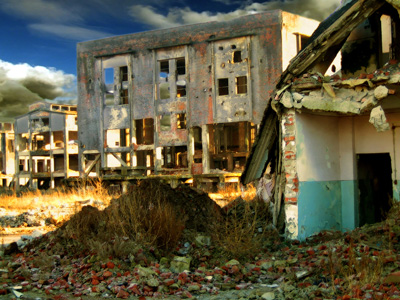
Destroyed factory

In some factories, exits are locked to prevent workers from leaving. This leads to tragedy when fires occur. How would you feel if you were locked into your workplace everyday?

Imagine working 14-, 16-, 18-hour days in a brick kiln or garment factory. The work is repetitive and physically demanding. Your bathroom breaks are timed, and you are not free to converse with your fellow workers. Those who step out of line are beaten or subjected to verbal abuse. At the end of the day, your paycheck is too small to buy enough food to feed your hungry family. Or, your employer informs you that he is applying your paycheck toward your outstanding debt (which is often inflated or completely fabricated), so you have nothing to show for your day of work.

This is reality for far too many people in the world. On this Labor Day, let’s remember the workers around the world who do not enjoy the amazing freedoms we take for granted. The freedom to talk with fellow workers and hold organized meetings. The freedom to go to the restroom at will. Freedom from discrimination, racism, and sexism at the workplace. Of course these freedoms are not respected 100% of the time, but in the U.S. we at least have well-enforced laws to protect the basic rights of workers. Until all workers around the world have their rights protected as well, it is our responsibility to support businesses that treat their workers with respect, and to speak out against businesses that practice exploitation.

Tomorrow, I’m going to enjoy my freedom to kick off work a little early the Friday before a holiday weekend. But when I walk out of my comfortable, air-conditioned office building, I’ll be thinking of the workers in sweltering sweatshops and back-breaking quarries and how much work there is still left to do.

World Day Against Child Labor

June 12 was the World Day Against Child Labor, an initiative by the International Labor Organization to draw attention to the global problem of exploitative child labor. The ILO estimates that 215 million children worldwide are involved in child labor. Over half of those children are working in the “worst forms” of child labor, which include prostitution and pornography, drug trafficking, dangerous/harmful work, and work done under the conditions of slavery or debt bondage.

According to the ILO, the international community has adopted a road map that outlines steps for ending the worst forms of child labor by the year 2016. The number of children laboring worldwide has declined, but the rate of decline has slowed in recent years in conjunction with lagging economic conditions. Check out the video below from the ILO about the current state of child labor and progress being made to end it. (The ILO has a series of videos about child labor available on their YouTube channel, ILOTV.)