A Box Full of Joy

Sometimes it seems like you can’t swing a dead cat without hitting a new subscription box brand. (Is this an expression other people use or is my family just morbid?) I’m usually not that into the subscription box format because I’m so particular about the ethics of the products and companies I support. However, I recently connected with Julie Overby, the co-founder of bonJOY, a brand that bills itself as a “little box of good.” I was excited to learn that their product sourcing criteria are as stringent as mine—and in fact go further by seeking out brands that specifically support women and combat human trafficking. I was immediately enamored with the company’s mission and Julie’s infectiously joyful spirit, so I asked her to share some background about bonJOY and what makes it different from other boxes.

Past bonJOY boxes

Past bonJOY boxes

Fair for All: Subscription boxes are a big trend right now. What’s the appeal?

Julie Overby: I think it’s the surprise factor! You choose a subscription box brand that’s a fit with your lifestyle, and leave it to them to curate a selection of items you might never otherwise discover and voila, it arrives on your doorstep. It’s a bit of Christmas morning all throughout the year!

Why did you start bonJOY?

Esther & I met while volunteering at a safe house for trafficking survivors, and eventually started discovering and sending each other these products we found from brands that had a heart for survivors too. We found that the subscription box concept worked beautifully as a way of sharing our finds with the world and building support for these amazing brands and the organizations they work with. In light of a such a dark and evil wrong (trafficking) in the world, we wanted to highlight the joy and restoration that these anti-trafficking organizations are making possible for women who have survived such a horrific thing.

What makes bonJOY different from other subscription boxes?

The very specific cause focus. There are other (wonderful!) fair trade and cause-related boxes out there, but to my knowledge, we’re the only one that focuses specifically on a) brands making a positive impact for women, b) disadvantaged or at-risk women, and c) trafficking-specific causes. We don’t promote an amazing value because we’re actually paying our partners their full wholesale rates for their products – we want to make sure each box creates the maximum impact. (Many other boxes get products for free or at a greatly reduced cost.) More things you might not guess about us here!

Why the focus on human trafficking?

It’s something both of us are passionate about, but we’re not lawyers, doctors, or ex-SEALs, so we’re not out there busting down doors and saving these girls. It’s kind of beautiful how it worked out, but we’re able to take our abilities and interests and support the people doing just that through building business for these brands. As awareness about the issue grows (and it’s grown a LOT in the past five years), people are looking more and more for ways that they can respond and join in the fight, and we think this is one way to do just that. Plus, I’m crazy about being able to tell a story with my purchases – I love having things in my home and closet that I can’t help but talk about. Some of the pieces we feature are even signed by the women who made them, which I think is so awe-inspiring.

bonjoy-box-label

What criteria do products have to meet to be included in a bonJOY box?

They’ve got to be made ethically, number one. We also want them to be creating some kind of positive impact, whether that’s a donation to an organization somewhere or creating employment for survivors trying to get back on their feet. For consumable products like beauty and candles, that sort of thing, we also do the research to make sure ingredients are pure and good for you and the earth. Bonus points when a product is eco-friendly.

Tell me about your joy philosophy. (I’m kind of in love with it.)

We think of joy as a weapon against the darkness. When these survivors light up the world by smiling with abandon… wow. Talk about inspiration. As humans and consumers, we want to fight for pervasive joy – in the way we live and interact, in the products we use, in the causes we support. It’s simple, but it can be a challenge. Joy is easy to chase though – it doesn’t lie. :-) You can read more about our perspective and our core values in this blog post.

What’s your favorite item that has been included in a bonJOY box?

Oh boy, so many! Soap from the Hope Soap Project (loooove their bars), facial wipes from Rooted Beauty (so perfect for travelling and so affordable — actually, Target just picked them up!), and this simple yet gorgeous necklace from Purpose Jewelry (hand-signed by a survivor and everyday kind of wearable). You can see everything we’ve featured before here.

What’s next for bonJOY?

Well, we just launched a new subscription option, so instead of just shipping quarterly like we did last year, we’ve added a monthly box on top of that. It’s $35/month + free shipping, and I think it’s a great deal if you love discovery and want to join us in creating consistent impact. We’re also partnering with four key anti-trafficking organizations this year to give $1 from each box and inviting subscribers to add a donation on top of that. A21 is our first Give-Back Partner. Really excited about that one and looking forward to seeing the kind of impact we can make together. Beyond that, we’re looking at some really exciting collaborations and themed boxes later in the year, so stay tuned! We’ve got lots of ideas, just need the time and womanpower to bring them to life. :-)

–––––––––––

If you decide to order a box of ethical awesomeness from bonJOY, use coupon code FAIRFORALL to get $2 off.

Find out more about bonJOY at bonjoybox.com or on social media; they’re @bonjoybox on Facebook, Twitter and Instagram.

Apps & Online Tools for Ethical Shopping

ethical-shopping-apps-header

As a companion to my recent Beginner’s Guide to Ethical Shopping, I wanted to share this post by Kasi Martin of The Peahen about apps and online tools to help make ethical shopping easier. Kasi is a devotee of ethical fashion and writes about brands, designers, issues and trends at the intersection of style and standards.

Ethical designers catch a lot of flak for not being fashion-forward enough. When I bring up ethical fashion to a friend or outsider I usually get a skeptical eyebrow raise. Before I make a style recommendation, I’m forced to brandish it with an ethical disclaimer. “Oh, you’re on the hunt for a new brand of denim? There’s a new organic hemp denim brand I discovered –  but you know – it’s all that hippy-dippy shit I love.”

I want to stop this justification madness. Ethical should be cool. It should generate just as much excitement for shoppers as a Zara haul…even if it’s more expensive.

Zara copies trends as they trickle down from the runway. Ethical fashion creates trends that travel up to the runway. This is ethical fashion’s redeeming quality that makes it appealing to the masses. Issues like greenwashing or human rights may be entirely off your radar  [I will eventually convert you] – but ethical fashion gives you the ability to shop according to your terms. Because trends start from the bottom, you have power to pause for a reality check and confidently say – “Hey, I’m not okay paying 300 bucks for a pair of knock-off Rockstud pumps because Valentino said they were cool three seasons ago.” Ethical fashion makes you a rebel WITH a cause.

Still, with all this power of choice in front of you, ethical brands are disparate and hard to discover. You could click on a cathy Instagam one second, and the next it’s flying off your radar into the social media abyss. What sticks? How do you find which brands are right for you?

Well, stop by here for suggestions. My ‘elsewhere’ list is a good place to start. But there are also a few online tools that will help you reign in the option overload, discover what’s new and audit what you already love.

No excuses for not buying ethically now, this is shopping empowerment at your fingertips.

For the mobile shopper

Orange Harp – A mobile app that puts artisans and brands in one place. Checkout Lovehewn jewelry. And it’s not just fashion! Buy through the platform to donate a bit extra to fight human trafficking.

Orange Harp website

Continue reading on The Peahen >>

Thank You & Year-End Roundup

2014 is on its way out the door, so I wanted to take a moment to thank everyone who has read and participated in the blog this year. We aim to help people understand the impacts of their purchases and promote justice, fairness and prosperity for all. Every comment and like and pageview means a lot to us because it means word is getting out and we’re one step closer to making that fairer world a reality.

We appreciate you and look forward to bringing you more in 2015! If there are any particular topics you’d like see covered or questions you’d like to have answered, please contact us—we want to help!

I can no other answer make but thanks. Shakespeare

Year-End Roundup

Since we haven’t done a roundup post in a while I wanted to end the year with a few thought-provoking links I’ve been saving up.

1. Uzbekistan Cotton Campaign – Forced labor in Uzbekistan continues, pulling over a million children, teachers, public servants and employees of private businesses to harvest cotton in often hazardous conditions. This website summarizes the situation and provides actions for governments, companies and citizens to take to put an end to this state-mandated labor. The Uzbek-German Forum for Human Rights also has thorough documentation of the issue, including the Cotton Chronicle, which describes specific incidents in the fields.

2. Pollution from synthetic microfibers – Thousands of microfibers can wear off a synthetic garment in the wash and end up in the environment. This article describes one scientist’s work to research the impact of these fibers and solutions to minimize fiber runoff.

3. The truth about organic cotton – This blog post methodically breaks down the requirements of organic cotton certification and debunks some misconceptions, such as that organic cotton uses less water (it doesn’t). I really appreciated the scientific approach of this article. The author gets beyond the buzzwords so many brands use and shares real data.

We’ve come a long way this year but there’s still more work to do. Thanks for coming along with us!

News Roundup: June 2014

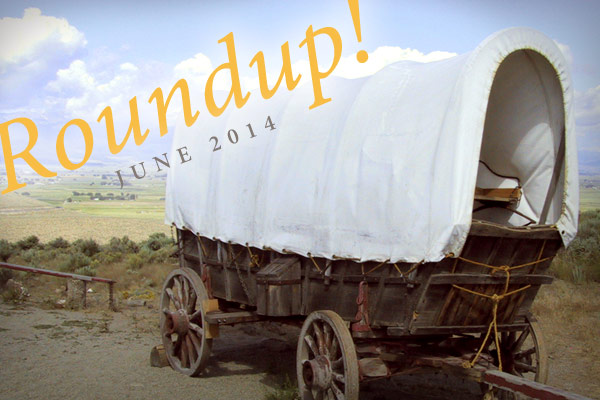
Conestoga wagon with post title

Circle the wagons, it’s roundup time! To be honest, I didn’t spend a ton of time reading this month. I was too busy trying to get outside as much as possible! However, the stuff I did read was top-notch quality. Check out the links below!

You Don’t Have to Feel It —This post blew my face off with truth. It explores our motivations for doing good, and how emotion can’t be the only motivator we have. (Style Wise)

Dov Charney: the man who put the sleaze factor into American Apparel — American Apparel founder and CEO Dov Charney was ousted this month in relation to alleged misconduct (he’s a notorious creeper, to say the least). I love the manufacturing ethics of American Apparel but have always felt weird supporting them because of their over-sexualized photography and Charney’s grossness. Hopefully his removal means the brand can move in a less offensive direction. (The Guardian)

Benefit Corporations Look Beyond The Profit Motive — Basic overview of the concept of “benefit corporations” (commonly known as B Corporations). The quote below addresses what I think is one of the keys for social enterprise to really take off. Profit isn’t everything! (NPR)

There are legal protections when a state signs on: A shareholder can’t sue a benefit corporation for valuing the environment as much as profit.
— Benefit Corporations Look Beyond The Profit Motive

Greenpeace Reviews Major Food Retailers for Sustainable Seafood Purchasing — One of the best and easiest-to-understand articles I’ve seen about sustainable seafood. (Triple Pundit)

2014 Trafficking in Persons Report — This annual report ranks countries into tiers based on their efforts toward combating human trafficking. (U.S. State Department)

Reader Request: Ethical Jeans — In my post of pants recommendations for Sarah, I noted that ethical high-end jeans being pretty widely available. And what do you know, Jamillah coincidentally just wrote a post with ethical jeans recommendations! (Made to Travel)

Host a Clothing Swap! — Dominique shares helpful step-by-step instructions for organizing a clothing swap with friends—a great way to give old clothes a new home! (Let’s Be Fair)

Top 3 Resale Sites — Elizabeth reviews her favorite apparel resale sites with helpful notes on return policies and how to sell. (The Note Passer)

Did you read the Style Wise link at the top? Go do that now. Then have a great week!

News Roundup: May 2014

Happy Wednesday! Another month has gone by, which means it’s time for another roundup of articles and links that caught my interest recently. Check out the links below for some great resources and thought-provoking insights!

Creating a Fair Wardrobe – A four-part blog series from For the Love of Justice

Rendering of solar roadways

Rendering of solar roadways

Solar Roadways: The Most Groundbreaking Innovation since the Internet (Modavanti)

Why Textile Waste Should be Banned From Landfills (Triple Pundit)

Modavanti has teamed up with Green Tree Textiles for our Modacycle Campaign! – Details on Modavanti’s new textile recycling initiative (Modavanti)

Shopping for shoes is a minefield – This article points out how athletic shoes lag behind other apparel sectors in transparency/sustainability. (Dynamic Business)

The Rise of Conscious Business Needs the Support of Conscious Consumerism — Who should lead the way in ethical consumerism: business or consumers? (Pro Bono Australia)

Free2Work Electronics Industry Trends 2014 – Report on efforts being made by electronics companies to address exploitation and forced labor in their supply chains (Free2Work)

10 Biggest Excuses For Not Paying a Living Wage (And Why They Suck) (Ecouterre)

Fashionably Informed: 5 Ethical Fashion Companies (College Fashion)

Can fair trade clothing prevent the next factory tragedy? (Humanosphere)

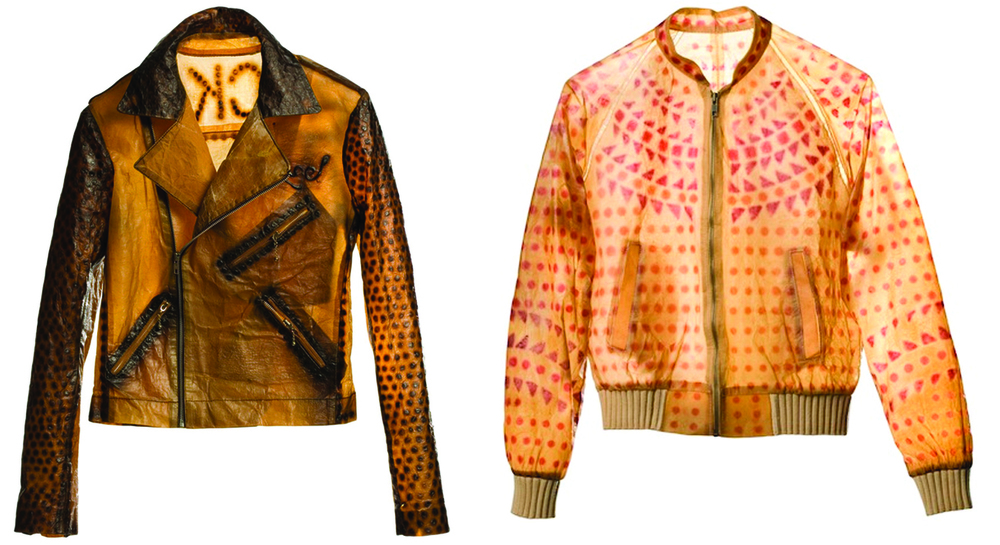
Fabric generated from bacteria from The Next Black documentary

Fabric generated from bacteria from The Next Black documentary

The Next Black – Review of a documentary about technology in the future of fashion (The Note Passer)

Youths Sue U.S. Government Over Climate Inaction (Al Jazeera America)

Ifixit – Website that provides resources for repairing items instead of replacing them, which helps reduce waste and unnecessary consumption

I’ll leave you with this excellent pin from Let’s Be Fair:


What have you been reading lately? Let us know in the comments!

Make Your Halloween Sweet with Fair Trade Chocolate

Halloween is one of my favorite holidays. I love the costumes, spooky decorations, and a reason to re-watch Hocus Pocus. However, there’s one part of the holiday I wish I could change—Halloween candy, particularly chocolate.

Child labor and forced labor are prevalent in the cocoa industry in West Africa, meaning there’s a good chance that those fun size Hershey bars and other conventional treats were made in part by workers who were enslaved, abused, or unfairly compensated. It especially disturbs me around Halloween when so many kids in the United States are happily eating buckets full of chocolate candy. I can’t help thinking about how children the same age in Africa are mistreated and denied an education to ensure the harvest of that very cocoa.

While most mainstream candy companies make no guarantees about their cocoa coming from ethical sources, there is good news! Fair trade chocolate manufacturers have stepped up to provide ethical options for your Halloween party or trick-or-treat bowl.

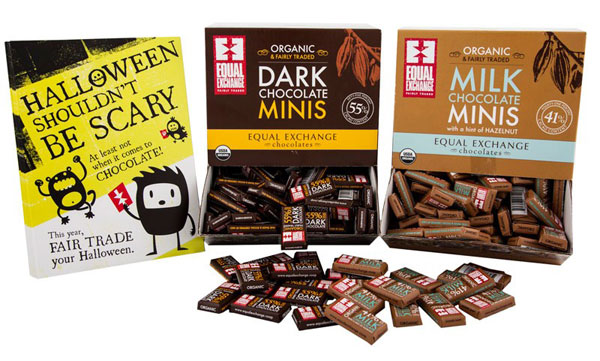
Informational card and chocolate display image

Fair Trade Your Halloween kit from Equal Exchange

This year I ordered a Fair Trade Your Halloween kit from Equal Exchange. For only $24, I’ll get 150 bite-sized pieces of tasty fair trade chocolate (I chose milk, but dark is available), plus 150 illustrated informational cards. Cocoa in Equal Exchange chocolate is produced in accordance with International Labor Organization standards on child labor and is sourced from cooperatives of small farmers. Order by Oct. 15 to receive your kit in time for Halloween. (Read more about Equal Exchange’s cocoa practices.)

If you want to share more fair trade information with your friends and family, you can order a Halloween Action Kit from Global Exchange. This kit includes postcards, a sticker, a poster, a DVD copy of the documentary film The Dark Side of Chocolate and more.

Fair trade chocolate is a very important issue to me personally. If you haven’t read much about child labor in the cocoa industry, I encourage you to look into it this year. It’s the kind of knowledge that can turn your view of the world upside-down, but in an ultimately good way, because it enables you to start being part of the solution.

Resources to learn more:

Resource Spotlight: Free2Work

Free2Work is a project of the Not For Sale Campaign with support from the International Labor Rights Forum. Free2Work seeks to provide information to consumers about brands’ performance on modern-day slavery and labor abuse issues.

Free2Work website

Last year Free2Work released a major report entitled Apparel Industry Trends 2012: From Farm to Factory. This report “ranks 300 apparel brands on their efforts to address child and forced labor in their supply chains. It provides a picture of the practices of industry leaders, and calls out brands that fuel modern slavery through their negligence.” Most brands listed in the report rank well when it comes to having worker protection policies in place, but their performance plummets in the categories of monitoring and transparency. Several brands who are making good progress are highlighted, such as Maggie’s Organics, PVH Corp. (owner of Tommy Hilfiger and Calvin Klein), and Patagonia. Check out the report to see how your favorite brands rank.*

You can also download the free Free2Work app for your phone, which allows you to scan the barcode of any product and instantly see information about the brand’s efforts to prevent child and forced labor. The app also allows you to contribute information about products to the app to help grow their database.

I have found Free2Work to be an insightful resource—I encourage you to check it out!

*The report is not a record of which companies are using child labor. “A Free2Work grade indicates the extent to which a company has traced its suppliers and established systems throughout its supply chain that can enable it to prevent and address modern slavery.”

New Fairly Friendly Additions: Better Way Imports and BeadforLife

We recently added two new excellent retailers to our Fairly Friendly list.

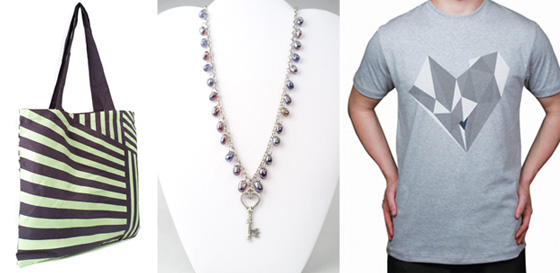
Better Way Imports partners with suppliers who provide opportunity for victims of human trafficking. They offer a wide variety of bags and jewelry, plus printed t-shirts, cards, journals, gift bags and more.

Purse, necklace, and t-shirt from Better Way Imports

Everyday Zebra purse, Abolitionist necklace, and Mosaic tee from Better Way Imports

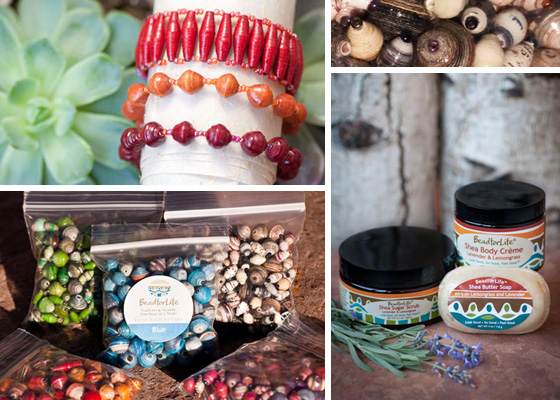
BeadforLife works exclusively in Uganda, where they provide several programs to enhance employment opportunities, education, and health care, particularly for women and girls. They offer fun jewelry made from handmade recycled paper beads, loose beads for your own crafting projects, and personal care products made from Ugandan shea butter.

Bracelets, beads, and shea butter products from BeadforLife

Sunset bracelet set, loose beads, and shea butter spa collection from BeadforLife

Both retailers are members of the Fair Trade Federation. The only principle each company failed to meet was not explicitly stating their practices in regard to child labor. However, as FTF members, they are required to meet standards about the appropriate involvement of children in production, which you can read more about on the Fair Trade Federation website.

Better Way Imports: Fairly Friendly listing | Visit site
BeadforLife: Fairly Friendly listing | Visit site

September News Roundup

There were several labor-rights related news items this month. Check out the stories below and some actions you can take to help combat labor abuses and human trafficking.

Over 280 people die in Pakistan factory fire

Petition supporting compensation for victims of the fire (addressed to the prime minister of Pakistan)

9 Ethical Shopping Apps & Plug-Ins

Stitched Together: a short film about the ethical Alta Gracia factory in the Dominican Republic

Petition asking Whole Foods to speak out against child labor in the cocoa industry 

Ask your Senators to support the Trafficking Victims Protection Reauthorization Act