Sustainable Wedding Reception Tips

Elegant table setting with white linens and daffodils

Since I started my sustainable events consulting business, one of the most frequent questions I’ve gotten from friends is, “Do you do weddings?” I’ve never actively avoided weddings, but my focus so far has been on corporate and non-profit events. But recently as I’ve met more people in the wedding planning community, I’ve found myself mentally organizing various sustainable strategies that would apply to weddings, and getting excited about helping a couple create a wedding day that matches their values.

So let me take this opportunity to say it officially: Yes, I do weddings! I recently expressed my newfound ardor for matrimony in a guest post on fellow EWC member blog Leotie Lovely by sharing some of my tips for planning a sustainable wedding reception. Check out my sustainable wedding reception tips on Leotie Lovely >>

Get Ready for SpringSwap16

It’s time for the next Fair for All style swap! SpringSwap16 is your opportunity to clean out your closet and swap unwanted items for new-to-you fashion.

This will be our third clothing swap event, and I’m so excited to have built up a community of people who enjoy getting new clothes in this fun, personal and environmentally-friendly way.

SpringSwap16 promo graphic

SpringSwap16 Women’s Style Swap

Wednesday, May 4, 2016 • New Day Craft Mead & Cider

See full details & sign up >>

Some scenes from our last swap:

Women browsing tables of clothing

Woman peruses jewelry table

Rack of women's clothing

As always, the style swap is a free event. And like at our last swap, New Day’s famous Mead & Knead will be going on in the front room at the same time, where you can get a chair massage and a glass of mead or cider for just $10. (Be sure to arrive early if you want a massage; slots fill up fast.)

We hope to see you on May 4!

Sustainable Events: Throwing a Green Kids’ Party

Cupcakes in ice cream cones

Business update! My sustainable events consulting venture is rolling along, and I’m making great connections in both the event planning community and the environmental community. It’s encouraging to hear people’s positive responses to what I’m doing, and I’m excited to bring these two groups closer together.

In addition to making new connections, I’m enjoying support from my fellow Ethical Writers Coalition members. I recently shared my top tips for throwing a green kids’ party with Summer of sustainable fashion and lifestyle blog Tortoise & Lady Grey. She’s celebrating her little one’s fourth birthday this week and is doing her best to keep the party sustainable. Kids’ parties can be a major source of waste generated by disposable plates, cups, streamers, balloons, treat bags… the list goes on. However, with a bit of careful planning, your child’s party can be a magical and memorable day that doesn’t heavily burden the environment.

Read my tips for throwing a green kids’ party on Tortoise & Lady Grey >>

P.S. On April 23 I’ll be representing my business with a booth at the Earth Day Indiana festival, so come say hey!

How to Get Rid of Clothing Swap Leftovers

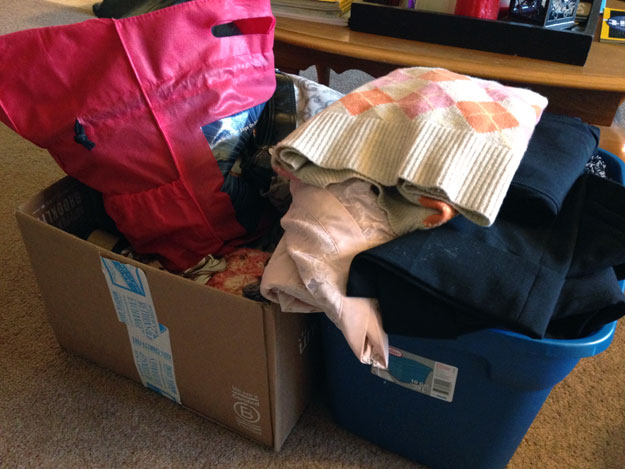
We hosted our most recent style swap on January 20, and the boxes of leftover clothes and accessories have been hanging out in my living room ever since.

Two boxes overflowing with clothes

Hi, guys.

Dealing with the leftovers is a minor inconvenience, but I actually appreciate that the swaps have given me an opportunity to experiment with different ways of connecting stuff with people who actually want it. Here’s what I’ve tried so far with this latest batch:

Consignment/Resale

At the swap, I announced that I might try selling some of the leftovers and donating the proceeds to Dress for Success. A few weeks ago I took what I considered the best of the leftovers to two consignment/resale shops, Plato’s Closet and Simply Chic. Unfortunately, neither store purchased any of the items, saying the items weren’t recent enough or weren’t in styles that sell well.

Facebook Sale Groups

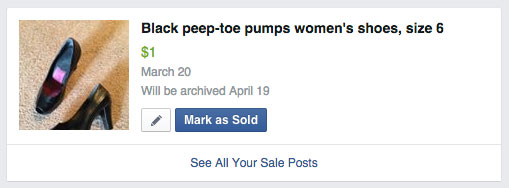
After trying the resale shops, I posted four of what I considered the most appealing items in a local Facebook sale group, listing each item for a dollar. One item sold (a skirt from H&M), but the others didn’t. Given the fact that people weren’t jumping on what I thought was good stuff, I didn’t continue posting the rest.

Screenshot of Facebook sale group post

Nobody wanted these dope shoes!

I would like to continue experimenting with what works best for these groups—is there an optimal time of day to post? There are multiple sale groups for my neighborhood—does women’s fashion sell better in one group than another? Is it better to post a “closet cleanout” style post with lots of pictures and numbered items, or post one item at a time? I’m hesitant to post lots of items at once, because you still have to communicate with each buyer individually regarding pickup, which could become time-consuming if a lot of items sell.

ThredUP

My best friend is an avid devotee of ThredUP, an online resale shop for women’s and kids’ fashion. She raves about the experience from the consumer side and suggested I try out the selling side to see what it’s like. Despite the fact that the local consignment stores didn’t accept any of my items, I browsed ThredUP and saw several items similar to the items I had tried to sell, and most items I entered into the site’s Payout Estimator were marked as “Accepted.” A few items even had surprisingly high estimated payouts:

  • Etcetera dress pants – estimated payout of $18.80 to $22.80 (this has to be some kind of glitch)
  • Paper Denim & Cloth jeans – estimated payout of $8.88
  • J. Crew khakis – estimated payout of $5.13

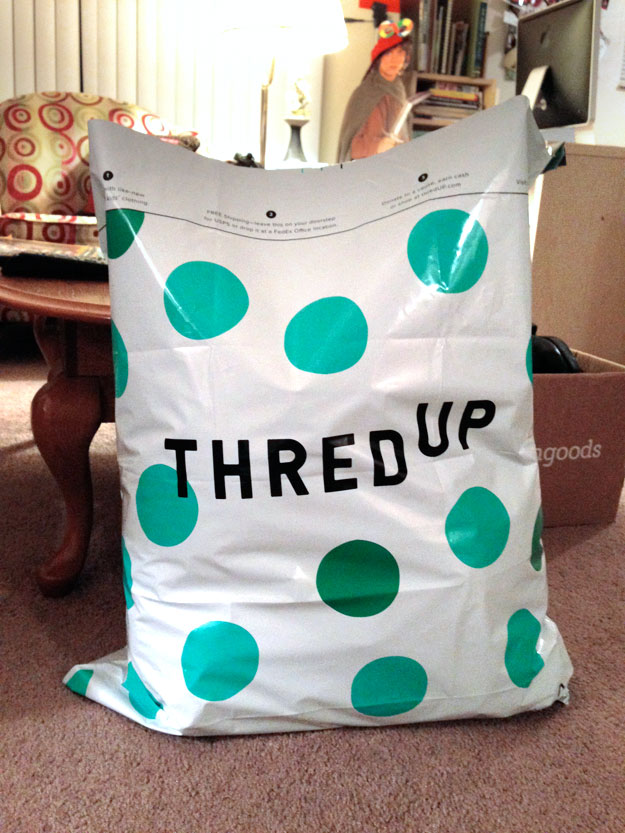
I ended up sending in about 24 items, filling one of ThredUP’s cleanout bags. The mix included two pairs of shoes, several pairs of dress pants, tops, sweaters, and a couple of dresses. The submission process was super easy—the free shipping label comes already attached to the cleanout bag, so you don’t even have to worry about sticking it on.

Full ThredUP bag

Say hi to Frodo in the background!

Yesterday I received an email from ThredUP announcing they have received my bag and it is scheduled to be processed on April 24. The site says they accept less than 40% of what they receive, so I know not to expect them to take everything, but I’m interested to see how close the estimated payouts come to the actual, especially on the big ticket items listed above. For the items they don’t accept, they connect with textile recyclers, which I’m totally in favor of and wish I had more direct access to as a consumer.

Donate

Some of the swap leftovers weren’t on-trend enough or in good enough condition to submit to ThredUP, so I’m planning to take those items to Thrifty Threads this weekend. I like to support this particular thrift store with swap leftovers since their proceeds support the Julian Center, a local women’s shelter. I know they would probably prefer to have the good stuff than the dregs, so I hope they’re set up to sell unwanted items to textile recyclers or other resellers—this is something that’s been in the back of my mind to research.

What have your experiences with clothing resale been like? I’m hoping ThredUP is more accepting than the local stores since they cater to national trends, which are sometimes slower to reach Indiana. (I don’t think people here know that wide-leg dress pants are a thing again!) Have you ever used ThredUP, either as a buyer or seller? How about a Facebook sale group?

How Green is Fabric Made from Recycled Bottles?

Back of person in winter coat made of performance fabric

The following post was written by Alden Wicker and originally appeared on EcoCult, a guide to sustainable and eco-friendly living in NYC and beyond.

You might have noticed something popping up in the sustainable or eco-friendly fashion world: fabric made from recycled PET bottles.

This actually isn’t new. Patagonia has been recycling bottles into its fleece since the early 90s. What is new is the range of textiles we can make from recycled bottles as technology has improved. There are colorful printed yoga pants, technical cold-weather gear, and even blended textiles like denim.

Some of my sustainable friends have questioned how truly sustainable anything made with plastic can be. And there is merit in our collective striving toward a plastic-free wardrobe. After all, plastic is made from petroleum, so it’s natural to decide to go for a 100% organic cotton garment instead of one made with plastic, recycled or not. Also, the problem of polyester microfibers in the oceans is a scary one.

But the fact is, polyester – which is what recycled bottle yarn is – has become indispensable to the modern wardrobes. It’s how you get stretch. For example, Pact underwear creates its super-soft undies with organic cotton and 5% elastane, a polyester-polyurethane copolymer. If you wanted to forgo these synthetic textiles completely, you would have to resort to cotton bloomers that are gathered about the legs the old fashioned way. Sexy. You would also have to forgo athliesure as an entire category, or any performance gear at all. Have fun snowboarding that mountain in a wool fisherman’s sweater or heavy shearling coat. You could probably get away with wearing nothing but vintage jeans (let’s hope they never go out of style), but you would also have to get used to some pretty gnarly vintage bras as well, if you can’t do stretch. Basically, you would have to dress like a 19th century hippie.

Continue reading on EcoCult >>

A Box Full of Joy

Sometimes it seems like you can’t swing a dead cat without hitting a new subscription box brand. (Is this an expression other people use or is my family just morbid?) I’m usually not that into the subscription box format because I’m so particular about the ethics of the products and companies I support. However, I recently connected with Julie Overby, the co-founder of bonJOY, a brand that bills itself as a “little box of good.” I was excited to learn that their product sourcing criteria are as stringent as mine—and in fact go further by seeking out brands that specifically support women and combat human trafficking. I was immediately enamored with the company’s mission and Julie’s infectiously joyful spirit, so I asked her to share some background about bonJOY and what makes it different from other boxes.

Past bonJOY boxes

Past bonJOY boxes

Fair for All: Subscription boxes are a big trend right now. What’s the appeal?

Julie Overby: I think it’s the surprise factor! You choose a subscription box brand that’s a fit with your lifestyle, and leave it to them to curate a selection of items you might never otherwise discover and voila, it arrives on your doorstep. It’s a bit of Christmas morning all throughout the year!

Why did you start bonJOY?

Esther & I met while volunteering at a safe house for trafficking survivors, and eventually started discovering and sending each other these products we found from brands that had a heart for survivors too. We found that the subscription box concept worked beautifully as a way of sharing our finds with the world and building support for these amazing brands and the organizations they work with. In light of a such a dark and evil wrong (trafficking) in the world, we wanted to highlight the joy and restoration that these anti-trafficking organizations are making possible for women who have survived such a horrific thing.

What makes bonJOY different from other subscription boxes?

The very specific cause focus. There are other (wonderful!) fair trade and cause-related boxes out there, but to my knowledge, we’re the only one that focuses specifically on a) brands making a positive impact for women, b) disadvantaged or at-risk women, and c) trafficking-specific causes. We don’t promote an amazing value because we’re actually paying our partners their full wholesale rates for their products – we want to make sure each box creates the maximum impact. (Many other boxes get products for free or at a greatly reduced cost.) More things you might not guess about us here!

Why the focus on human trafficking?

It’s something both of us are passionate about, but we’re not lawyers, doctors, or ex-SEALs, so we’re not out there busting down doors and saving these girls. It’s kind of beautiful how it worked out, but we’re able to take our abilities and interests and support the people doing just that through building business for these brands. As awareness about the issue grows (and it’s grown a LOT in the past five years), people are looking more and more for ways that they can respond and join in the fight, and we think this is one way to do just that. Plus, I’m crazy about being able to tell a story with my purchases – I love having things in my home and closet that I can’t help but talk about. Some of the pieces we feature are even signed by the women who made them, which I think is so awe-inspiring.

bonjoy-box-label

What criteria do products have to meet to be included in a bonJOY box?

They’ve got to be made ethically, number one. We also want them to be creating some kind of positive impact, whether that’s a donation to an organization somewhere or creating employment for survivors trying to get back on their feet. For consumable products like beauty and candles, that sort of thing, we also do the research to make sure ingredients are pure and good for you and the earth. Bonus points when a product is eco-friendly.

Tell me about your joy philosophy. (I’m kind of in love with it.)

We think of joy as a weapon against the darkness. When these survivors light up the world by smiling with abandon… wow. Talk about inspiration. As humans and consumers, we want to fight for pervasive joy – in the way we live and interact, in the products we use, in the causes we support. It’s simple, but it can be a challenge. Joy is easy to chase though – it doesn’t lie. :-) You can read more about our perspective and our core values in this blog post.

What’s your favorite item that has been included in a bonJOY box?

Oh boy, so many! Soap from the Hope Soap Project (loooove their bars), facial wipes from Rooted Beauty (so perfect for travelling and so affordable — actually, Target just picked them up!), and this simple yet gorgeous necklace from Purpose Jewelry (hand-signed by a survivor and everyday kind of wearable). You can see everything we’ve featured before here.

What’s next for bonJOY?

Well, we just launched a new subscription option, so instead of just shipping quarterly like we did last year, we’ve added a monthly box on top of that. It’s $35/month + free shipping, and I think it’s a great deal if you love discovery and want to join us in creating consistent impact. We’re also partnering with four key anti-trafficking organizations this year to give $1 from each box and inviting subscribers to add a donation on top of that. A21 is our first Give-Back Partner. Really excited about that one and looking forward to seeing the kind of impact we can make together. Beyond that, we’re looking at some really exciting collaborations and themed boxes later in the year, so stay tuned! We’ve got lots of ideas, just need the time and womanpower to bring them to life. :-)

–––––––––––

If you decide to order a box of ethical awesomeness from bonJOY, use coupon code FAIRFORALL to get $2 off.

Find out more about bonJOY at bonjoybox.com or on social media; they’re @bonjoybox on Facebook, Twitter and Instagram.


Sustainable Events: Reduce Waste at Your Next Party

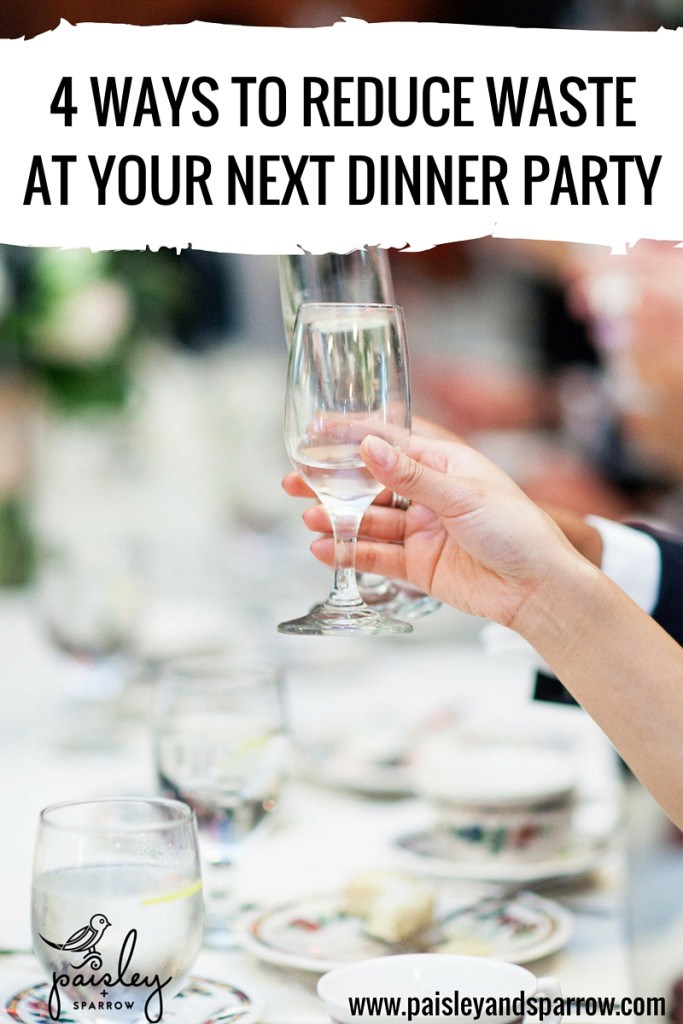
Woman raising glass at dinner party

As part of my sustainable events consulting business, I was recently featured on the blog of socially-conscious retailer Paisley + Sparrow with my top four tips for reducing waste at dinner parties. Hosting a party has never been easier with the array of convenience products available, from packaged veggie trays and snacks to cases of soft drinks and beer, not to mention those red plastic cups. But we often don’t stop to think about the environmental impact of these items. Continue reading on Paisley + Sparrow >>

One Year without Shampoo: An Update

Watching the NFL playoffs last week, I suddenly remembered that division championship weekend marks my one-year anniversary of not using shampoo. It’s crazy to think about, but as I’ve already adoringly professed, it’s a change that has dramatically improved my life for the better.

Not long after I published my last post on this topic, I began noticing a higher rate of breakage from the ends of my hair. I had accepted (and actually enjoyed) a degree of dryness as part of the no-poo result, but this was starting to look like straight-up damage, and I worried that I would have to abandon my shampoo-free ways. However, before doing anything drastic like buying shampoo, I decided to try some adjustments to my hair-washing routine. I was incredibly pleased to discover that these minor changes resulted in my hair looking and feeling even better than before!

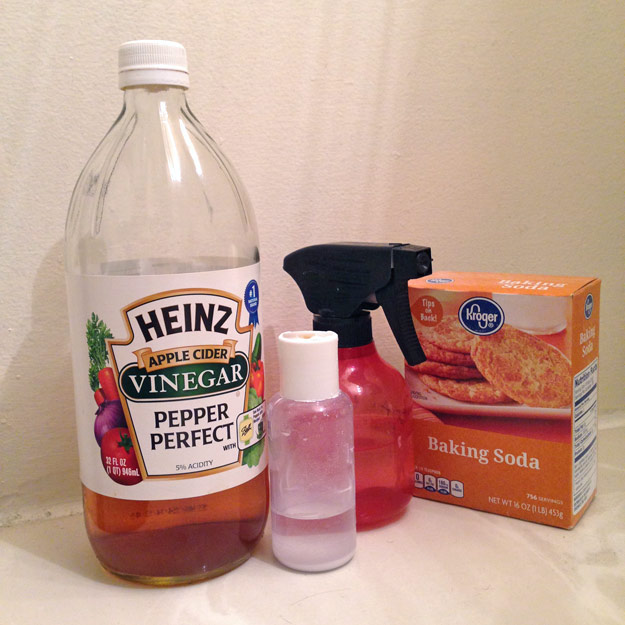
Bottle of vinegar, spray bottle, and baking soda

I still use the same trusty supplies, but in a different ratio. Still working through my first bottle of ACV from a year ago!

Here’s my updated routine, with the key changes noted:

  1. Fill a small travel shampoo bottle with one part baking soda and six parts water. This is a much lower concentration of baking soda than I was using previously, and I now only mix one wash’s worth of the solution at a time. I use all or almost all of this mixture for one wash.
  2. Combine 1-2 tablespoons of apple cider vinegar with 1 cup water in a small spray bottle. This is the same concentration I was using before, but now I spray my hair much more heavily each time. This quantity now lasts me about three washes instead of six. I theorize (with zero science knowledge to back me up) that the dryness and breakage I was experiencing was due to not using enough acid to balance out the effects of the baking soda.
  3. Wash wet hair and scalp with baking soda mixture. Do not wash ends of hair. Rinse well. Because I’m now using less baking soda, I spend a little more time scrubbing my scalp for extra manual cleaning action.
  4. Spray vinegar mixture onto hair until fully saturated, spraying the scalp thoroughly to balance out the baking soda and also spraying all the way to the ends of your hair. I let it sit for a minute or two to absorb. Rinse well.

With this new routine, my hair is now softer and shinier than before and breakage has decreased to a normal level. My hair is less voluminous because it’s less dry, but it still successfully holds a curl. For a while I had been back up to three washes per week, but with these changes I’m now back down to two.

There are several blog posts out there in which people describe their horror stories of going no-poo. I certainly can’t attest that this method works for all types of hair—I only know it works for mine. But if you give no-poo a try and start having a bad experience, I encourage you to experiment with your routine to find the method that works for you before giving up completely. Maybe your hair needs a lot of baking soda scrubbing action, or maybe your hair needs hardly any baking soda at all. If you feel like your hair is truly becoming damaged, definitely stop and assess the situation, but a few simple adjustments may be all you need to reset the balance.

Who is BlueIndy for?

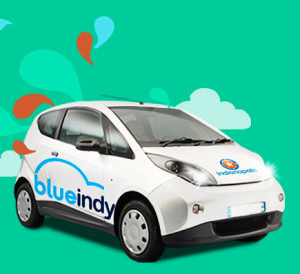
BlueIndy carFor a couple of months I’ve been wanting to try the BlueIndy electric car sharing service in Indianapolis. There’s a station about half a mile from my apartment, and I was curious about the cars and what the overall user experience is like. I also wanted to address a lingering question I’ve had since the system appeared: Who is BlueIndy for?
As a car owner whose daily commute is outside the BlueIndy range, I figured I was not the primary target market. However, the BlueIndy website touts free, guaranteed parking as one of its benefits, so I wondered if would BlueIndy be convenient for occasional trips downtown. Every Indianapolis urbanite knows the frustration of arriving downtown to unexpectedly find the cheapest parking garages plastered with “$20 Event Parking” signs. Could BlueIndy be a way to avoid this unpleasant surprise?

With the warmer weather this past weekend, I thought Sunday would be a good day to try it out for a trip downtown for lunch, so I logged on to the BlueIndy website to start planning my excursion. My plan was to pick up a BlueIndy car from the SoBro station, drive downtown and deposit the car at one of the many downtown stations, eat lunch, then pick up another BlueIndy car and return to the SoBro station. I quickly learned that this plan would be inconvenient to the point of impossibility due to two major flaws in the BlueIndy system.

Two major flaws

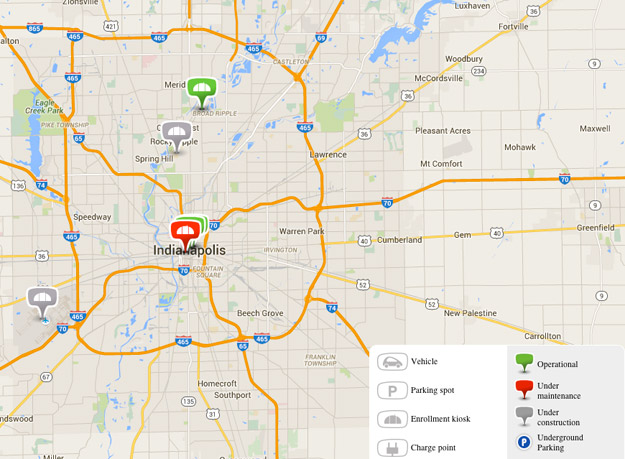
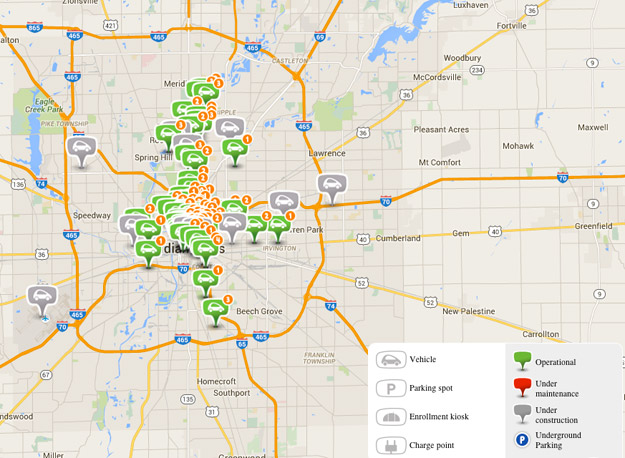
According to the membership description pages on the BlueIndy website, all BlueIndy memberships (including one-day memberships) must begin at an Enrollment Kiosk.* This in itself seems reasonable, since you need to verify that you’re a licensed driver before using the cars. However, as of the date of this post, there are only three operational Enrollment Kiosks in the city out of dozens of stations, with only two more under construction. Standard BlueIndy stations run along the north-south corridor as far south as the University of Indianapolis and as far north as 63rd Street, with some popping out to the east and west near downtown. Despite this broad coverage area, two of the Enrollment Kiosks are located downtown within two blocks of each other, and the third is located at College & Broad Ripple Ave.

*In the more deeply-buried FAQ, the website says that monthly and yearly memberships can be purchased through the website or mobile app, but there was no clarification on whether the user would still need to visit an Enrollment Kiosk to obtain their membership card.

Map of BlueIndy vehicle stations

BlueIndy vehicle stations

Map of BlueIndy Enrollment Kiosks

BlueIndy Enrollment Kiosks

It would take me about an hour to walk to the Broad Ripple kiosk—technically doable, but hardly convenient. It would only take about 15 minutes to ride my bike there, though, which seems like a reasonable alternative except for the fact that there is no bike parking provided as part of any BlueIndy stations. There may be nearby bike parking or there may not; it is in no way guaranteed. This seems like a huge missed opportunity, as including bike parking as a fundamental part of each station would make the system accessible to a much broader geographic area.

Who is BlueIndy for?

Because of the Enrollment Kiosk requirement, it seems apparent that BlueIndy is not really intended for one-day use. The inconvenience of getting to an Enrollment Kiosk would far outweigh the guaranteed parking benefit in most cases.

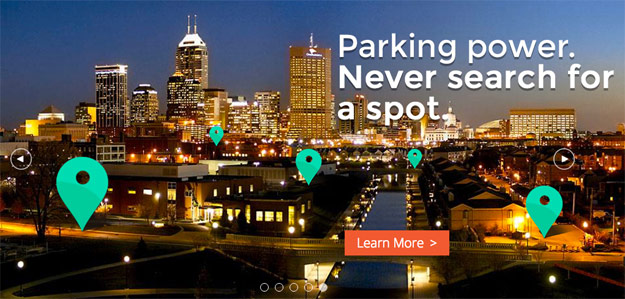
BlueIndy banner promoting guaranteed parking

Guaranteed parking doesn’t outweigh the other inconveniences of a one-day membership.

The Enrollment Kiosk requirement also begs the question, is the system intended for people who don’t own cars? If it is, how are these users supposed to get to an Enrollment Kiosk to sign up? Yearly membership cards are sent out via snail mail according to the BlueIndy website, so once you have your card you could use any station for your first trip, but a yearly membership is a big commitment if you haven’t even had a chance to try out the system.

Despite these flaws (which I hope the city addresses soon), here are some groups that I think can actually benefit from BlueIndy as it exists today:

  • Partners or families who own only one car, particularly if one working adult can use BlueIndy for their commute
  • Non-car owners who have access to an Enrollment Kiosk
  • Tourists staying downtown could use one-day memberships to visit other “notable” neighborhoods like Irvington, Broad Ripple or Fountain Square
  • College students
  • Electric car owners can use BlueIndy stations to charge their own vehicles

Do I still think BlueIndy is a valid mode of green transportation? Yes. My favorite thing about BlueIndy, now that I realize I can’t practically use it myself, is the charging service it offers to electric car owners, as this could increase the adoption rate of all-electric vehicles in the city. Is it a perfect system? Far from it. Hopefully as the program matures it will find its niche and clarify its marketing to reach the people who can truly benefit.

New Project: Sustainability in Events

Remember when I announced I was working a new, secret, scary, exciting project? I’m pumped to finally eliminate “secret” from that list!

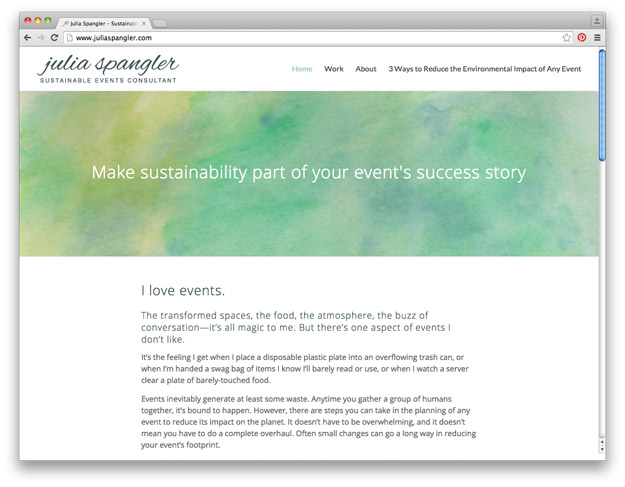
Screenshot of Julia Spangler's sustainable event consulting website

I’m thrilled to share with you guys that I am starting my own sustainable events consulting business. The impetus for this idea came from several sources—my own love of events, my event experience from my day job, and the overall cultural shift in my generation toward valuing experiences more than possessions. As sustainability continues to become a more urgent global issue, event attendees (especially millennials) will demand that experiences are planned responsibly. Some brands are already doing this fantastically, but other companies and organizations need help to turn those sustainable ideals into reality. That’s where I come in!

A lot of the advice I offer is inspired by topics I’ve written about here on Fair for All. One person’s lifestyle changes at home can make a difference, but the impact is awesomely magnified at an event attended by hundreds of people!

If you’re interested in learning more, check out my official bizness website at www.juliaspangler.com. And of course, I’ll be continuing to plan sustainable events for the blog, including our next style swap on Jan. 20. Posting may take a downtick in frequency as I shift focus to the business, but I also plan to share a lot of the new things I’m learning with you!

Thanks to everyone who knew about this endeavor for your support so far; you’ve been awesome. And if you’re in the process planning a festival, fundraiser, bingo night or bar mitzvah, drop me a line—I’d love to help make it more sustainable!