Share Your Style Story

New York Fashion Week is February 12-19. When I hear Fashion Week I usually think “that thing they do at the end of Project Runway,” but I know it’s also a time when designers debut new collections and fashion in general is in the global spotlight.

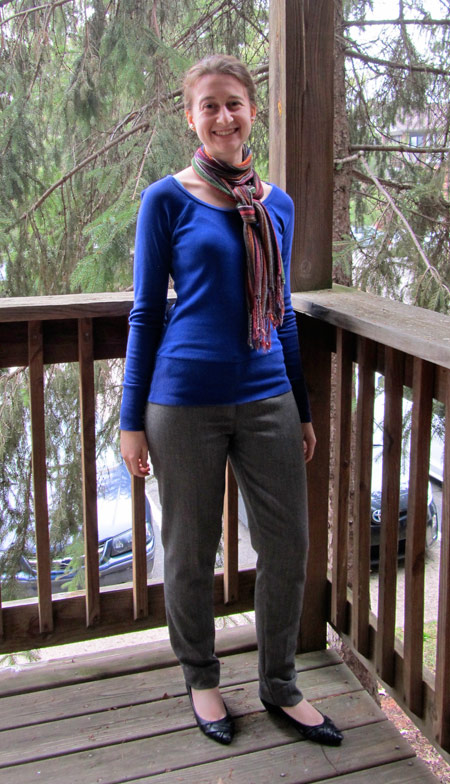
To counteract the unsustainable aspects of the fashion industry that will be inherently celebrated this week, the Ethical Writers Coalition has launched Style Stories, a movement that highlights style that is both fashionable and sustainable. Anyone can submit a photo and story of their favorite outfit that contains an ethical component: fair trade, vintage/secondhand, locally made, eco-friendly, organic, cruelty-free, or otherwise ethically produced.

Style Stories information graphic

Ignore the February 12 deadline—you can still submit after that!


There are a couple different ways to participate:

  1. Submit your outfit on the Style Stories tumblr
  2. Post your outfit on Instagram using the hashtag #stylestories15

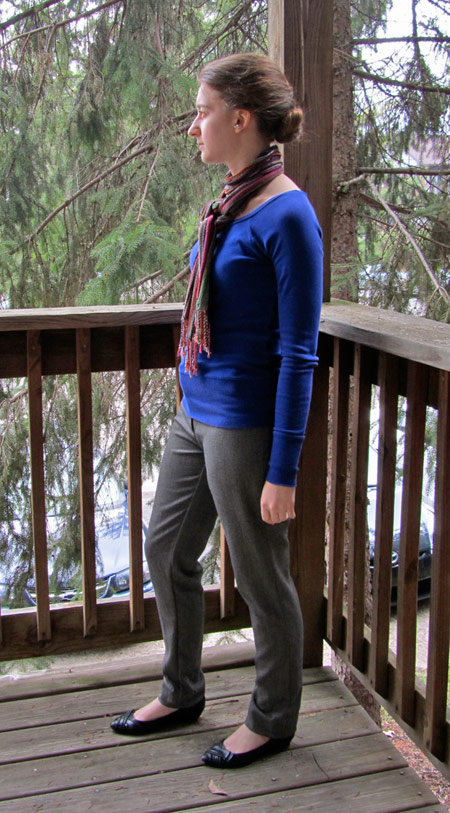
Even if you don’t have an outfit to share, definitely visit the Tumblr and peruse the gallery of photos. Not so long ago, ethical fashion had the stereotype of being hippie-ish and frumpy (or as my sister would say, “Everything has dragonflies on it.”) The Style Stories gallery shows that this is definitely not the case anymore, and there are ethical fashion options for every taste and style. Be sure to check out my submission while you’re there!

Connecting Stuff You Don’t Want with People Who Want It

The other day when I arrived at work, I found a mysterious box sitting on my desk. On it, this note from my coworker Katina:

Would you like these boots? Never been worn.

Tall brown boots in shoebox

Surprise boots! I giddily tried them on and modeled them for everyone in the department. I also got the origin story from Katina—the boots originally belonged to her cousin’s coworker, who gave them to Katina’s cousin, who gave them to Katina, who gave them to me. Whew!

The convoluted journey of these boots made me think about the ways our unwanted stuff circulates. One man’s trash is truly another man’s treasure (somebody didn’t want these boots! seriously!), but sometimes the path from person-with-stuff to person-who-wants-stuff isn’t easy to find.

My typical practice has been to throw all my unwanted stuff in a bag and take it all to Goodwill. Don’t get me wrong, this is way better than throwing it in the trash. But I’ve caught glimpses of the back rooms of some thrift stores… SO MANY PILES. And have you ever been to a Goodwill outlet? It’s the stuff that didn’t sell at regular Goodwill stores, and they sell it by the POUND. Eeek. The amount of stuff we donate is overwhelming, and when you donate to a thrift store, you’re rolling the dice on whether anyone else will even want it. Oftentimes surplus donations are shipped to developing countries overseas, which on the surface appears charitable but may actually undermine local economies.

Infographic listing ways to connect unwanted stuff with people who want it

With the rise of the sharing economy, I think how we get rid of stuff is going to change a lot in the next 5-10 years, or even sooner. Companies like Lyft and Airbnb demonstrate that people are willing to make personal connections to share cars and homes. Not only are they willing to do it, it’s the cool thing to do! On a smaller scale, I think people are going to become more and more excited about the idea of making personal connections to share their unwanted stuff.

Here are a few ways to connect your unwanted items with people who will be excited to have them. Some of them are more personal than others, but they all offer an extra level of likelihood that your stuff will be used and appreciated:

  • Sell online (eBay, Amazon, Twice, thredUP, Vinted, Poshmark)
  • Exchange in an alternative marketplace like Yerdle or Bondsy
  • Swap with friends, or give to a friend
  • Give away on Freecycle
  • Sell or give away on Craigslist
  • Sell to a store that sells used items (Half Price Books, Disc Replay, etc.)
  • Consignment stores

Admittedly, all of these methods require a little more effort than dropping off a box at Goodwill. You may have to make a trip to the post office or set up an appointment to meet a buyer/recipient. However, knowing a little about where your stuff is going can be incredibly satisfying. Over the summer I gave away some screen printing supplies on Craigslist. The guy I gave them to told me the kit was for his daughter who has been learning the screen printing process and has made some prints in the past. Just hearing those few details made me really excited to give him the supplies, knowing they were going to someone who would be interested in using them.

I have also been the grateful recipient of other people’s junk. A couple of weeks ago I wrote a Facebook post asking where I could find some reclaimed wood for an art project. Within a day I got suggestions of eight different sources, none of which required me to buy wood off the shelf at a lumberyard. I ended up getting wood from two different friends who just had it lying around. It’s amazing what people will provide if you just ask! In the same way, if you just put it out there that you have X item, you never know who might be interested in it!

Indiana wall art made with reclaimed wood

My reclaimed wood art! Also featuring leftover artificial turf from a work project and old Christmas lights.

Will I still shop at and donate to Goodwill and similar stores? Of course. You can’t beat big thrift stores for convenience and variety, and some items may be too small or low-value to be worth the effort of those other channels. But this year I want to make more of an effort to connect the things I don’t want with people who will be excited and happy to have them.

Have you used any of these methods to get rid of stuff you didn’t want? Have you ever made a great connection with someone who really wanted what you were giving away?

My Favorite Ethical Pinners on Pinterest

favorite-ethical-pinners-on-pinterest

I have a confession to make: I am teetering on the brink of a Pinterest addiction. I make a conscious effort not to rely on my phone for constant distraction, but I do find myself checking Pinterest at least 3-4 times most days. Despite its drawbacks, like the fact that it helps exacerbate a culture of aspirational consumerism and feelings of inadequacy, I find it to be both entertaining and helpful for the following reasons:

  1. Even though the majority of items in my feed aren’t ethically made, pinning things I like gives me an idea of what my own personal style is. I can then look for ethical alternatives or DIY projects that would give me a similar look.
  2. There are tons of tutorials for DIY projects, including recycling/upcycling projects and basic sewing tutorials, both of which I am all about right now.
  3. It’s a great source for finding artwork and photography I wouldn’t have seen otherwise.
  4. I like evening gowns, and Pinterest shows them to me!

There are a few pinners I follow in the ethical lifestyle realm who I can always count on for interesting pins. Here are some of my favorites:


Fair Trade Quilts & Crafts – This account was fully responsible for me embracing aspects of bohemian interior design. The gorgeous interiors they pin give me inspiration for creating a home full of eclectic fair trade and secondhand items.

Visit Fair Trade Federation’s profile on Pinterest.

Fair Trade Federation – The FTF uses Pinterest to showcase cool products from their members.

Mata Traders – I frequently find myself re-pinning links to high-quality blog posts about fair trade pinned by Mata Traders.

Visit Elizabeth Stilwell | The Note Passer’s profile on Pinterest.

Elizabeth Stilwell | The Note Passer – I love Elizabeth’s pins that link to blog posts about zero-waste living.

To follow me on Pinterest, hit me up here! Full disclosure: not everything I pin is ethically-made, since as I described above, I use Pinterest to figure out my style, not to make a specific shopping list. My board Fair Trade & Ethical Lifestyle is devoted to ethically-made products and related links. (And if you’re looking for some evening gown eye candy as well, my Wearables board is where it’s at.)

How do you use Pinterest? Who are some of your favorite pinners?

New Year, New Name

As the ethical consumerism movement has grown and evolved over the last year, we started thinking about the name of this site: the Fair for All Shopping Guide. We’re entering a landscape where there are many more ethical shopping options than there were even five years ago, but it’s also a landscape where some brands are beginning to engage in “ethical-washing” to appear more socially responsible (the same way that many brands now engage in “greenwashing” to appear more eco-friendly). Even the purchase of an ethically-made item has implications on overconsumption, natural resource use, and a range of other issues.

We realized it’s important to avoid giving the message that shopping can be the solution to the world’s problems. Shopping differently can make a real positive impact, but it’s not everything. As such, we have decided to remove the word “shopping” from the Fair for All Shopping Guide name. We are now simply the Fair for All Guide.

Our name is now the "Fair for All Guide"

Does the name change mean our content is changing? Yes and no. We still plan to cover fairly made products and ethical brands, because we do truly believe in the power of individual purchases to make a difference. However we will also explore other ethical lifestyle topics that are not related to shopping, like living with less, upcycling, reducing waste, etc.

We’re excited about this change and hope you are too! Conveniently, our URL and Facebook and Twitter handles remain the same. Let us know if there are any topics you’d like to see us cover this year!

Thank You & Year-End Roundup

2014 is on its way out the door, so I wanted to take a moment to thank everyone who has read and participated in the blog this year. We aim to help people understand the impacts of their purchases and promote justice, fairness and prosperity for all. Every comment and like and pageview means a lot to us because it means word is getting out and we’re one step closer to making that fairer world a reality.

We appreciate you and look forward to bringing you more in 2015! If there are any particular topics you’d like see covered or questions you’d like to have answered, please contact us—we want to help!

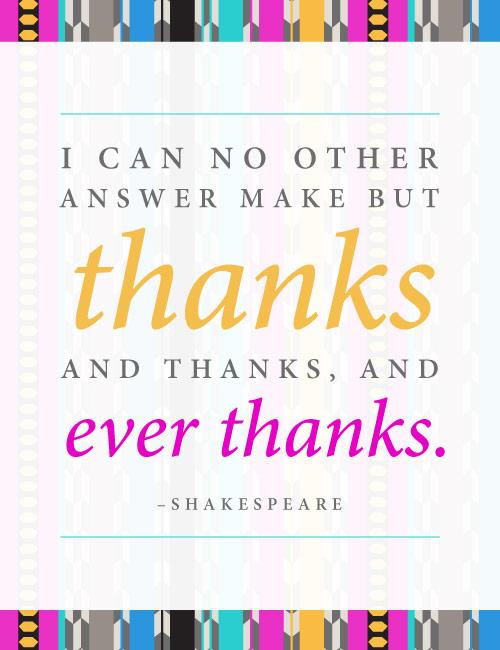
I can no other answer make but thanks. Shakespeare

Year-End Roundup

Since we haven’t done a roundup post in a while I wanted to end the year with a few thought-provoking links I’ve been saving up.

1. Uzbekistan Cotton Campaign – Forced labor in Uzbekistan continues, pulling over a million children, teachers, public servants and employees of private businesses to harvest cotton in often hazardous conditions. This website summarizes the situation and provides actions for governments, companies and citizens to take to put an end to this state-mandated labor. The Uzbek-German Forum for Human Rights also has thorough documentation of the issue, including the Cotton Chronicle, which describes specific incidents in the fields.

2. Pollution from synthetic microfibers – Thousands of microfibers can wear off a synthetic garment in the wash and end up in the environment. This article describes one scientist’s work to research the impact of these fibers and solutions to minimize fiber runoff.

3. The truth about organic cotton – This blog post methodically breaks down the requirements of organic cotton certification and debunks some misconceptions, such as that organic cotton uses less water (it doesn’t). I really appreciated the scientific approach of this article. The author gets beyond the buzzwords so many brands use and shares real data.

We’ve come a long way this year but there’s still more work to do. Thanks for coming along with us!

Buy Less, Live More

In the final days before Christmas, I wanted to share this fun and thoughtful campaign from the Story of Stuff Project.

Buy Less, Live More: Play, Bike, Share, Knit

The Story of Stuff Project started several years ago with an animated online video that showed the journey of the stuff we buy from its production to its eventual death in a landfill. Since then the organization has expanded its scope to address issues issues ranging from overconsumption to corruption to the environment. This December they have a campaign called Buy Less, Live More, which asks individuals to share photos showing what they have time to do when they’re not shopping.

Buy less, live more poster

I submitted a photo but it wasn’t approved by the time I posted this, which is actually OK because it’s a bit of a spoiler for a DIY post I’ll be doing in January. This year I finished up my Christmas shopping on a Friday, which left Saturday open for yoga class, biking AND running (it was definitely my most fit day of the year), and working on that DIY project. It was an incredibly satisfying day! Admittedly, I did get mostly store-bought gifts for the people on my list, but I did make one gift and tried to support ethical and local businesses for the others.

buy-less-give-more-poster-2

I like this campaign as a simple and fun way to remember that shopping and gifts are not the point of this time of year, and a thoughtful gift doesn’t have to be a store-bought one.

Have a warm and happy holiday from us at the Fair for All Guide!

Meet an Ethical Blogger: Jessica

I’m excited to introduce you to Jessica, author of the blog Notes From A Thoughtful Life! Jessica does an amazing job of providing practical tips that make ethical shopping a realistic pursuit, not just an idealistic dream.

Notes From A Thoughtful Life title image

Fair for All: Describe the focus of your blog.

Jessica: Notes From A Thoughtful Life is a blog about embracing our everyday normal life and making it count. I love that quote by mother Teresa that says “live simply so that others may simply live”. The idea that what we do, how we live, is important and that we can use it to bring life to others is something I love. So I write about fair trade, living thoughtfully and really, just grace, because I am still learning how to live what I write about!

Why do you choose to write about these topics? What motivates you to pursue an ethical lifestyle?

I first learned about sweatshops and unethical labor in the clothing industry years ago and slowly started changing some of my buying habits since then but honestly, I had a hard time knowing where to start. The more I learned the more I changed and the more I realized that if I was having a difficult time figuring out where to start, then maybe others were too. That inspired me to write the blog, especially The Ethical List, a list I keep of all the fair and ethical companies I have discovered. Knowing that the clothes and other things I buy, like coffee and such, is made by people who are paid fairly is really enough motivation in an of itself!

How we live is important and we can use it to bring life to others.

What makes a product or company ethical to you? When you’re making a purchase or deciding what to write about, what principles or criteria guide your decision?

When I shop online I almost always read the company’s about page and find out what I can about their sourcing policies. It’s important to me that companies are clear and honest about how they create and source their products. I also Google them with “sweatshop” or “labor violations” in the search terms to see if they actually do what they say they do. I buy secondhand and used whenever possible. Most importantly, I try not to be too hardcore and strict about ethical guidelines because in reality I know I won’t be able to always buy fair trade or thrift but I do want to make the best decision I can based on my options. If you can’t afford or find a fair and ethical product, second best is okay too. Target and a few other major companies, while not winning any awards, are at least attempting to maintain a more ethical supply chain.

What are your top 3 favorite ethical shopping brands or websites?

Oh my gosh, so many good ones!  Everlane, for their reasonably priced and super comfy tees. Ten Thousand Villages, because they are the first fair trade store I ever shopped at way back when I was a little girl. I still love that store. And  I have many things from that store, even from when I was a little girl. And Shea Moisture, for having some of the best smelling ethically-sourced bar soap ever.

Here are some recent posts from Notes From A Thoughtful Life:

For more ethical blog recommendations, check out the rest of our Meet an Ethical Blogger series or visit the Resources page.