New Year, New Name

As the ethical consumerism movement has grown and evolved over the last year, we started thinking about the name of this site: the Fair for All Shopping Guide. We’re entering a landscape where there are many more ethical shopping options than there were even five years ago, but it’s also a landscape where some brands are beginning to engage in “ethical-washing” to appear more socially responsible (the same way that many brands now engage in “greenwashing” to appear more eco-friendly). Even the purchase of an ethically-made item has implications on overconsumption, natural resource use, and a range of other issues.

We realized it’s important to avoid giving the message that shopping can be the solution to the world’s problems. Shopping differently can make a real positive impact, but it’s not everything. As such, we have decided to remove the word “shopping” from the Fair for All Shopping Guide name. We are now simply the Fair for All Guide.

Our name is now the "Fair for All Guide"

Does the name change mean our content is changing? Yes and no. We still plan to cover fairly made products and ethical brands, because we do truly believe in the power of individual purchases to make a difference. However we will also explore other ethical lifestyle topics that are not related to shopping, like living with less, upcycling, reducing waste, etc.

We’re excited about this change and hope you are too! Conveniently, our URL and Facebook and Twitter handles remain the same. Let us know if there are any topics you’d like to see us cover this year!

Thank You & Year-End Roundup

2014 is on its way out the door, so I wanted to take a moment to thank everyone who has read and participated in the blog this year. We aim to help people understand the impacts of their purchases and promote justice, fairness and prosperity for all. Every comment and like and pageview means a lot to us because it means word is getting out and we’re one step closer to making that fairer world a reality.

We appreciate you and look forward to bringing you more in 2015! If there are any particular topics you’d like see covered or questions you’d like to have answered, please contact us—we want to help!

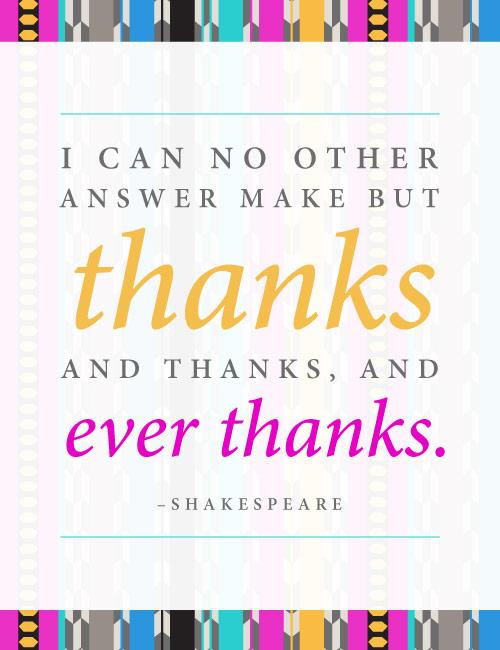
I can no other answer make but thanks. Shakespeare

Year-End Roundup

Since we haven’t done a roundup post in a while I wanted to end the year with a few thought-provoking links I’ve been saving up.

1. Uzbekistan Cotton Campaign – Forced labor in Uzbekistan continues, pulling over a million children, teachers, public servants and employees of private businesses to harvest cotton in often hazardous conditions. This website summarizes the situation and provides actions for governments, companies and citizens to take to put an end to this state-mandated labor. The Uzbek-German Forum for Human Rights also has thorough documentation of the issue, including the Cotton Chronicle, which describes specific incidents in the fields.

2. Pollution from synthetic microfibers – Thousands of microfibers can wear off a synthetic garment in the wash and end up in the environment. This article describes one scientist’s work to research the impact of these fibers and solutions to minimize fiber runoff.

3. The truth about organic cotton – This blog post methodically breaks down the requirements of organic cotton certification and debunks some misconceptions, such as that organic cotton uses less water (it doesn’t). I really appreciated the scientific approach of this article. The author gets beyond the buzzwords so many brands use and shares real data.

We’ve come a long way this year but there’s still more work to do. Thanks for coming along with us!

Buy Less, Live More

In the final days before Christmas, I wanted to share this fun and thoughtful campaign from the Story of Stuff Project.

Buy Less, Live More: Play, Bike, Share, Knit

The Story of Stuff Project started several years ago with an animated online video that showed the journey of the stuff we buy from its production to its eventual death in a landfill. Since then the organization has expanded its scope to address issues issues ranging from overconsumption to corruption to the environment. This December they have a campaign called Buy Less, Live More, which asks individuals to share photos showing what they have time to do when they’re not shopping.

Buy less, live more poster

I submitted a photo but it wasn’t approved by the time I posted this, which is actually OK because it’s a bit of a spoiler for a DIY post I’ll be doing in January. This year I finished up my Christmas shopping on a Friday, which left Saturday open for yoga class, biking AND running (it was definitely my most fit day of the year), and working on that DIY project. It was an incredibly satisfying day! Admittedly, I did get mostly store-bought gifts for the people on my list, but I did make one gift and tried to support ethical and local businesses for the others.

buy-less-give-more-poster-2

I like this campaign as a simple and fun way to remember that shopping and gifts are not the point of this time of year, and a thoughtful gift doesn’t have to be a store-bought one.

Have a warm and happy holiday from us at the Fair for All Guide!

Meet an Ethical Blogger: Jessica

I’m excited to introduce you to Jessica, author of the blog Notes From A Thoughtful Life! Jessica does an amazing job of providing practical tips that make ethical shopping a realistic pursuit, not just an idealistic dream.

Notes From A Thoughtful Life title image

Fair for All: Describe the focus of your blog.

Jessica: Notes From A Thoughtful Life is a blog about embracing our everyday normal life and making it count. I love that quote by mother Teresa that says “live simply so that others may simply live”. The idea that what we do, how we live, is important and that we can use it to bring life to others is something I love. So I write about fair trade, living thoughtfully and really, just grace, because I am still learning how to live what I write about!

Why do you choose to write about these topics? What motivates you to pursue an ethical lifestyle?

I first learned about sweatshops and unethical labor in the clothing industry years ago and slowly started changing some of my buying habits since then but honestly, I had a hard time knowing where to start. The more I learned the more I changed and the more I realized that if I was having a difficult time figuring out where to start, then maybe others were too. That inspired me to write the blog, especially The Ethical List, a list I keep of all the fair and ethical companies I have discovered. Knowing that the clothes and other things I buy, like coffee and such, is made by people who are paid fairly is really enough motivation in an of itself!

How we live is important and we can use it to bring life to others.

What makes a product or company ethical to you? When you’re making a purchase or deciding what to write about, what principles or criteria guide your decision?

When I shop online I almost always read the company’s about page and find out what I can about their sourcing policies. It’s important to me that companies are clear and honest about how they create and source their products. I also Google them with “sweatshop” or “labor violations” in the search terms to see if they actually do what they say they do. I buy secondhand and used whenever possible. Most importantly, I try not to be too hardcore and strict about ethical guidelines because in reality I know I won’t be able to always buy fair trade or thrift but I do want to make the best decision I can based on my options. If you can’t afford or find a fair and ethical product, second best is okay too. Target and a few other major companies, while not winning any awards, are at least attempting to maintain a more ethical supply chain.

What are your top 3 favorite ethical shopping brands or websites?

Oh my gosh, so many good ones!  Everlane, for their reasonably priced and super comfy tees. Ten Thousand Villages, because they are the first fair trade store I ever shopped at way back when I was a little girl. I still love that store. And  I have many things from that store, even from when I was a little girl. And Shea Moisture, for having some of the best smelling ethically-sourced bar soap ever.

Here are some recent posts from Notes From A Thoughtful Life:

For more ethical blog recommendations, check out the rest of our Meet an Ethical Blogger series or visit the Resources page.

Get to Know Las Casas, Guatemalan Fair Trade

Las Casas table at the Manthan International Market

This summer I attended the Manthan International Market in downtown Indianapolis with the intent of sampling tasty foods of the world. Imagine my excitement when there turned out to be several fair trade vendors there as well! I was especially excited to meet David Durica of Las Casas, a vendor I’d never heard of before. I learned that Las Casas is fairly new to the Indianapolis fair trade scene and focuses specifically on sharing the beautiful culture of Guatemala.

I invited David to share more about Las Casas and the work they are doing in Guatemala and in the local Indy area.

Fair for All: Tell us about how Las Casas started.
Las Casas: My wife, Jenny, and I lived in Guatemala for a year, and while there we developed a deep respect for Guatemala’s people and culture. Towards the end of our time, we started brainstorming ways to sustain our relationships and maintain our commitment to the people long-term. After experiencing the struggles and issues throughout Guatemala – which include: lack of education and jobs, malnutrition, and a tragic history of oppression – we began identifying the existing strengths and skills among the people. We saw that the artisans were doing amazing work but they needed access to outside markets and fair wages. The need for Fair Trade was identified by realizing that if people matter, then the way we trade should matter.

Guatemalan artisan with table of jewelry

Describe your mission.
As a social enterprise, we seek to display cultural beauty, pursue fairness, and advocate for truth and reconciliation. We believe Fair Trade is a reconciled way of living for us as consumers. We view Las Casas as both a journey and a destination, a means and an end. The journey aspect is tangible by supporting fair trade and advocating alongside the indigenous artisans. This part of the mission puts fair trade merchandise into the hands of consumers. The destination is why we take part in the journey, which involves an intangible mission to reconcile trade by valuing people over product. Altogether, we hope to build a bridge with artisans living in a completely different reality.

What is it about Guatemala that makes that country so special to you?
We’ve always been drawn to Guatemala ever since our first short-term missions trip there in 2007. The country is vibrant with rich, cultural traditions and indigenous Mayan people who inspire us with their work ethic, commitment to family, and generous hospitality. More so than we’d experienced elsewhere, the indigenous population strive to maintain their ancient way of life, including their art of back-strap weaving, which is such a testament to their values.

During our time living there in 2011, we couldn’t help but get to know local artisans. We had nothing but respect for the work that they do, and were impassioned to co-develop an avenue of support with them, their families, and their community. Thus, we started this Fair Trade venture.

Guatemalan artisan weaving

The product that caught my eye the most at your booth at the market was the Guatop shoes. They are completely rad. Can you tell us more about how the design of the Guatops came to be, how they are made, and where people can get them?
You can’t miss the GuaTops, right?! These shoes are made of authentic indigenous patterns from Mayan villages throughout Guatemala. The textiles are back-strap woven, then hand-stitched into a pre-cut pattern to form the shoe. The fabric is then complemented by genuine leather, which is sourced from the coast of Guatemala.

Pretty unique, right? But we’re actually still in development of our GuaTops. Everything we’ve offered thus far was beta testing and samples. Because of the handmade dynamic, it’s been difficult to offer GuaTops anywhere other than in person, which is mostly at events in the Indianapolis area. We post some pictures of the shoes online, but don’t actually sell them online yet. The best way to get a pair would be to email us your general size and we can send you some pictures of our available inventory that would be in your approximate range. Then we’d connect somewhere so you can try them on!

GuaTops shoe

What’s your favorite product that you offer, or a new product you are excited about?
Part of our mission is to support a variety of indigenous artisan groups. With that being said, the groups and individuals we’re supporting come from varying levels. Some are paralyzed by poverty, so our work with them focuses on product development, creating savings, and long-term vision to lift their families out of poverty. Other groups are well equipped and have quarterly development workshops on their own.

So based on that, our newest excitement comes from a grassroots cooperative in Nahuala (a very rural village). Previously they were only making raw fabrics, so they’re brand new to the world of finished goods. Exclusively for Las Casas, they’re now making Snap Bags. These handy textile pouches feature a clasp made from a measuring tape…it naturally snaps back into place. We’re very inspired by their initiative and ability to develop concepts and product ideas.

Guatemalan artisans with Las Casas snap bags

Are your products available in any physical stores/locations, or just online?
Primarily, our products are sold at local events (farmer’s markets, craft shows, and festivals). We also list limited-inventory on our website with an online store. Throughout different times of the year we’ll also host house parties in central Indiana, offering hosts 50% off as our appreciation for the support to expand our market.

We’re developing a plan to open our own storefront. We project to be situated with a Grand Opening in 1-2 years.

Are you members of any fair trade organizations or certifications?
Las Casas is not certified through any fair trade organizations. However, half of the cooperatives we’re supporting have their own fair trade certification. The other half that we support represent family owned businesses or individuals that are not formally certified, nor have they had the resources to do so at this time…which is exactly why we’re working with them: to empower them and provide opportunities for development, such as certification.

What’s next for Las Casas?
We’re extremely excited for our brand new project called #BeReconciled. We were awarded our first-ever Community Action Grant in November 2014 to implement a local project in Indianapolis that will facilitate dialogue in diverse community settings resulting in a public art installation.

#BeReconciled title image

As we gear up for #BeReconciled, we’re also launching an Indiegogo campaign to fundraise support with the goal of opening the storefront venue where we’ll offer Las Casas fair trade retail merchandise alongside the #BeReconciled Art Gallery. Once this storefront is secured, we’ll build towards plans to introduce the third and final component to the business, a small Guatemalan café. Check out more details on “what’s next” on our campaign page.

Thanks to David for sharing the Las Casas story!

Ethical Holiday Shopping Sources

Holiday shopping season snuck up on me more than usual this year. In the past I’ve been a proactive early shopper, but this year I feel like my mind had barely left Halloweentown when boom! It’s late November and I have exactly zero gifts!

Are you in the same boat as me? Never fear! We’ve still got a month, and there are plenty of ethical retailers with great selections of gifts for everyone on your list. Here are some resources to get you started:

Fair Trade Federation Holiday Guide 2014 cover

Fair Trade Federation Holiday Gift Guide 2014

This online catalog features gifts from a plethora of Fair Trade Federation members. Click the link button on anything that catches your eye to be taken directly to the page on the seller’s site where you can buy it.
 
Fair Tuesday - December 2, 2014

Fair Tuesday

Fair Tuesday is an ethical shopping movement in response to Black Friday and Cyber Monday to feature fair trade, ethical, and eco-friendly brands. Visit the Buy/Shop section of the Fair Tuesday website for a directory of participating retailers, many of whom are offering significant discount codes—I spot checked a few and saw numbers like 20% off, 25% off, 30% off… Definitely check here if you like the thrill of a deal!
 

SERRV fall 2014 catalog cover

SERRV

One of my favorite places to look for fair trade gifts. I love their handy collections like Gifts for Him, Gift Baskets, Gifts Under $30 and more.
 

Ten Thousand Villages holiday gift finder

Ten Thousand Villages

Another fair trade site with a huge variety of gifts. Use their Gift Finder to find just the right thing for friends, teachers, coworkers, kids and more. They also have an option to filter by price point, so you can find gifts that fit your budget.
 

If you’re local to central Indiana or Columbus, OH, I highly recommend making Global Gifts a stop on your holiday shopping circuit. Not only is it a more pleasant shopping environment than a crowded, noisy mall (free coffee samples, anyone?), but you’re bound to find great gifts, stocking stuffers, or even holiday decorations for your own home. And all of their items are made by artisans who are treated fairly.

In this season of giving, your gift choices have the power to improve the lives of disadvantaged people around the world. You may be in the habit of making charitable donations this time of year, but you can also help end poverty by supporting fair trade. As a system that provides market access and equitable business relationships, fair trade enables artisans to earn a sustainable income to support themselves and their families, reducing dependence on charitable aid. That’s a happy holiday for everyone involved.