The True Cost of Fashion

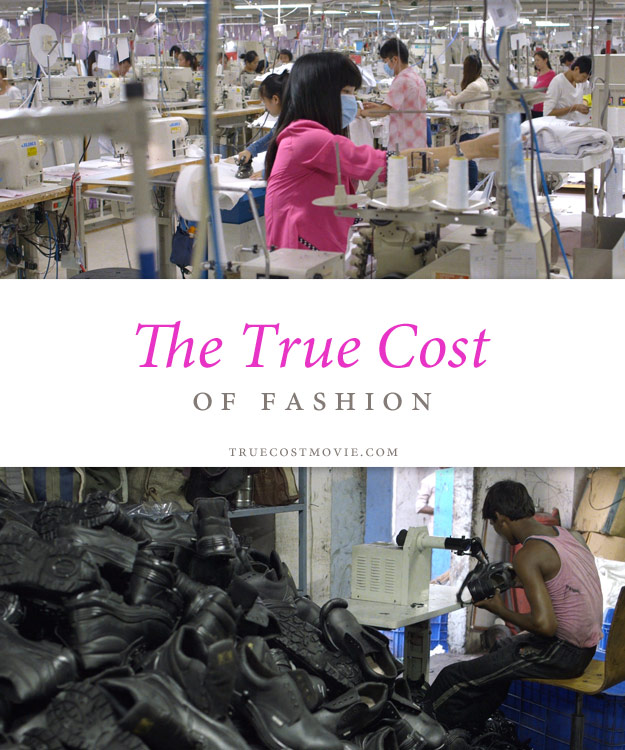
East Asian factory workers, a South Asian shoe sweatshop

I recently learned about a new documentary that sheds light on the hidden flaws of the fashion industry. The True Cost explores the fashion supply chain from the cotton fields of India to factories in Cambodia and Bangladesh and exposes how the bargains we see on store racks are made possible by unsafe working conditions, rampant pesticide use and other negative factors. The film aims to answer the question, “Who really pays the price for our clothing?”

The True Cost focuses on establishing the fact that the fashion industry is deeply flawed and in need of major reform. According to a review by the LA Times, director Andrew Morgan says his intent was “to overwhelm the viewer with just how enormous the issue is.” I’m definitely a solution-focused person, so to an extent it bothers me that the film focuses so heavily on the problem, but in terms of educating the general public I think that’s where you have to start. (Plus it would be hard for a film to include solutions for a lot of different scenarios and consumers. That’s what blogs are for!)

I have yet to see the movie in full, but I plan to and would love to share the experience with other interested folks. Indianapolis locals: Would you be interested in attending a screening of this movie? I’ve never hosted a film screening before but I think this film could provoke great discussion, perhaps with an accompanying panel. If you or someone you know would be interested in such an event, let me know in the comments!

Everyone else, check out the True Cost website for a list of global screenings. You can also purchase the film on DVD or for digital streaming.

Have you seen The True Cost? I’d love to hear your thoughts.

6 Myths About Buying Ethical Clothing

The post below was originally published by Leah on Style Wise. It may challenge some of your viewpoints about ethical shopping, but it’s ultimately meant to empower you. You have more options for making a difference than you might think!

6 Myths About Buying Ethical Clothing

Far and away the most common negative comment I get on ethical fashion articles I’ve written for other sites is some variation of:

“Good for you for having enough money to buy expensive clothes. Some of us can’t afford to buy a closet full of ethical clothing and it’s classist for you to even mention it. Have you no pity on poor people in your own country? And have you considered the fact that people in foreign countries will lose their jobs if we stop buying from sweatshops? Better to have a lousy job than no job at all.”

Some of them are considerably less harsh and some are too horrific to repeat here, but it’s clear to me that the biggest deterrence to acquiring an ethical wardrobe is money. So let me clarify a few things.

Firstly, I absolutely do care about the plight of the poor in my own country. It’s despicable that, despite our national wealth, more than 45 million people live below the poverty line. And we’ve got a few social safety nets, but we haven’t really figured out how to help people get a leg up long term, and it’s only getting worse. And it’s just a matter of fact that low cost, sweatshop-sourced clothing may be the best financial option for a lot of people. If you live paycheck to paycheck and have trouble putting clothes on your back and the backs of your children, please know that I not only feel for you, but I think you need to make the best choice for your family, even if that means making the ethics of your clothing choices less of a priority, or not a priority at all. You are welcome to this conversation, of course, but you may have other things to worry about.

But I also know for a fact that a lot of you can afford to consider your purchases. You’re the ones I’m talking to (and I get the sense that, by and large, you’re also the ones making the most excuses). Reality check: I manage a local thrift shop and my husband is a grad student. We aren’t exactly making it rain over here. But we do benefit a lot from the knowledge that, if something were to happen to us, our parents would be able to step in to support us. We have a social network that makes us feel secure and that helps us make long term financial decisions we couldn’t make if we were going it completely alone. We also don’t have children to support, so our income stretches a bit further.

I am aware of my relative privilege, but I suspect there are a lot of you in my position who don’t realize that it is possible to change your spending habits without breaking the bank. If you can overcome a few prevalent myths, you’ll be on your way to making better choices in no time.

Myth 1: It’s a given that I will buy at least a dozen new items every season.

For many of us, it would be a financial disaster to buy more than a handful of fair trade clothing items every 6 months. But, if you’ve already built a basic wardrobe, you don’t need to buy more than a couple new things a year. Magazines and 5 week trend cycles make us feel obligated to keep up with every new fad on the market, but it isn’t necessary or even fulfilling. You may have to buy less if you’re purchasing from more ethical brands, but that probably won’t hurt you in the long run. Plus, in my own experience, fair trade and domestically produced items from small brands hold up better than fast fashion items anyway, so you won’t need to replace your staples as often.

Myth 2: I can’t dress well with secondhand items.

My go-to advice for people considering their purchases for the first time is to start with thrift shopping. The sticker shock of fair trade and sustainable items will wear off eventually, but in the meantime, try secondhand on for size. A lot of people insist that they can’t get high quality items at thrift shops, but I suspect they don’t regularly visit them. The thrift market is booming and it’s surprisingly easy to find something you like that’s in great condition.

And yes, thrift shopping is a more ethical option, even if you’re buying conventional brands there. Why? Because you’re not contributing to demand for new items and you’re ensuring that things don’t end up in the landfill so quickly. Additionally, money spent at thrift shops supports local charities.

Myth 3: My specific circumstances (size, profession, location) prevent me from buying from ethical retailers.

I feel you on this one. The ethical market is still growing and it’s not always easy – or possible – to find things that fit well or suit your lifestyle. To you, I’d suggest a few options:

  1. Buy from online consignment stores like thredUP and Twice. You may be able to find a greater variety of sizes and styles from secondhand sites online.
  2. Search ebay’s pre-owned section for brands you like.
  3. Buy well. If you can’t find ethical or secondhand options, try to buy things that will last. You’ll save money over time and you won’t contribute as heavily to demand for sweatshop goods. I do this with shoes, because it’s difficult to find well-made, comfortable shoes on the ethical market (though there are a growing number of companies filling the void).

Continue reading on Style Wise >>

Local Chocolate Fave Becomes Fairtrade Certified

The Indianapolis fair trade revelations keep coming! Last summer I learned about Liz Alig, and a few weeks ago I learned that Indianapolis-based Endangered Species Chocolate (ESC) has just been certified by Fairtrade International, making it the first first American-made chocolate using fully traceable Fairtrade cocoa from West Africa.

I’m excited that an Indianapolis company is demonstrating major leadership in fair trade certification. ESC previously claimed on its packaging that it followed ethical sourcing practices, but I tend to be skeptical of ethical claims that aren’t backed by a fair trade certification. Now that they are certified with Fairtrade International, I feel much more confident purchasing their products (which I plan to do on the regular now, because omgsooooogood).

Three chocolate bars from Endangered Species Chocolate

To share the local love and get the inside story on their move to fair trade certification, I spoke to Whitney Bembenick, ESC’s research and development manager.

Fair for All: Why was becoming Fairtrade certified important to ESC?

Whitney Bembenick: It is Endangered Species Chocolate’s mission to have a positive impact on species, habitat and humanity through the work that it does to make premium, ethically traded, shade grown, all natural chocolate. We believe that we carry an important responsibility to help the fair trade community grow, and that joining forces with Fairtrade International will allow us to continue to expand our work.

How will the certification improve the lives of the cocoa producers you work with?

In addition to paying a fair price, which is set by the Fairtrade Standard and Pricing Unit, we pay an additional Fairtrade Premium of $200 per tonne of cocoa purchased from our farmers in West Africa.  The farmers are then responsible for democratically determining how this money will be spent to enrich the lives of their community.  A few examples of how this money may be used are: fresh water sourcing, community buildings, education for both children and farmers, and investment in improvement of their agricultural tools/systems.

ESC was already following its own ethical sourcing practices. Will the certification change how you do things?

The core of what we have been doing, and what we will continue to do, will not change.  We will continue to ethically source our cocoa from the same farmers we have partnered with in West Africa for years to come, making a positive impact on species, habitat and humanity. However, we now have Fairtrade certified sugar, vanilla and other ingredients that have Fairtrade standards in each of our chocolate bars. We are also looking forward to working with the people at Fairtrade International (America) to develop impact reports which will outline how the work we are doing is impacting farmer communities.

Dark chocolate with blackberry sage chocolate bar

Why did you choose the Fairtrade International certification over other fair trade certifications (Fair Trade USA, IMO Fair for Life, etc.)?

Fairtrade International is the longest standing, most globally recognized fair trade certification. Over 6 in 10 people recognize the logo, and of those people, 9 in 10 trust it. We have confidence in the rigor and transparency of a fair trade organization with that much recognition.

Are all of ESC’s products Fairtrade certified?

Yes! Look for the seal on all of our products as they become available on shelf.

Part of ESC’s mission is to promote conservation and protect animals. Can you briefly describe the projects you have going on right now in that arena?

In the past three years, we have been able to donate over $1 million to our 10% partners, African Wildlife Foundation and Xerces Society. In addition, we have partnered with several non-profits that are species-related to raise awareness for their cause on the inside of our wrappers. For instance, our Lavender Mint Crème Filled Chocolate Bar features the Monk Seal Foundation and its work to protect the Hawaiian Monk Seal. We also have “pop up” contests sporadically throughout the year on Facebook that both raise awareness and often times give money to various species-driven non-profits.

Where can people buy Endangered Species Chocolate?

The options are endless!  National and local natural grocers have a great selection of our chocolate bars. Many other conventional grocers carry us too, usually in their natural marketplace. Readers can go to www.chocolatebar.com for a product finder, or click on the bar they would like to purchase, and they will be taken to our Amazon marketplace to have yummy chocolate delivered right to their door.

_______________

Thanks to Whitney for sharing the story of ESC’s fair trade certification! Of probable interest to chocolate-lovers: ESC also just recently released several varieties of “cocoa spread,” i.e. basically fair trade Nutella. *insert that emoji with hearts for eyes*

Is fair trade gaining traction with companies in your city? Have any of your favorite brands gone fair trade?

Style Swap: My Favorite Ethical Dress

Today I’m excited to be doing a style swap with Leah from Stylewise! We each styled our favorite ethical dresses. Check out Leah’s blog to see my outfit.

Leah in blue Mata Traders dress and brown sweater

My favorite ethical dress is the Postcard Dress by Mata Traders. I purchased it during an end-of-season sale early last fall, which meant it sat in my closet for about 5 months before I could wear it as a proper sundress. Since it was a bit cold and I planned to be outside, I wore a cropped sweater over it today.

Close-up of brown sweater and beaded pendant necklace

I’ve owned a few dresses by Mata Traders and I find that the fit is hit and miss, particularly if you’re small busted like me. I ran this one through the washer and dryer against recommendations to shrink it up a bit and it worked perfectly! They also have a knit cotton line this season, so I think I’ll have better luck with fit in the future.

Leah smiling in blue dress and brown sweater

I love the textured, linen feel of the fabric and the fact that it pairs with almost any color. I also like the 1930s farm girl aesthetic and the square neckline. It’s a simple piece with some standout details. Plus, it was made under fair trade guidelines by a women’s co-op in India, so I can look and feel great wearing it.

Now that I’ve spent all this time scrutinizing it, I want to stock up on more easy-to-wear dresses like this one!

Ethical Details:
Dress: Mata Traders
Sweater: American Apparel
Necklace: Greenola Style

Don’t forget to hit up Leah’s blog to see my favorite ethical dress and read her other excellent posts!

My Verdict on Handkerchiefs

Last month I interviewed Marion Poirier of handkerchief company TSHU, asking her all my skeptical questions about how much a hanky can really handle. She kindly provided me two handkerchiefs to try out, and after a month of use my verdict is in.

I’m officially a handkerchief convert. For me the most fun part is the feeling that blowing my nose on something that feels like clothes is somewhat rebellious. The first time I tried it, I thought someone was going to come up behind me and demand to know why I was besmirching a perfectly good piece of fabric. This is ridiculous of course, since people have been using handkerchiefs for hundreds of years longer than we’ve been using paper tissues. But I still get a thrill!

From a practical standpoint, the hankies hold up. They’re softer and stronger than paper tissues, with one handkerchief easily doing the work of several tissues. Once the handkerchief dries out (which it does quickly), whatever gunk fragments are left seem very insignificant compared to my load of laundry as a whole. The handkerchief material is thick enough that it contains moisture well, especially when it’s folded up. After each use, I fold my handkerchief so any moisture is on the inside, and then I put it in a little satin case I previously used to carry tissues. (TSHU makes a carrying case as well.)

Two handkerchiefs folded in small satin case

My handkerchief carrying case, originally made to hold a travel pack of tissues.

I used the handkerchiefs almost exclusively for blowing my nose. I had a backlog of disposable napkins in my lunchbox, so I didn’t really need to use a hanky to wipe my fingers after eating. Also, because I used my hankies for nose-blowing, I wasn’t in a big hurry to use them for other things and cross-contaminate. If I was going to use a handkerchief as a napkin, I would definitely want a separate handkerchief from my nose handkerchief.

I prefer the one-ply handkerchief to the two-ply. For me the two-ply is a little thick for general nose-blowing usage. It still works, but it feels a little bulky. I can see how it could be useful for wiping up spills or wet hands, though, or to use if you have a serious cold. Initially I was just going to try out a two-ply handkerchief, so I’m glad Marion sent me the one-ply as well!

The one-ply polka-dotted Henri and two-ply Dwight handkerchiefs

The one-ply polka-dotted Henri and two-ply white Dwight handkerchiefs

The only downside of the experiment was that I didn’t have more hankies to rotate. Since I only had two, I used each one for several days longer than I probably should have. It wasn’t always easy to tell which parts of the hanky I had already used, which probably isn’t the greatest from a hygiene standpoint. I also kept forgetting to throw them in the laundry since I kept them in my purse. On the bright side, I discovered that they are very easy to hand wash and quick to dry.

TSHU just released a new organic hanky multi-pack (aptly named Hank) that could solve my problem of too few hankies. Having one for each day of the week would be ideal—I would use one for the day then throw it in the wash and get a fresh one for tomorrow, like a pair of socks.

Eight natural handkerchiefs with red corners

Note for my fellow Americans: TSHU’s prices are in Canadian dollars, so a three-pack of Hank hankies actually costs about $40, not $48. TSHU also offers free shipping on all orders worldwide.

I’m excited to continue using my handkerchiefs and eventually add to my collection!

Disclosure: TSHU gave me two handkerchiefs to try for free. All opinions are my own.

Let’s Start a Revolution

Fashion Revolution Day 24.04.15

Two years ago today, the Rana Plaza factory complex in Bangladesh collapsed, killing 1,133 workers and injuring over 2,500 more. Many of the victims worked making apparel for Western brands. This tragedy is commemorated with Fashion Revolution Day, a campaign to shine light on the people who make the clothes we wear, often in uncomfortable or downright dangerous conditions.

You can join the Fashion Revolution by asking your favorite brand “Who made my clothes?”

Take a photo of your clothing label and ask the brand on social media "Who made my clothes?"

I chose to call out athletic apparel brand Champion, since ethically-made activewear can be tough to find.

Members of the Ethical Writers Coalition are marking Fashion Revolution Day with posts on ethical fashion. Check out what my talented cohorts are saying:

I’m particularly excited about Alden’s petition for fashion retail websites to disclose the country of origin of their products. This small step toward transparency will help lead the way to more meaningful disclosures about supply chains and factories.

What brand are you calling out today?

Behind the Scenes of Fair Trade Fashion with Liz Alig

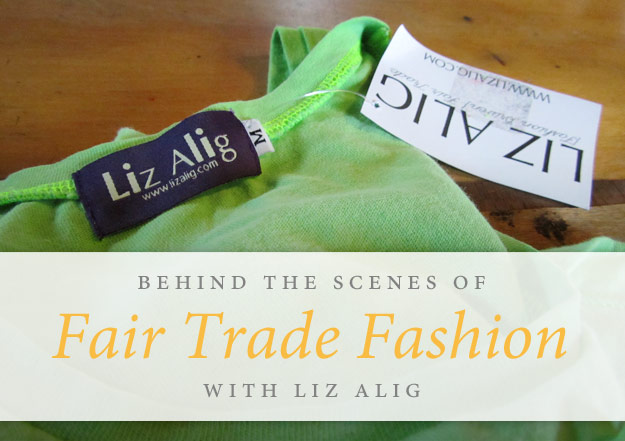
Liz Alig hang tag on a green shirt

In an old farmhouse at an orchard east of Indianapolis is a hidden fashion design studio you’d never know was there. It’s the headquarters of Liz Alig, and a couple of weeks ago founder Elizabeth Roney invited me to visit the studio.

I had never been behind the scenes of any kind of fashion business, let alone a fair trade fashion company, so I came with tons of questions and left with a head full of knowledge (along with a bunch of food I bought at the adjacent country store).

Here are the biggest things I learned:

1. A small team can have a big impact

The first thing I was impressed to learn was that Liz Alig is only a two-person operation. Elizabeth, as designer and operations manager, designs the collections and handles the logistics of communicating with the fair trade producers. Liz Alig is focused on wholesale distribution through boutiques around the country, so Elizabeth has a part-time sales and marketing associate help with that end of things.

It was encouraging to see a small team make such a big impact. Through the work of just two people, Liz Alig provides opportunity to fair trade producers in several developing countries and offers conscious consumers an ethical and fashion-forward clothing option.

2. Design is a small part of the process

Elizabeth told me that the design part of being a fashion designer actually only takes up a fraction of her time. Liz Alig releases two collections a year, fall and spring, and each collection takes about two weeks to design. It takes another two weeks to create the patterns the producers will use to make the orders.

After creating the patterns, Elizabeth will make a sample of each piece and send it to the producer group, or more often, she will send the group the pattern and have them make the sample themselves with a sketch to guide them. “That way they understand more how the piece is assembled,” Elizabeth says.

The rest of Elizabeth’s time is spent working with the producer groups to make and receive the orders, which I learned has its own set of unique challenges.

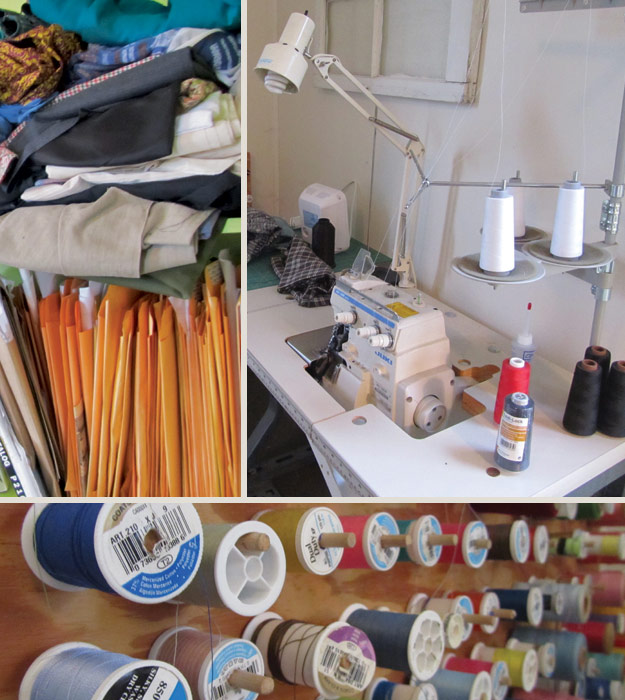
Pile of fabric, sewing machine, spools of thread

Supplies in the design studio: excess fabric, a pattern library, a rainbow of thread colors and Elizabeth’s sewing machine

3. Cultural miscommunication is a common occurrence

Liz Alig works with producer groups in Cambodia, India, Honduras, Haiti and more, and each group has different capabilities and resources. I asked about the language barrier, and Elizabeth said she frequently uses Google Translate to communicate with the different groups.

As well as speaking different languages, the producer groups also have different cultural ideas about what constitutes good fashion. Elizabeth said that many times she’s received a sample or shipment and been surprised by the colors used or the fit of the garments. One group used short zippers that didn’t work with how the garment was supposed to fit. Another group paired multiple bright colors together to make tops that were louder than what would be marketable in the boutiques where Liz Alig is stocked.

Quality can also vary depending on the producer group’s circumstances. The group Liz Alig works with in Haiti doesn’t have electricity, so they produce their garments using a foot-powered treadle sewing machine and by hand-sewing. “We want to give them more orders, but we need to get their quality up,” Elizabeth says.

I was heartened to hear this real story of the impact of fair trade relationships. A group without electricity would never be considered a viable option for fast fashion production, but by forming long-term relationships, fair trade offers this group in Haiti the opportunity to learn by doing, improve their skills and increase their capacity.

Close-up of screen printed design of illustrated people

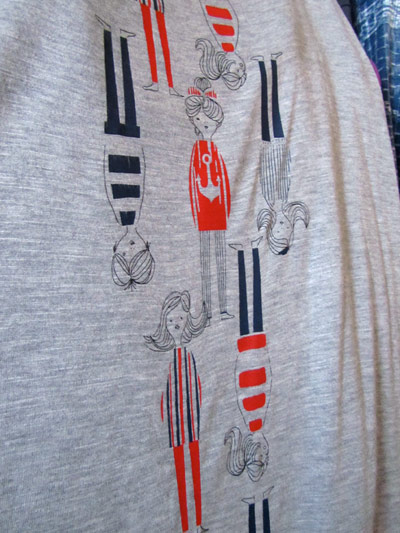
Liz Alig recently introduced screen prints into their designs. Elizabeth’s designs are often inspired by motifs found in the producers’ culture, however this print, her favorite from the spring 2015 collection, was inspired by vintage fabric found at Goodwill.

4. Excess fabric is big business

Liz Alig makes several of their styles using factory excess fabric. I asked if factories are ever surprised when someone calls wanting their waste, and Elizabeth explained that the sale of excess fabric is actually a big industry. “People don’t realize how much waste there is in fabric production,” she said. Excess fabric can occur when the original purchaser orders too much, or if the color or design don’t match what the original purchaser wanted.

Liz Alig gets most of their factory excess fabric from El Salvador or Cambodia. The fabric is sold in warehouses or markets, sometimes in reams and sometimes just in wads. Elizabeth said that she tries to design garments using fabrics she knows will be abundant in the excess markets, such as gray jersey knit.

Rack of dresses, skirts and tops

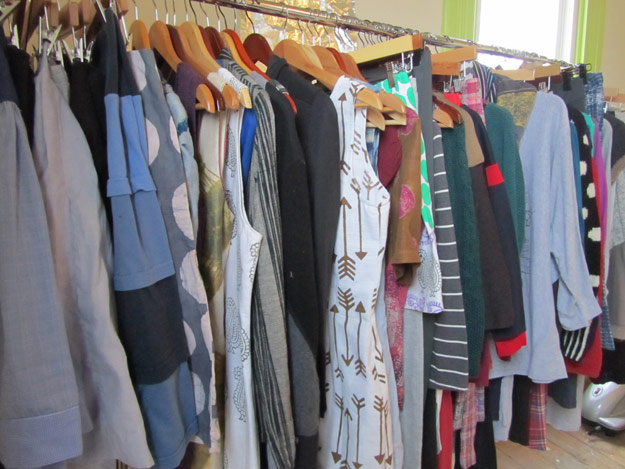
Liz Alig produces small quantities of each garment, around 100-200 pieces, making each piece a truly unique investment. This is a sneak peek of their fall 2015 collection.

It was fascinating to learn the ins and outs of how a fair trade company actually conducts business, and to learn how clothing goes from a designer’s idea to a real garment hanging in your closet. Thanks to Elizabeth for letting me visit and for sharing her knowledge and the Liz Alig story!

Happy Fair Trade Birthday to Me!

In my family, we play it fast and loose when it comes to when birthdays are celebrated. “Within a six week period of the actual date?” we collectively ask. “Close enough!” So I don’t feel behind at all posting a recap of my fair trade birthday gifts only a month after I received them (at the celebration that was two weeks after my actual birthday).

I was my mother’s daughter this year and bought pretty much all of my presents for myself, wrapped them all, then sneakily accepted cash before we all ooohed and aaahed over my selections.

Dress: Liz Alig, made fairly in India

Julia wearing Regina Dress from Liz Alig

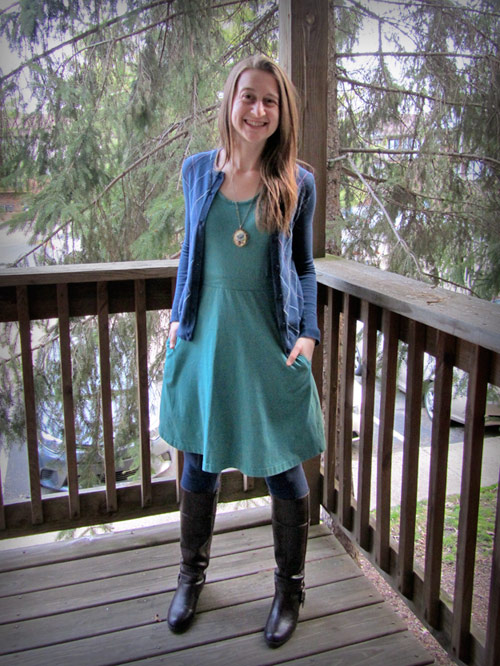
This dress is THE BEST. Pockets, cute color, work-appropriate length, wide straps (it’s sleeveless), and twirly! It’s on wicked sale and Liz Alig makes small quantities so you should probably buy one before they’re all gone. (This is not even a paid endorsement, I just love it this much.)

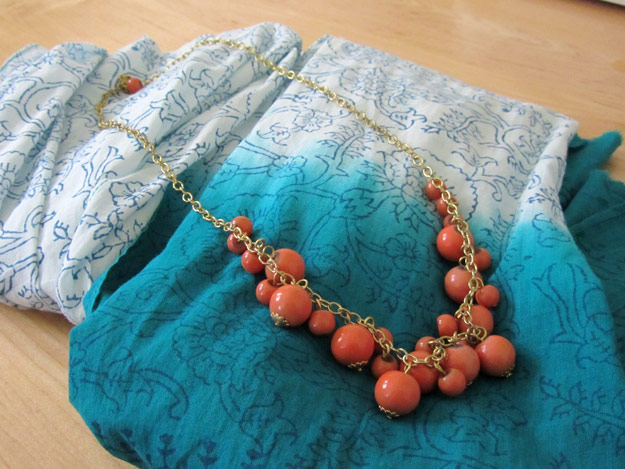
Scarf: Handmade Expressions via Global Gifts, made fairly in India

Necklace: Global Gifts, made fairly in India

Teal-to-white ombre scarf and coral beaded necklace

I’m wearing this scarf right now while I blog!

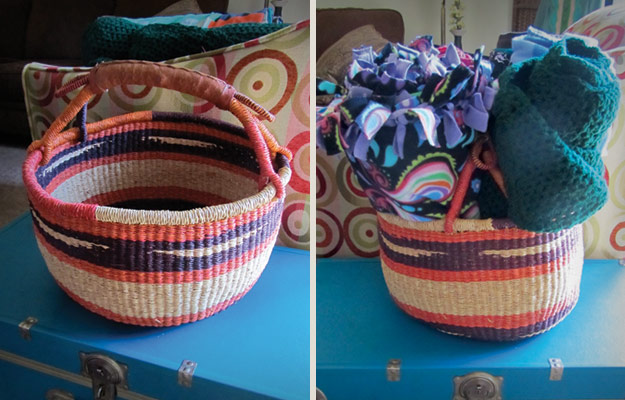
Basket: SERRV via Global Gifts, made fairly in Ghana

Basket with leather handles holding blankets

I had previously been keeping my throw blankets in a plastic tub. Major upgrade. I love the leather handle!

I’ve never had a basket as part of my decor before, but now that I have one, I can see myself becoming a basket lady. They look so much cooler than bins, and there’s no shortage of fair trade basket options, so I could collect them guilt-free! Bwahaha! (I can see the look of horror on my interior decorator sister’s face. Don’t worry, Paige, I don’t need any more storage… for now…)

Have you treated yourself to any new fair trade items lately? Does your family also celebrate birthdays willy-nilly? How many baskets is too many?

Handkerchiefs: An Eco Throwback

Handkerchiefs: An Eco Throwback over photo of two hankies

Handkerchiefs have never really been a thing during my lifetime. My experience with them is pretty much limited to what I’ve seen in historical dramas and Looney Tunes, and my vague understanding of hankies is that they’re non-disposable Kleenex, which seems kind of icky.

However, as people (including me) look to reduce their use of disposable paper products, handkerchiefs are making a comeback. I’m completely in favor of hankies in terms of reducing waste, but given my recent perception of handkerchiefs as basically snot rags, I was skeptical of their practicality and hygiene.

I reached out to Marion Poirier, co-founder and CEO of Montreal-based handkerchief company TSHU, with my questions about how well handkerchiefs can really work on an everyday basis.

Fair for All: What are some of the ways to use a handkerchief?

Marion Poirier: There are many different ways to use a handkerchief and funnily enough, lots of them don’t include blowing or wiping one’s nose!

A handkerchief is a very useful accessory to carry on one at all times and can come in handy in various situations. For instance, there is nothing like a soft, absorbent cotton handkerchief to wipe the sweat off one’s brow after an energetic workout, a bike ride or simply to deal with the heat or excessive sweating due to anxiety.

It’s also a great fix for oily hands after digging into finger food or wiping your child’s cheeks after a snack. Bearded and mustachioed men also find our hankies quite useful after enjoying a beverage! Crying or emotion can also be dealt with in style. Wiping your screen or your glasses with a handkerchief is also appropriate. Some of our clients even groom their pets with the handkerchiefs. And, for practical reasons, there is nothing like a cotton handkerchief to really blow your nose when practicing outdoor winter sports – without ending up with little debris of wet paper-tissues in your pockets.
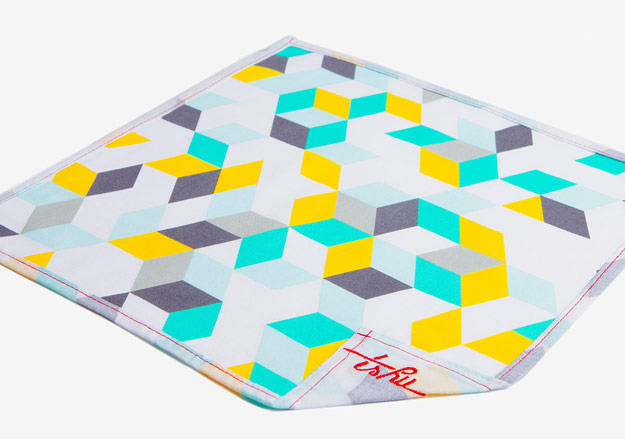
Teal, yellow and gray geometric patterned handkerchief

Are handkerchiefs a practical solution for people with serious nasal congestion, or are they only for those with a dainty nose drip?

Cotton handkerchiefs are definitely appropriate for real use! They are truly fantastic for people who suffer from seasonal allergies or severe colds as their noses are frequently irritated and their skin more sensitive due to excessive blowing. After all, hankies are way softer and more absorbent then regular paper tissues!

However one chooses to use their handkerchief is absolutely personal though. The idea is to try it and see what works for you! If germs are a concern for you, the same rules as using paper tissues apply: wash your hands often! And, for extra precaution, leave your handkerchief in our practical case (Casey) for hygiene and transport, wash both the handkerchief and case often and/or have a few hankies in stock as backup.

Personally, I can go through 5 or 6 two-ply hankies in a day when sick, or one every day or second day when healthy. I’ve seen people wash their hankies once a week though (or even less!) – so everything is a question of comfort and use!

How do you wash a handkerchief? If you use it to blow your nose, does it make your other laundry gross?

Caring for your handkerchief is extremely simple. Simply toss it in the machine with your laundry – cold water preferably, and lay flat or hang to dry. Bonus points for drying in the sun, as the sun naturally fades stains!

As per “contamination” with the rest of your laundry – again it’s a question of comfort. Most parents will agree that their loads have seen worse things than handkerchiefs…
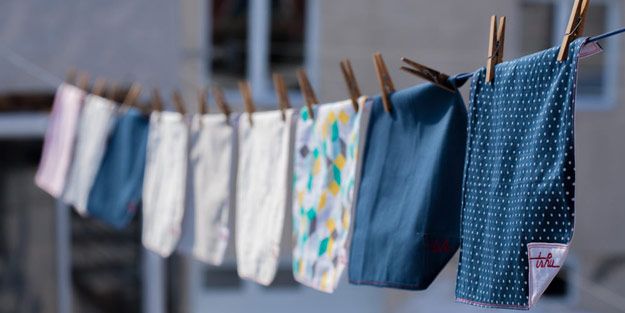
Several handkerchiefs hanging on an outdoor clothesline

How do you handle carrying around a dirty or wet handkerchief all day if you happen to use it early in the day?

How many times you use one handkerchief is really up to you! There are several tricks to get the most out of your hanky. For instance, you can fold it where it’s been used and move on to another section, piece by piece. The surprising thing about cotton handkerchiefs is that it “magically” dries in your pocket. So, the folded part of the hanky you were using this morning may be dry by late afternoon, the water having evaporated! If it’s beyond re-using, you can also use our little case to store your dirty handkerchief. It’s always good to have a backup handkerchief, too. There’s an old saying that I like to quote: “Always carry two handkerchiefs: one for show and one for blow.”

What are the differences between a handkerchief, a pocket square and a cloth napkin?

A handkerchief is usually made out of cotton and is particularly useful when soft and absorbent. A pocket square is often made from more delicate materials such as silk and wool and boast a hand rolled edge, which makes them more decorative than practical. Cloth napkins are usually way larger in size than handkerchiefs or pocket squares and are sometimes made with linen, which is not as soft on the nose.
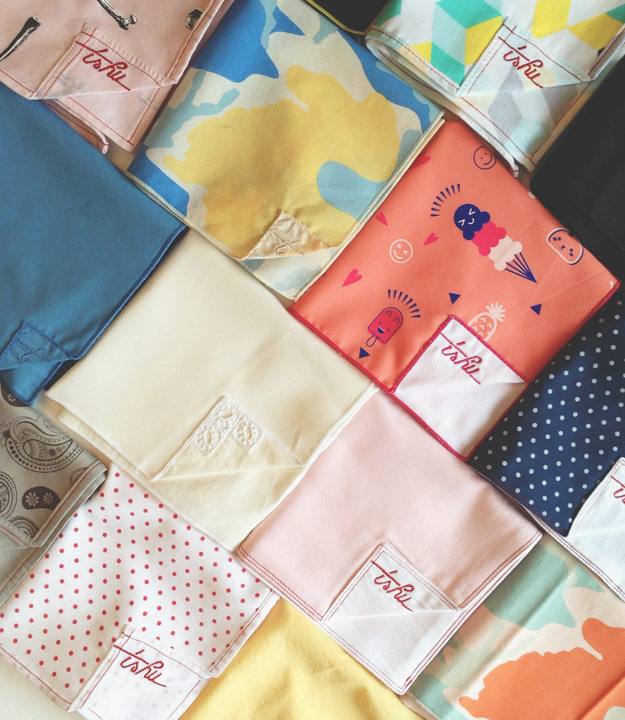
Assortment of colorful handkerchiefs

Do you carry multiple handkerchiefs, or is one usually enough?

Most people carry one or two (one for show, one for blow). I personally like to have at least one on me and I leave some everywhere for emergencies (the car, the office, my laptop case, in the pocket of the jacket I use to run, etc.).

Since starting to use handkerchiefs, how has your life improved?

In many ways! With three kids in the house, we waste considerably less. We’ve also converted to cloth napkins so we basically don’t use paper tissues or towels at all anymore.

Aside from the environmental impact, I’ve absolutely converted to the habit and don’t find the use of paper tissues to be agreeable any more. In comparison, they are way too thin & fragile and not as soft as our cotton handkerchiefs!

I’ve also found that having a TSHU on you is incredibly practical for every day life and use my handkerchiefs to deal with the unexpected frequently. I’m always proud to pull out a beautiful, colourful hanky to save a situation or politely refuse paper napkins at a deli when ordering a sandwich!

___

Marion sent me two TSHU hankies to try out: the one-ply polka-dotted Henri and the two-ply organic Dwight. TSHU handkerchiefs are handmade in Montreal, and the company plants a tree for each handkerchief adopted (TSHU calls each purchase an adoption—cute!).
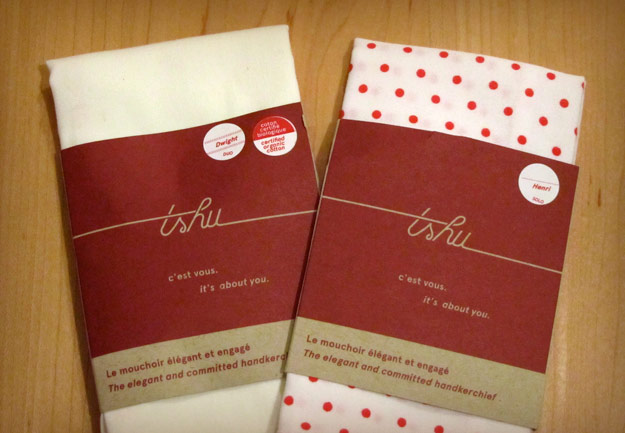
Two TSHU handkerchiefs in cardboard sleeve packaging

As a cloth napkin user, I like the idea of a pseudo-napkin I can take with me anywhere. And with the weather (hopefully) warming up soon, it will be nice to have something to wipe the sweat off my face with after a run or a particularly energetic swing dance. I plan to use the hankies for at least 30 days, then I’ll report back about the practical ins and outs.

Have you ever used a cloth handkerchief? What was your experience?

Disclaimer: TSHU provided me two free handkerchiefs to review in a future post.
Do You Pity Shop?

This post was originally published by Alden Wicker on EcoCult. I read it and said “Yes, this is right on the money!” It’s got an excellent perspective on what it means to shop consciously. Enjoy!

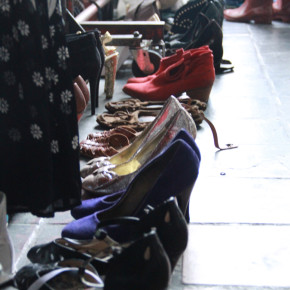
Row of high heels at a vintage marketIt’s a thin, blurry line between shopping consciously, and pity shopping.

I bet if you’re reading this blog, you’ve pity shopped before. That Fair Trade bracelet that you never wear. The ill-fitting charity t-shirt. The expensive vegan handbag that fell apart after four months.

Actually, I think everyone has pity shopped, starting with the first time you bought a sorry looking cupcake at a bake sale that was raising money for a good cause. You ruined your diet, and it didn’t even taste that good, but you wanted to help out. Not a huge deal, really, that one cupcake.

But when you get into the world of sustainable and ethical consumption, pity shopping becomes a big, expensive problem. I’m an enthusiastic proponent of buying as sustainably and ethically as possible. My every purchase is carefully considered, and I spend an inordinate amount of time fretting over how to avoid buying something that is manufactured in China, or made from toxic ingredients. I also get very excited when I see a sustainable fashion item.

Buying an eco-friendly item that you don’t need or want is like smearing peanut butter on a celery stick and thinking the calories balance each other out. News flash: It still possesses calories.

It’s true that you can get a lot of things in the sustainable version, whether it’s made with natural materials, benefits artisans in a developing country, or is just pre-worn. But you can’t get everything that way.

And that is where I trip up. Over the past five years, I have found myself in possession of a whole suitcase worth of pity purchases, including unflattering clothing, poorly constructed accessories, and ineffective beauty products, just because they were sustainable in some way! I would never have paid money for it, had I not been blinded by its ethical qualities. I would have looked at it and thought, “Meh, not for me.” Instead, I plunked down my credit card and brought it home.

Then it sat in my closet, barely used, until I finally faced the truth that I’m just never going to wear it. So I regretfully take it to the consignment store or Goodwill. Even worse is when I get the eco-friendly version, decide I hate it, get rid of it, and wind up getting the conventional version after all!

Don’t be fooled: Pity purchasing is not sustainable. If you purchase a sustainable item, and then never use it, you are being wasteful. That sustainable item is not zero impact, it’s just less impact than the conventional item. It had to be transported to you somehow. Electricity was involved in its manufacture. The fabric is organic, but the zipper is not.

Feeling altruistic about buying an eco-friendly item that you don’t need or want is like smearing peanut butter on a celery stick and thinking the calories balance each other out. Yes, it’s healthier than a peanut butter fudge brownie. But it still possesses calories.

The first guideline for living sustainably is simply consuming less. Buying the sustainable version is way down on the list, after borrowing it, making it, and buying it used.

Don’t get me wrong. I wholeheartedly support labels and brands and companies who are breaking the mold and doing things differently. Especially ones that are making products that are just as beautiful, just as durable, just as effective as their conventional counterparts. That’s what this blog is all about! And on a scale of 1 to wasteful, pity shopping is way better than impulse shopping and buying a bunch of conventional clothing that you don’t want or need.

But an important part of being sustainable is knowing yourself, your wants, your needs, and your style. It’s saying, “I love what you’re doing, but it’s not right for me.” (Which I do all the time.) It’s looking past the eco-friendly label and thinking about whether you actually will use it.

One great trick I use is to ask myself the question: “Would I buy this ‘eco-friendly’ item if I didn’t care about sustainability?” If the answer is yes, then ding! ding! ding! You have found a winner. Oftentimes, though, you’ll realize that it’s not very attractive, or well-made, or tasty. In that case, I give you permission to not buy it.

I even give you permission to buy the conventional version if:

  1. You’ve done your research
  2. You haven’t found a viable alternative, and
  3. You’re going to love it and use it for years to come.

That still counts as conscious consumerism, so don’t feel guilty about it! Now, if you’ll excuse me, I have some eco-friendly clothing to take to the consignment store.

Have you ever pity shopped? Tell me about it in the comments! 

___

Alden Wicker is editor-in-chief of EcoCult, a blog covering sustainable and eco-friendly living in NYC and beyond.