Apps & Online Tools for Ethical Shopping

ethical-shopping-apps-header

As a companion to my recent Beginner’s Guide to Ethical Shopping, I wanted to share this post by Kasi Martin of The Peahen about apps and online tools to help make ethical shopping easier. Kasi is a devotee of ethical fashion and writes about brands, designers, issues and trends at the intersection of style and standards.

Ethical designers catch a lot of flak for not being fashion-forward enough. When I bring up ethical fashion to a friend or outsider I usually get a skeptical eyebrow raise. Before I make a style recommendation, I’m forced to brandish it with an ethical disclaimer. “Oh, you’re on the hunt for a new brand of denim? There’s a new organic hemp denim brand I discovered –  but you know – it’s all that hippy-dippy shit I love.”

I want to stop this justification madness. Ethical should be cool. It should generate just as much excitement for shoppers as a Zara haul…even if it’s more expensive.

Zara copies trends as they trickle down from the runway. Ethical fashion creates trends that travel up to the runway. This is ethical fashion’s redeeming quality that makes it appealing to the masses. Issues like greenwashing or human rights may be entirely off your radar  [I will eventually convert you] – but ethical fashion gives you the ability to shop according to your terms. Because trends start from the bottom, you have power to pause for a reality check and confidently say – “Hey, I’m not okay paying 300 bucks for a pair of knock-off Rockstud pumps because Valentino said they were cool three seasons ago.” Ethical fashion makes you a rebel WITH a cause.

Still, with all this power of choice in front of you, ethical brands are disparate and hard to discover. You could click on a cathy Instagam one second, and the next it’s flying off your radar into the social media abyss. What sticks? How do you find which brands are right for you?

Well, stop by here for suggestions. My ‘elsewhere’ list is a good place to start. But there are also a few online tools that will help you reign in the option overload, discover what’s new and audit what you already love.

No excuses for not buying ethically now, this is shopping empowerment at your fingertips.

For the mobile shopper

Orange Harp – A mobile app that puts artisans and brands in one place. Checkout Lovehewn jewelry. And it’s not just fashion! Buy through the platform to donate a bit extra to fight human trafficking.

Orange Harp website

Continue reading on The Peahen >>

Product Review: Fair Trade Crossbody Purse

When I attended the Fair Trade Federation conference back in the spring of 2014, one of the booths that caught my attention was Manos Zapotecas. Their bags are a gorgeous combination of native textiles and leather and immediately made me want to go on a very sophisticated hike over desert steppes. I walked past their booth again and again just to ogle them.

Recently I got in touch with Hannah Aronowitz of Manos Zapotecas to learn more about the process of making their beautiful bags, and she also lent me their Luisa crossbody purse to review.
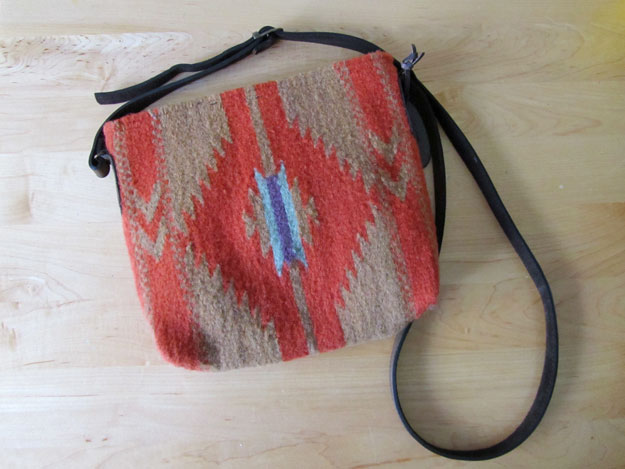
Coral and beige fair trade crossbody purse

The Luisa purse in Adobe & Earth

Fair for All: Describe the process of making a Manos Zapotecas bag.

Hannah Aronowitz: All Manos Zapotecas bags are handmade according to time-honored traditions by Zapotec weavers in Teotitlán del Valle, Oaxaca, Mexico.

Our weavers are also the designers of the beautiful patterns found on all of our bags. Many are the traditional Zapotec designs while others are modern interpretations of their tribal patterns or even abstract expressions. Our Style Coordinator works closely with the weavers to discuss colors for seasonal lines and each designer gets a chance to draw up their designs on paper, and then produce a sample. We offer feedback throughout the design process and choose the best samples to be made into Manos Zapotecas bags.

Manos Zapotecas weavers use bi-peddle treadle looms and preparing the loom to weave is an intensive process unto itself. A completed woven piece is called a tapete, or woolen tapestry. Most traditionally used as rugs, Manos Zapotecas utilizes these small tapetes to make into bags.

The next step is to sew the tapetes into the shape of the bag it will become. It is then sent to a dedicated leatherworker in a nearby town who adds the leather handles and base, siding or fringe, depending on the model. The bag is returned to the weaver so they can sew in the zipper and lining and make sure the bag is in perfect condition to ship out.

This video goes through this process as explained by two of our weavers.
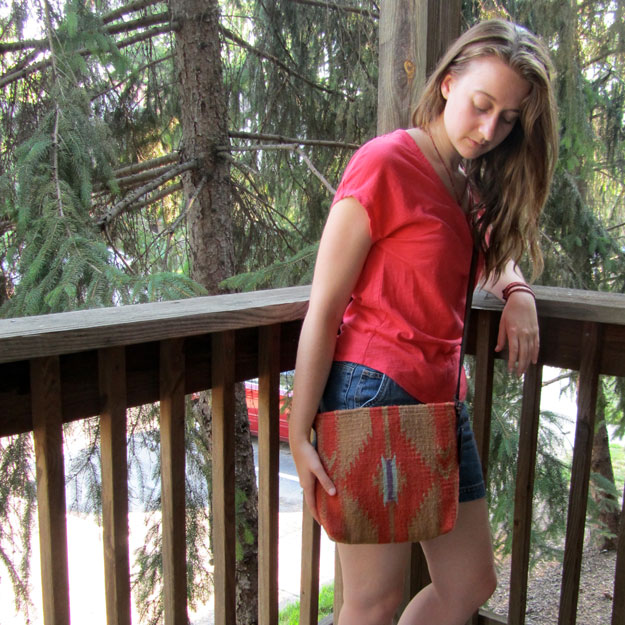
Julia wearing fair trade crossbody purse

How did Manos Zapotecas get connected with the artisans who produce the bags? Why did you choose to work in the Zapotec community specifically?

In 2009, Manos Zapotecas founder Shelly Tennyson was volunteering with a microfinance non-profit in the small Zapotec village of Teotitlán del Valle in the state of Oaxaca, Mexico. She was offering business classes to the female loan recipients, many of who were weavers. Shelley realized that no matter how exquisite the product, or how savvy their business skills, without buyers, these hardworking and skilled artisans were not being able to support themselves or their families adequately.

Three years later, Manos Zapotecas was borne out of a belief that commerce can, and should, change lives for the better. What began as a wild idea to sell Zapotec bags globally, in a village where most of the women hadn’t even left the state, has grown into a fair trade fashion brand that is run by a team of five women in the US and supports over 50 weavers in Oaxaca. The purpose of Manos Zapotecas is to perpetuate the beautiful traditions and improve the lives of the Zapotec artisans by connecting them with socially conscious consumers around the globe.
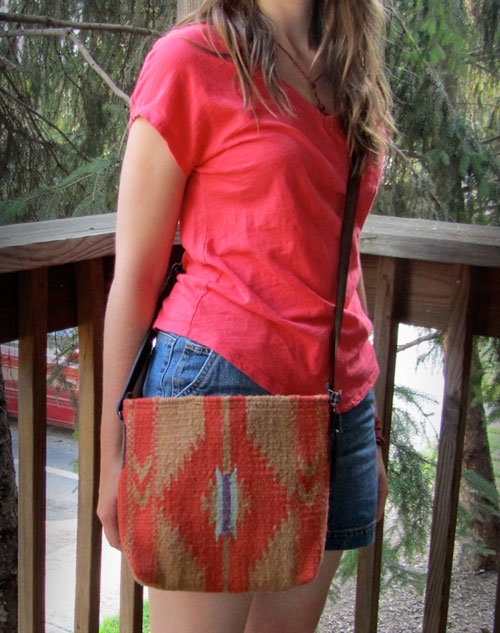
Julia wearing fair trade crossbody purse

Cropped to eliminate major RBF in this photo

Can you describe the natural dyes that are used in some of the bags?

Some weaving families still use natural dyes, the knowledge of which is passed down from generation to generation. These dyes are concocted from a variety of plant, animal and mineral sources, such as nuts and flowers, cochineal bugs and indigo. Other families prefer the more vivid colors produced by aniline dyes. For either method, the yarn is boiled with the dye, a fixative (such as lime juice) is added and then the skeins of colored yarn are hung to dry in the sun.

Where does the wool for the bags come from, and where are the metal and leather components of the bags produced? Do these producers follow humane and sustainable practices?

The 100% sheep’s wool comes from Puebla, Mexico, the leather from Leon, Mexico and the hardware from Mexico City. Because we don’t have the capability to visit these sources at the moment we don’t want to make any claims in terms of sustainability. Our weavers and tanners have built strong relationships with their suppliers, some have been working together for the last 30 years. We at MZ place high value on those current relationships and for now the artisans continue to source their own supplies.

I love that the meanings behind the traditional Zapotec designs are on the Manos Zapotecas website. Which pattern is your favorite and why?
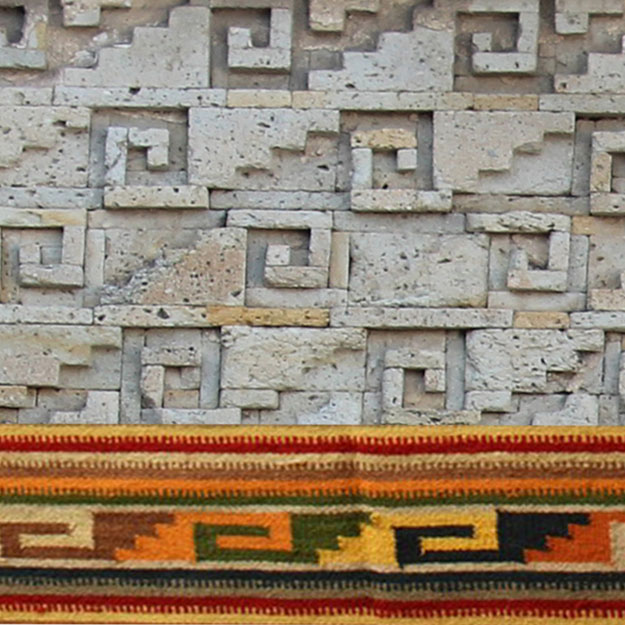
Grecas pattern

Grecas pattern

This pattern, called grecas, mimics the mosaic fretwork that is found spectacularly preserved at the ancient Zapotec religious center of Mitla. This geometric spiral represents the life cycle, according to the Zapotec worldview. Each step represents a stage of life, beginning at birth, moving on through youth, maturity and then decay, followed by the other world. It is a powerful symbol that is often repeated in MZ bags.

Is Manos Zapotecas a member of any fair trade organizations?

Yes! We are a proud member of the Fair Trade Federation, which means that we abide by a set of guiding principles which ensures that the artisans are getting the fair pay, support and safe work conditions they deserve. Making these kinds of business decisions comes second nature to a company that values the humans behind the products higher than the profits themselves. We see business as a means to improve lives, not just to line pockets.

What’s next for Manos Zapotecas?

We are very excited to launch our Fall 2015 Collection this September, which is comprised of about 25 new bags in a perfect fall palette. Also, we are looking forward to adding men’s products to our line in the coming year.
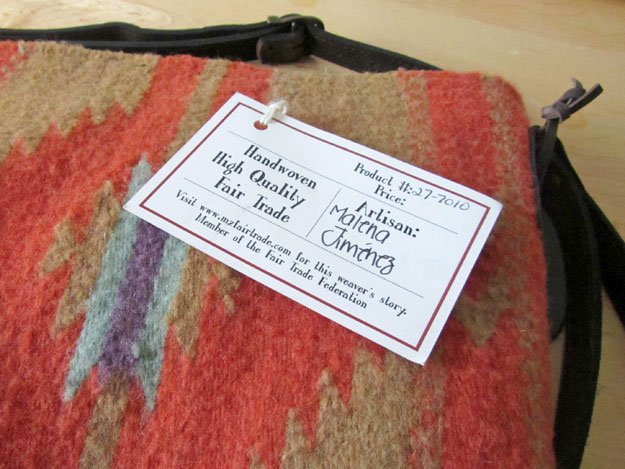
Tag on fair trade crossbody purse with name of artisan

My favorite thing about this purse was the hand-signed tag from the artisan who produced it. After watching videos about the process on the Manos Zapotecas website, I was inspired by the craft and creativity of the weavers and I’m so glad they are able to preserve their tradition. Scrolling through their online store is like perusing a gallery of abstract art.

The bag is a great size for everyday and has a convenient adjustable strap. It’s biggest downside is that there’s only one interior pocket. The lining could also be made of sturdier fabric to help the pocket hold its shape.

While I like the Adobe & Earth pattern on the bag I tried, if I was going to order a bag to keep permanently, I would choose one of the more colorful made-to-order designs like the Sunburst Sky or Dark Arrows. In my dream world I would also have the Mitla duffel bag.

Thanks to Hannah for giving us a behind-the-scenes look at the Manos Zapotecas process!

Disclosure: Manos Zapotecas temporarily lent me the Luisa purse to review. All opinions are my own.
The Beginner’s Guide to Ethical Shopping

A friend recently asked me how to get started shopping ethically: How can you tell if a brand is ethical? Where do you go? What do you look for? Looking back at my own process of becoming a more ethical consumer, I came up with some basic strategies you can use to gauge the ethics of a brand and ultimately decide if you want to support them.

Beginner's Guide to Ethical Shopping infographic

1. Decide what’s important to you

Do you care primarily about workers’ rights? The environment? Both? Use your personal priorities to guide your search. No brand is perfect, so it helps to know your must-haves as well as areas you would be comfortable compromising.

When I first started changing my shopping habits, working conditions and fair wages were my primary criteria. Human rights are still my main focus, but as I continue to learn more about how the environment is intertwined with human rights, lower-impact manufacturing processes and materials are now important to me as well.

2. See what the brand says about itself

I’ve found this in many different locations on brand websites. Good places to start are the About section, the FAQ page, anything labeled “Who We Are” or “Our Story,” or specific sections about sustainability or social responsibility. If a brand doesn’t mention a commitment to ethical or sustainable practices in any of these places, it’s a good bet that those things aren’t important to them. The more detailed and transparent a brand is about its practices, the better.

Note that most big mainstream brands have a lot of social responsibility- and sustainability-related content on their websites. Some are making real, positive progress, but I recommend not taking major brands solely at their word. Run a few strategic Google searches (see #4 below) to see if their media coverage lines up with their claims.

3. Check for certifications or memberships

There are many organizations that either certify ethical brands or products, or offer membership to brands who commit to following a certain set of principles. (Here is a rundown of some of the most well-known ethical certifications.) If a brand is certified by or a member of one of these organizations, the brand may post the organization’s logo on their website. Check in the About section or footer, or the brand may have a separate page called “Partners” or something similar.

Not all ethical companies are necessarily certified by or members of an ethical organization. However, looking for memberships and certifications is a great place to start if you’re overwhelmed by researching individual brands. Most organizations have directories of their members so you can easily find out who has met their standards. Seeing one of these logos can be a quick confirmation that a brand has met a certain baseline of ethical or sustainable practices.

4. Google it

If the brand you’re looking at doesn’t have any ethical certifications or memberships, try googling it alongside a few different words to see if people are writing about the brand in a positive or negative way. Here are some ideas:

  • [brand name] sustainable (i.e. “H&M sustainable”)
  • [brand name] ethical
  • [brand name] sweatshop
  • [brand name] living wage
  • [brand name] labor
  • [brand name] workers
  • [brand name] [criteria that’s most important to you]

Look for articles that feature some investigation or analysis, rather than just press releases written by the brand itself. You may also be able to find if the brand is recommended as ethical or sustainable in a directory or shopping guide focused on those characteristics.

5. Ask for more information

If you can’t find the information you’re looking for on the brand’s website or through independent media coverage, send them an email and ask! You may not receive a response, but sometimes you will, and often the tone and depth of that response will be a clear indicator of whether the brand is truly committed to the values you care about or if they’re just using green catchphrases.

6. Give yourself time

Obviously, following all of these steps every time you need to buy something is a lot of work. Give yourself time to become familiar with certifications and what companies tend to say about themselves. Find a few brands you feel confident about and start there.

Your purchases may not be perfect at first. When I first began shopping consciously, I bought things from companies I probably wouldn’t choose to support now. Likewise, there are now companies I probably would support now that I wouldn’t have before, because I’ve been able to see their progress and commitment over time.

For an abundance of information and links about ethical shopping, check out our Resources page.

A Primer on Product Stewardship

Warning: It’s about to get a little technical up in here, but stick with me, it’s worth it.

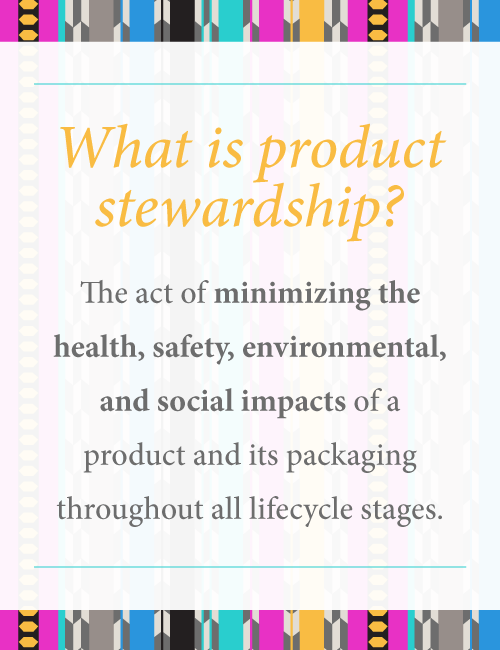
Product stewardship is a concept I only recently became familiar with, but it kind of blew my mind. In a nutshell, this concept aims to address the question of who is responsible for the impacts of a product throughout its life cycle. According to the Product Stewardship Institute (PSI):

Product stewardship is the act of minimizing the health, safety, environmental, and social impacts of a product and its packaging throughout all lifecycle stages, while also maximizing economic benefits. The manufacturer, or producer, of the product has the greatest ability to minimize adverse impacts, but other stakeholders, such as suppliers, retailers, and consumers, also play a role. Stewardship can be either voluntary or required by law.

Basically, product stewardship puts the onus on manufacturers to take greater responsibility for the items they are putting out into the world. To me this feels like a radically different mindset from mainstream industry, but it makes a ton of sense. Consumers don’t have the capacity to sustainably handle the end-of-life of today’s increasingly complex products, and the public sector shouldn’t be responsible for cleaning up messes that can be avoided with more intelligent product design or end-of-life planning from the manufacturers. I agree with PSI that ultimately a team effort is needed, but I appreciate the emphasis on manufacturers not being able to wash their hands of the things they produce once they’re out the door.

In fact, PSI also defines a sub-concept specifically related to manufacturer responsibility:

Extended producer responsibility (EPR) is a mandatory type of product stewardship that includes, at a minimum, the requirement that the manufacturer’s responsibility for its product extends to post-consumer management of that product and its packaging. There are two related features of EPR policy: (1) shifting financial and management responsibility, with government oversight, upstream to the manufacturer and away from the public sector; and (2) providing incentives to manufacturers to incorporate environmental considerations into the design of their products and packaging.

Whereas product stewardship is a general philosophy, extended producer responsibility appears to be a policy-specific initiative with the goal of establishing EPR regulations for various industries.

Definition of product stewardship

The linear economy vs. the circular economy

The Product Stewardship Society frames the impact of product stewardship this way: “If the ‘linear economy’ is characterized by a ‘Take, Make, Use, Dispose’ philosophy, then the circular economy is an alternate concept, aimed at keeping products and their materials in play for longer periods of time.”

John Ortiz, a product stewardship manager at Hewlett-Packard, says the design of products in the circular economy may include “upgradeability, refurbishment, or empowering customers with service options.” This is a refreshing change from industry’s current focus on planned obsolescence and turning durable products into disposable ones.

Examples of product stewardship

End-of-life management is especially critical for products that can be hazardous when disposed of improperly. One example of product stewardship success is the paint industry, which has launched a take-back program in several states to safely handle the recycling and disposal of household paint. The pharmaceutical industry is currently under pressure to implement a more comprehensive drug take-back program to prevent the social and environmental hazards of unused or expired medications.

Various brands from Samsung to The North Face have implemented take-back programs with varying scopes/ease of access:

I feel like we’re at a revolutionary point similar to the stage in the Industrial Revolution when people began mobilizing for basic labor rights. We realized then that you can’t treat people as if they are disposable, and now we’re realizing that you ultimately can’t treat materials as if they are disposable either.

If the circular economy gains traction, it’s going to look totally different than today’s economy—imagine being able to repair products, pass them along to someone else in good condition, or turn them back in for safe disposal or reliable recycling. Instead of constantly chucking our goods to upgrade to the latest minor enhancement or trend, we can focus on enjoying the value that long-lasting products add to our lives. And for items that are truly consumable by nature, like paint or medication, we can dispose of them safely and confidently.

Do any of your favorite brands have take-back or recycling programs not listed above? Let me know about them in the comments!

The Search for Ethical Swimwear

Guys, I had every intention of writing a “Top 5 Ethical Swimwear Picks” post with the latest and greatest ethical swimsuit brands. It’s been a couple of years since I’ve shopped for a new swimsuit, and with the expansion the ethical fashion scene has undergone in the last few years, I figured there would surely be plenty of new options to investigate and at least one that worked for my style and budget.

Alas, the swimwear arena appears to be lagging behind the rest of the ethical fashion industry—in fact, the ethical swimwear industry may even be shrinking. I contacted Faerie’s Dance, an online store that carries several sustainable swimwear styles, and they informed me that all three of their swimwear suppliers have gone out of business in the last two years.

There are still some options out there, despite there not being as many as I’d hoped. Here are some of my favorites that I found:

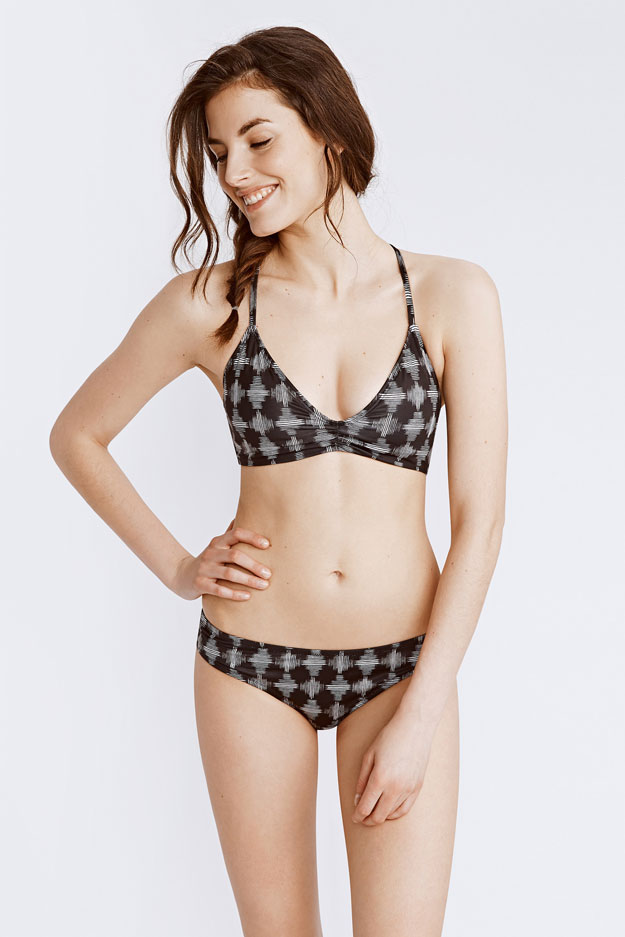
Faherty graphic weave bikini

Graphic Weave Bikini from Faherty (top, bottom)

  • Made in the USA
  • Eco-friendly fabric is a blend of recycled polyester from plastic bottles and Lycra

Latte Drops Reversible Bikini from FINCH

String Theory Reversible Bikini from FINCH (top, bottom)

  • FINCH maintains close relationships with their factories in China and Indonesia. Based in Shanghai, they are able to visit their local suppliers frequently.
  • Do not impose rush deadlines on suppliers or force a “race to the bottom” for costs
  • FINCH aims to design a timeless product that can be worn for many years. They repeat their core prints year after year, which reduces pressure on suppliers and allows consumers to replace one half of a bikini instead of both pieces, if only one is worn out.
  • Fabric is made from certified 87% Repreve brand recycled PET (post-consumer use bottles) and 13% Spandex

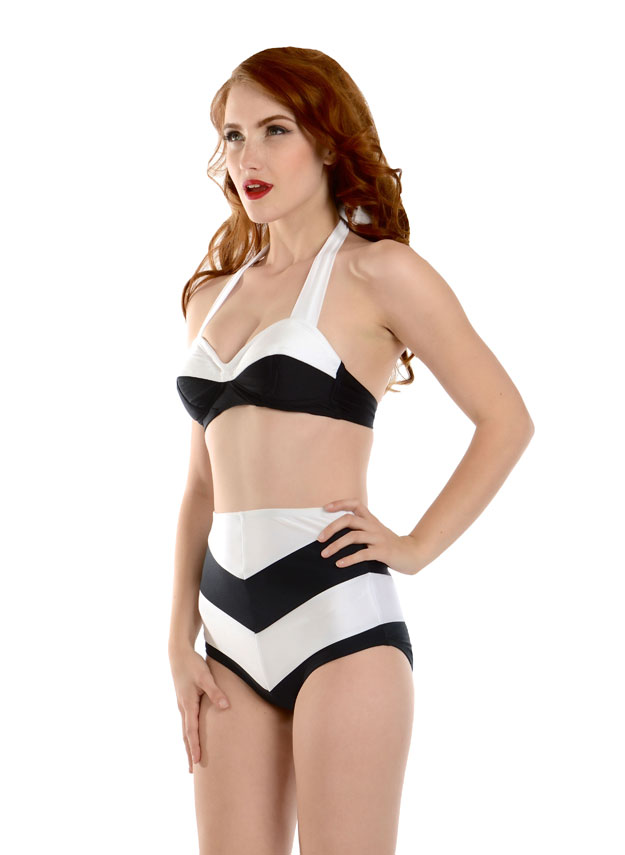
Black and white bikini from Fables by Barrie

Yvette Swim Bra and Amelia Bikini Bottom from Fables by Barrie

  • Made in San Diego, CA
  • From their about page: “We take pride in being most definitely sweatshop-free.”

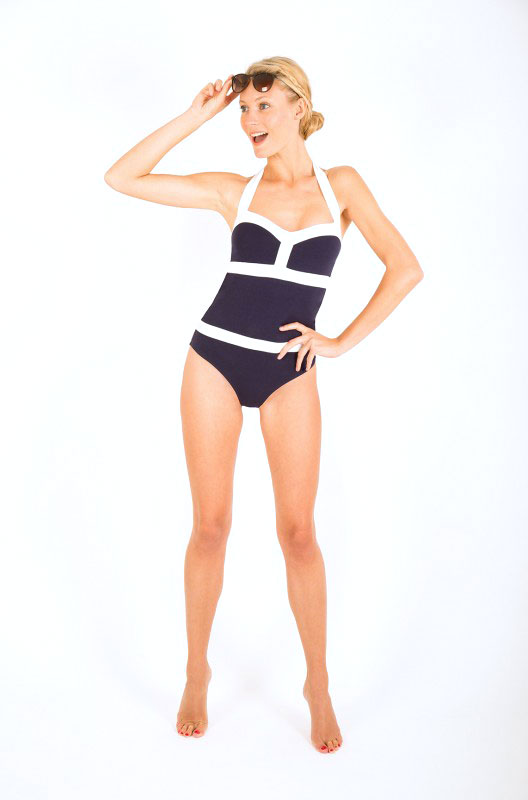
Mathilde one-piece swimsuit from LUZ

Mathilde One-Piece from LUZ

  • Fabrics is 93% GOTS-certified organic cotton and 7% elastane
  • Products are made in accordance with fair trade principles (fair salary, up-front payment, realistic and defined work schedule, long-term business relationship)

If you noticed a trend in my color choices (except for Mathilde—it’s navy!), I looked primarily for black designs so I could match them with the plain black bikini bottoms I already have.

For more ethical swimwear options, check out these posts:

Suit Yourself – Ethical Swimwear – Birds of a Thread
2015 Sustainable Swimwear Guide – Ecohabitude
Ethical and Adorable Swimwear  – Purse & Clutch
Guide to Ethical Swimwear – The Note Passer

Has anyone ever tried a cotton swimsuit before? The designs and colors in the entire LUZ collection are gorgeous. They make me almost want to roll the dice and try one…

Product Review: Karina Dress from Synergy Organic Clothing

For as long as I can remember, my mom and aunts have had a big vendetta against the color coral. “It’s not even a real color,” they would say, scoffing at any coral-colored garments on the rack at Nordstrom (our frequent shopping destination in my childhood). It’s taken me years to overcome their anti-coral propaganda, but I’ve been fully embracing the color lately and let me tell you, it feels good.

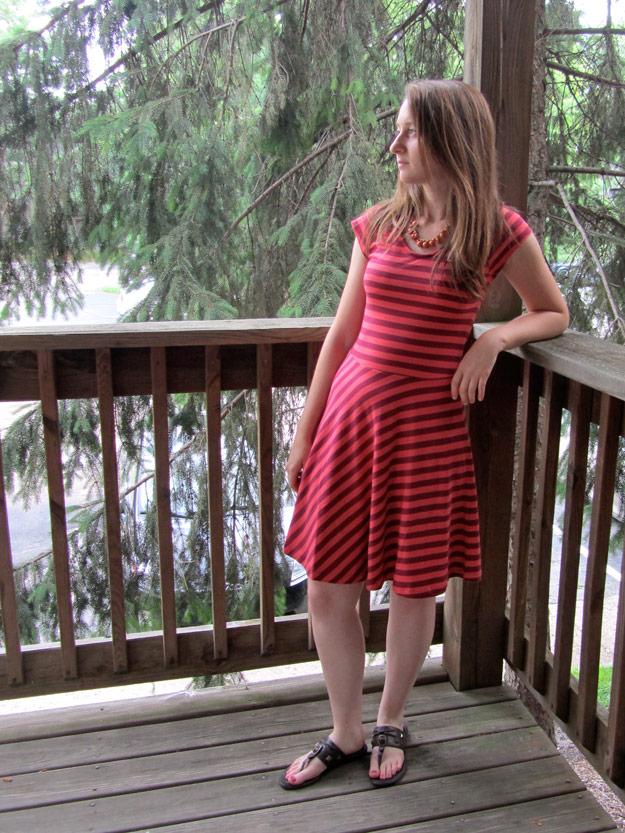
I recently received the Karina dress from Synergy Organic Clothing to try out, and I was drawn to it first for its coral and reddish-purplish stripes. It’s like if Beetlejuice was a skater girl from a tropical climate, which I mean as a compliment.

Front view of Karina Dress from Synergy Organic Clothing

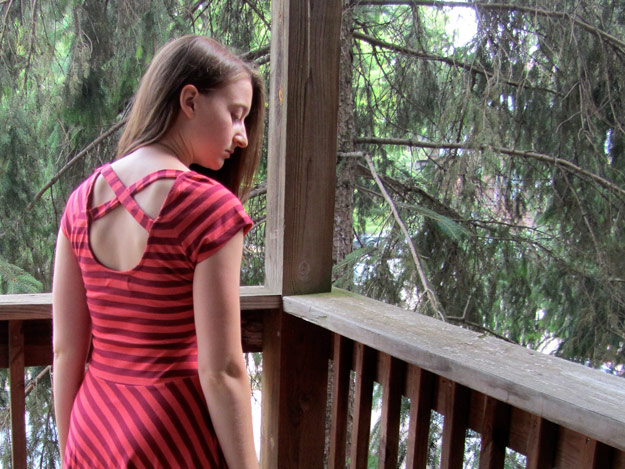
The swingy skirt and scooped back also appealed to me, and as always, I went for sleeves and a not-too-short length in case I want to try to wear it to work. The cotton fabric is wicked comfortable.

Back view of Karina Dress from Synergy Organic Clothing

The dress fit perfectly out of the box except for the straps that cross the scooped back. If I was slouching, the straps were about right, but if I stood up straight, they were kind of loose and droopy. I like to err on the side of good posture (which I attempt to have occasionally), so I shortened the straps a little with a few quick stitches and now they fit whether I’m slouching or not.

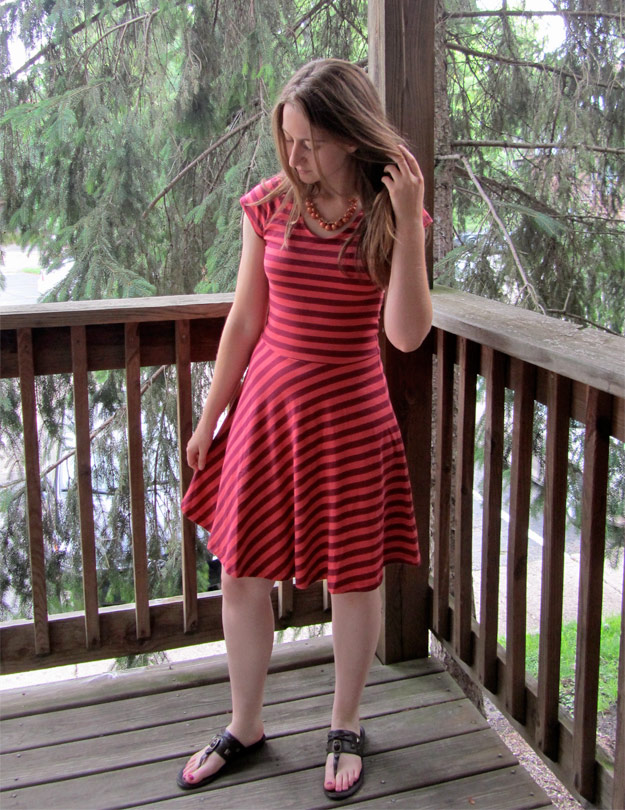
Karina Dress from Synergy Organic Clothing

The one thing I wish this dress had was pockets. I keep putting my hands on my hips expecting pockets to be there and I’m disappointed every time. However, I love the real-world-helpful description of the dress on the Synergy website. How many online stores have notes like “Scoop neck in front and back, high enough that you can still wear a bra”? Thank you for knowing what I actually care about!

Karina Dress from Synergy Organic Clothing

Socializing at my imaginary barbecue!

In terms of ethics, this dress is firing on all cylinders. The fabric is 100% GOTS-certified organic cotton dyed with low-impact dyes (meaning it meets certain requirements in regard to toxicity and biodegradability), and the dress is sewn in a fair trade operation in Nepal. Synergy is also a Green America Certified Gold business. Learn more about Synergy’s ethics.

I’m looking forward to wearing this dress to cookouts and swing dances and for general frolicking. Does your family hate on a particular color? Can you even imagine not liking coral? (I can’t anymore.)

P.S. Synergy is currently running a summer sale: Get 20% off your clothing order with code summer20.

Disclosure: Synergy Organic Clothing provided this dress for free for me to review. All opinions are my own.

Find Pretty Much Anything Ethically with These Directories

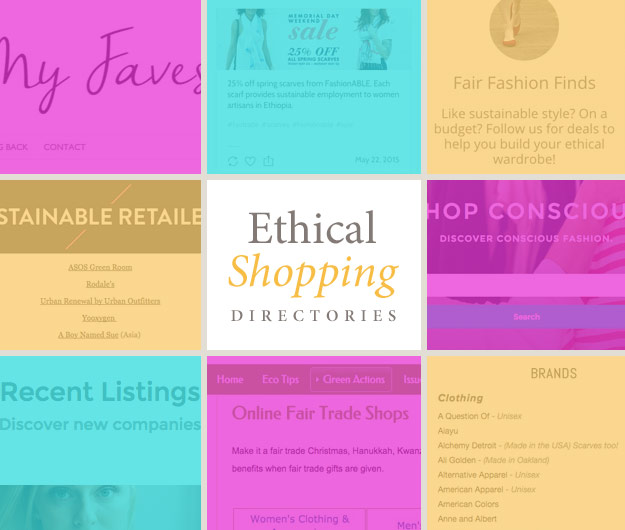
Ethical Shopping Directories header

Once upon a time, the Fair for All Guide was the Fair for All Shopping Guide, and it was our dream to create an all-encompassing directory of ethical products and brands and to be a one-stop shop for anyone who wanted to make any kind of ethical purchase.

Our plan ended up being a little bigger than our britches, and we retired our directory in 2014. However, there are many other blogs and websites that feature ethical shopping directories, which we share on our Resources page. We recently added the following new directories to the list—check them out to help you find what you’re looking for!

Note that each directory is maintained according to its owner’s ethical criteria, which may differ from Fair for All’s. Be sure to look at the ethics of any specific company before purchasing.

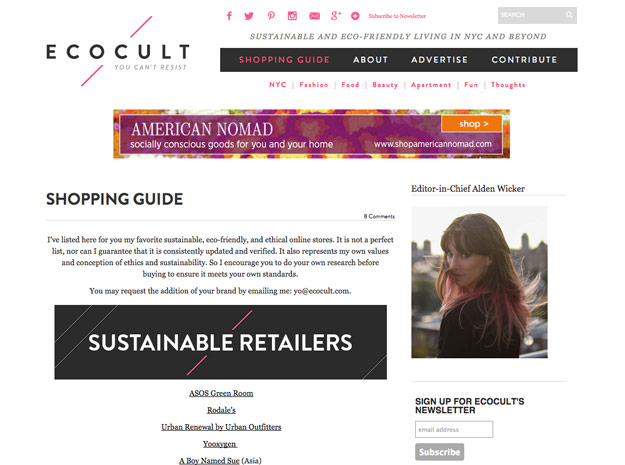
EcoCult screenshot

EcoCult Shopping Guide

Includes several categories like clothing, jewelry, accessories, lingerie, men’s, beauty, and home.

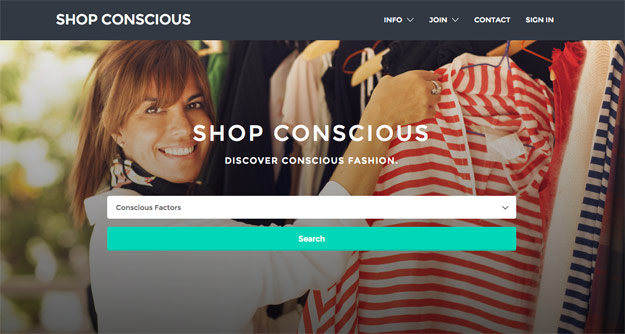
Shop Conscious screenshot

Shop Conscious

Shop Conscious focuses on fashion brands and enables you to filter by a plethora of conscious factors including Handmade, Fair Trade, Empowering Women, Recycled Materials, Made in the USA, Vegan and more.

Top 10 Fashionable Fair Trade sites screenshot

Top 10 List of Fashionable Fair Trade Companies

Looking for some chic wearables? This top ten list (actually featuring twelve items!) is for you.

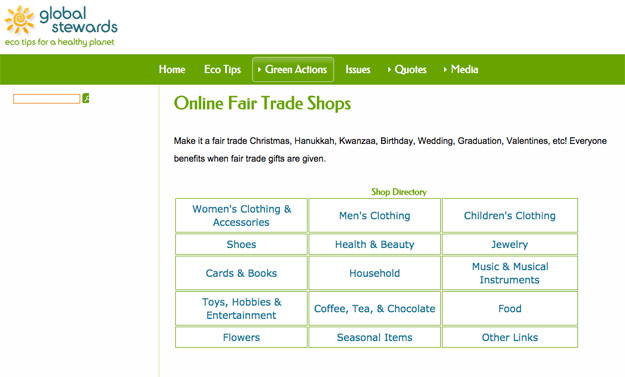
Global Stewards screenshot

Global Stewards Directory of Online Fair Trade Shops

Lists fair trade websites only. Categories include the usual plus some more obscure ones like toys/hobbies/entertainment, seasonal items, food, and flowers.

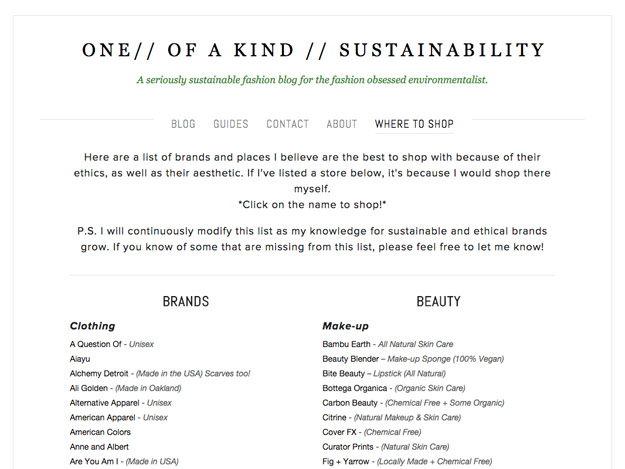
One of a Kind Sustainability screenshot

One of a Kind Sustainability Where to Shop Directory

Focuses on environmental sustainability rather than human rights, but several brands cover both bases. Includes categories for clothing, shoes, accessories, beauty and home, plus helpful notes about the product style or ethics/sustainability of each link.

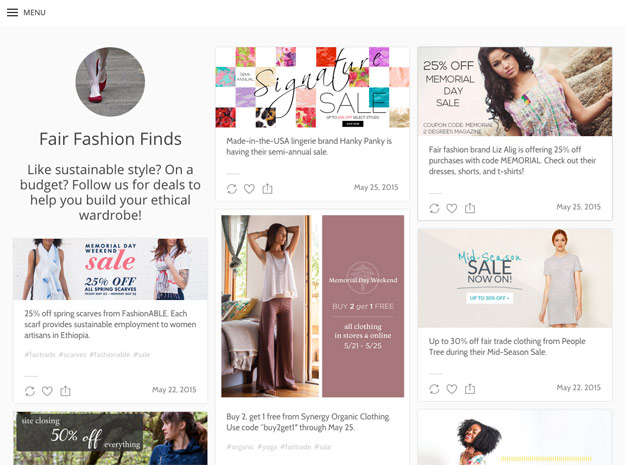
Fair Fashion Finds screenshot

Fair Fashion Finds

This Tumblr shares sales, discounts and deals from ethical shopping websites.

With the addition of these links, our Resources page is becoming a kind of mega Frankendirectory, which is pretty wicked if you ask me. If you have a favorite ethical shopping directory that isn’t listed, tell us about it and we’ll add it to the monster!