A Minimal Shoe Wardrobe

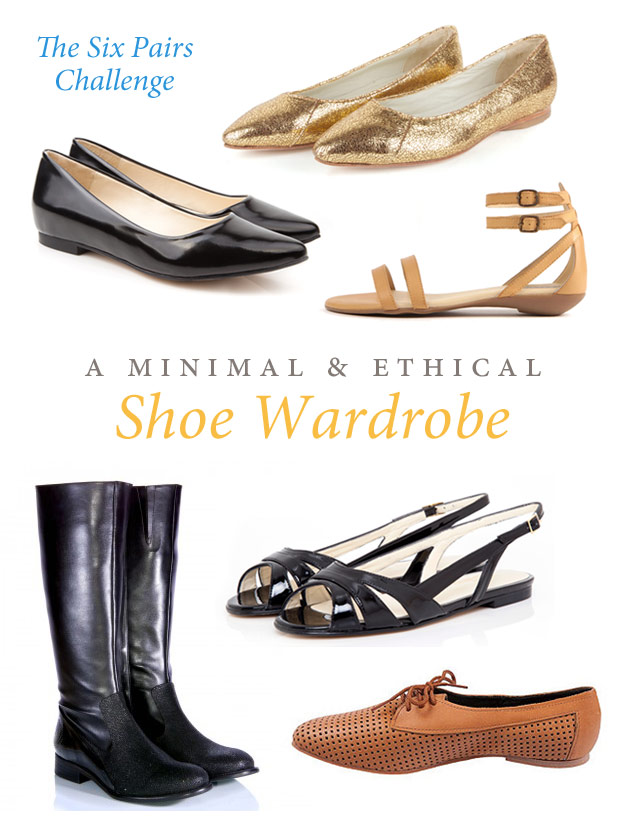
I’ve been thinking a lot about shoes lately. This is not really anything new, as shoes are fabulous and I am in no way immune to their wiles. But ever since reading this post about wardrobe staples on The Note Passer, I’ve been pondering what my own essentials would be, specifically in the footwear arena. I wondered, would it be possible to have a complete shoe wardrobe with only six pairs of shoes? (I have 30+ pairs currently.)

As I attempted to meet this challenge, I came up with a few non-negotiable characteristics to make sure my selections would be versatile, comfortable, and actually fit into my life.

  • I don’t do heels, so every style had to be flat.
  • I work in an office with a fairly stringent dress code, so most of my selections had to be work-appropriate.
  • I eliminated all suede shoes because I want shoes that are worry-free in all kinds of weather, including snow and rain. Its fuzzy surface is also inherently more casual, which makes it hard to dress up.
  • I decided not to include specialty shoes like snow boots, running shoes or dancing shoes. Those are harder to find ethically-made, so my strategy there is to buy quality shoes that are made to last, or buy secondhand.

After some serious sole searching (see what I did there??), I came up with the following selections for my dream minimal shoe wardrobe.

Minimal Ethical Shoe Wardrobe

I organized my search by thinking about four specific types of shoe that I felt needed to be represented no matter what. Once I had my options for each type, it was just a matter of mixing them together to make a balanced wardrobe.

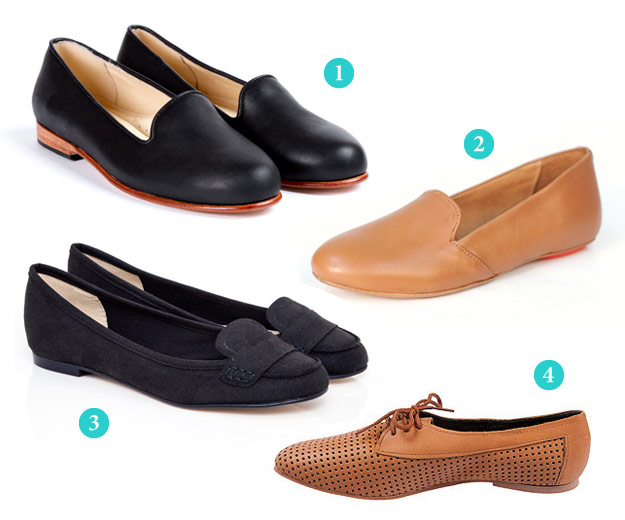
Loafers & oxfords

  1. Smoking Shoe in Noir from Nisolo
  2. Caramel Lalibella Loafer from Sseko Designs
  3. Joanie Faux Suede Flat from Beyond Skin
  4. Amanda Shoe from American Apparel

Ethical loafers and oxfords

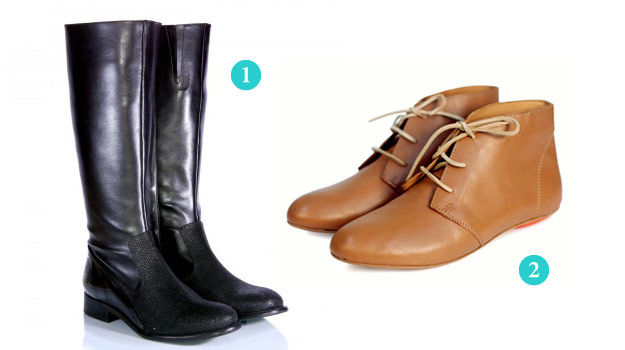
Boots

  1. Scout Boots from Bourgeois Boheme
  2. Caramel Nomad Bootie from Sseko Designs

Ethical boots

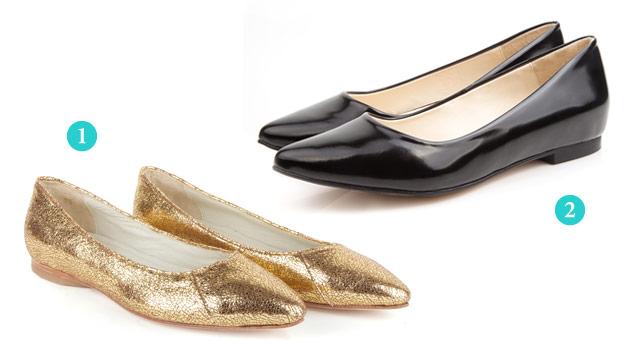
Flats

I had extra criteria for flats: a quiet sole and a slightly pointed toe. Clicky shoes are hard to dress down, and a round toe is hard to dress up.

  1. The Classic Point in Metallic Gold from Poppy Barley
  2. Shelley Flat from Beyond Skin

Ethical flats

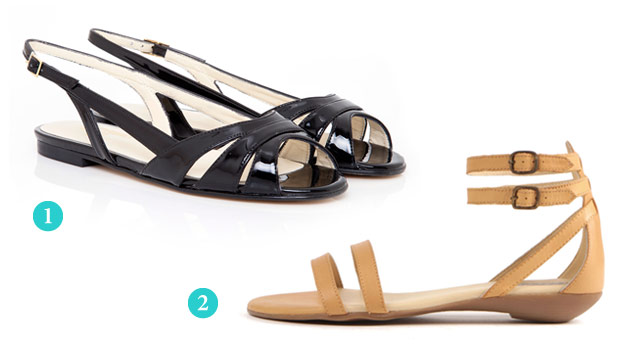
Sandals

  1. Rose Sandal from Beyond Skin
  2. Delicias Sandal in Pale Honey from Nisolo

Ethical sandals

Lessons learned

One key lesson I learned during my search is that camel/nude shoes are the key to being able to wear brown clothes without having a plethora of rarely worn brown shoes. This was both a revelation and a buzzkill, because I love brown shoes and have several pairs. (Remember the surprise boots?) But from a practical standpoint, you can wear camel or nude shoes with a lot more things, and they can be dressed up more readily than brown shoes can.

Black shoes are of course the most versatile, especially if you work in an office and wear a lot of black and gray professional attire. Metallics can act as a neutral in many cases as well, but I would recommend only having one or two pairs of metallic shoes and sticking to black or camel or nude for the rest.

Another takeaway was the wonder of oxfords and loafers. I don’t currently own any oxfords or loafers, but I now realize they would solve much of my morning shoe anxiety. They’re appropriate for the office but still work with casual clothes, they fill the gap between flats and boots, and you can wear them pretty much all year-round. I prefer oxfords to loafers, but unfortunately there were fewer ethical oxford options to be found.

The ability to dress a shoe up or down is important as well. To avoid having formal shoes that you rarely wear, get your everyday shoes a little more on the dressy side so they can work for more formal occasions.

I’m not looking to chuck all my existing shoes and start over, but this exercise definitely gave me some things to look for the next time I do need to buy shoes.

Have you ever tried to pare down your shoe collection? What are your must-have types of shoes?

Share Your Style Story

New York Fashion Week is February 12-19. When I hear Fashion Week I usually think “that thing they do at the end of Project Runway,” but I know it’s also a time when designers debut new collections and fashion in general is in the global spotlight.

To counteract the unsustainable aspects of the fashion industry that will be inherently celebrated this week, the Ethical Writers Coalition has launched Style Stories, a movement that highlights style that is both fashionable and sustainable. Anyone can submit a photo and story of their favorite outfit that contains an ethical component: fair trade, vintage/secondhand, locally made, eco-friendly, organic, cruelty-free, or otherwise ethically produced.

Style Stories information graphic

Ignore the February 12 deadline—you can still submit after that!


There are a couple different ways to participate:

  1. Submit your outfit on the Style Stories tumblr
  2. Post your outfit on Instagram using the hashtag #stylestories15

Even if you don’t have an outfit to share, definitely visit the Tumblr and peruse the gallery of photos. Not so long ago, ethical fashion had the stereotype of being hippie-ish and frumpy (or as my sister would say, “Everything has dragonflies on it.”) The Style Stories gallery shows that this is definitely not the case anymore, and there are ethical fashion options for every taste and style. Be sure to check out my submission while you’re there!

My Favorite Ethical Pinners on Pinterest

favorite-ethical-pinners-on-pinterest

I have a confession to make: I am teetering on the brink of a Pinterest addiction. I make a conscious effort not to rely on my phone for constant distraction, but I do find myself checking Pinterest at least 3-4 times most days. Despite its drawbacks, like the fact that it helps exacerbate a culture of aspirational consumerism and feelings of inadequacy, I find it to be both entertaining and helpful for the following reasons:

  1. Even though the majority of items in my feed aren’t ethically made, pinning things I like gives me an idea of what my own personal style is. I can then look for ethical alternatives or DIY projects that would give me a similar look.
  2. There are tons of tutorials for DIY projects, including recycling/upcycling projects and basic sewing tutorials, both of which I am all about right now.
  3. It’s a great source for finding artwork and photography I wouldn’t have seen otherwise.
  4. I like evening gowns, and Pinterest shows them to me!

There are a few pinners I follow in the ethical lifestyle realm who I can always count on for interesting pins. Here are some of my favorites:


Fair Trade Quilts & Crafts – This account was fully responsible for me embracing aspects of bohemian interior design. The gorgeous interiors they pin give me inspiration for creating a home full of eclectic fair trade and secondhand items.

Visit Fair Trade Federation’s profile on Pinterest.

Fair Trade Federation – The FTF uses Pinterest to showcase cool products from their members.

Mata Traders – I frequently find myself re-pinning links to high-quality blog posts about fair trade pinned by Mata Traders.

Visit Elizabeth Stilwell | The Note Passer’s profile on Pinterest.

Elizabeth Stilwell | The Note Passer – I love Elizabeth’s pins that link to blog posts about zero-waste living.

To follow me on Pinterest, hit me up here! Full disclosure: not everything I pin is ethically-made, since as I described above, I use Pinterest to figure out my style, not to make a specific shopping list. My board Fair Trade & Ethical Lifestyle is devoted to ethically-made products and related links. (And if you’re looking for some evening gown eye candy as well, my Wearables board is where it’s at.)

How do you use Pinterest? Who are some of your favorite pinners?