Thrift Store Score: All the Shirts

Last weekend I was at Goodwill picking up a picture frame and decided to browse shirts on a whim to see if I could fill either of the holes I had previously identified in my wardrobe: blouses for work and casual-yet-stylish t-shirts for the weekend. (As I’ve mentioned before in my thrift shopping tips, it’s best to have something specific in mind when thrifting.)

I must have done something to please the thrift store gods, because I found five count ’em FIVE shirts and satisfied two wardrobe needs! Check and mate.
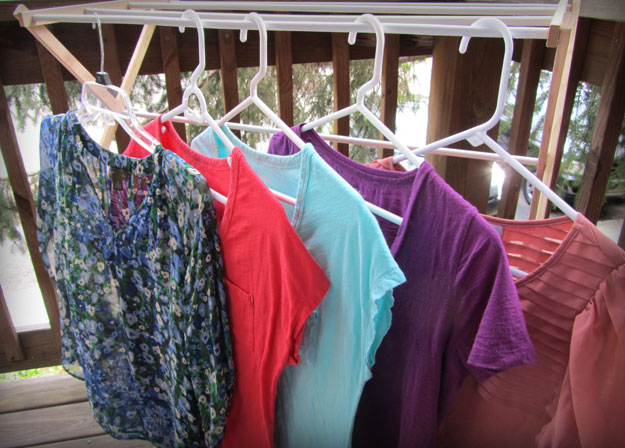
Photo of thrift store shirts hanging on clothes rack

I got two work blouses and three t-shirts. Picking out a shirt in the morning accounts for about 46% of my sartorial anxiety, so having these extra choices should reduce that dramatically (and enable me to part with some of the shirts I have that I don’t really like).

Julia in a purple thrift store t-shirt

The purple shirt in action! I’ve also already worn both of the work blouses. Coral and teal t-shirts: your time is coming soon.

For those of you who have jumped on board with the blog recently, here’s a recap of why thrift shopping is my absolute favorite way to buy clothing:

  • It eliminates waste. I haaaate waste, so I love the idea of diverting still-useful clothing to a new home instead of a landfill.
  • It’s economical. I got those five shirts for $22! Boom.
  • I get to try stuff on. I like looking at ethical clothing brands online and will occasionally make an online purchase, but sometimes you just need to know how something is going to fit.
  • It allows me to get some newer, on-trend styles without giving my money to brands with questionable manufacturing practices. (I realize this isn’t a perfectly ethical motivator, since the fast fashion cycle is one of the things that makes trendy items available in thrift stores, but if I’m being honest it’s still a reason I like thrifting. I would rather give those items a second life than reject them on principle.)

Have you had any good thrift finds lately? My next wardrobe holes to fill are black flats and a white cardigan, so hopefully I’ll have success stories about those soon.
Fall Favorites & Summer Sales

If you know me in real life, you know that I have been a grumpy bear since the weather turned cooler. Overcast skies and cold temperatures (i.e. anything below 60 degrees) are NOT my jam, but I’ve found a silver lining: My favorite fair trade companies are all coming out with their fall collections. If it’s going to be Gloom Central outside, at least there are pretty things to look at online!

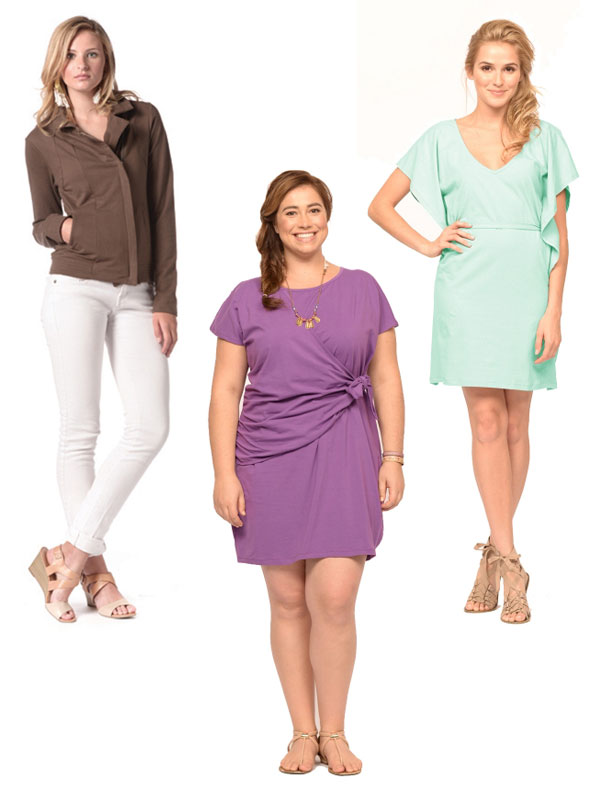
Here are my favorite items from some recent fair trade fall collections:

Collage of favorite fall items

  1. Alma Cardigan in Grey – People Tree
  2. Organic Tulip Skirt – Fair Indigo
  3. Alise Dress in Peach – Liz Alig
  4. Indigo Ends Scarf – SERRV
  5. Biltmore Blouse in Green – Mata Traders
  6. Lalina Rustic Brown Pullup – Oliberte
  7. Plum Ikat Shirtdress – SERRV

The cardigan and the tulip skirt would be such a cozy combination, and the brown boots would look great with the shirtdress.

The change of the seasons is also the time to take advantage of sales on outgoing summer items. This is my favorite way to score items from pricier brands. Check out the sale pages for some of the brands featured above—you’re bound to find a deal on something that will work perfectly well in fall with the right sweater or leggings.

How do you feel about fall? I feel like I’m definitely in the minority cursing its arrival. I’ll be fine with it come October, but expect me to continue scowling at the thermometer for the next two weeks…

Everyday Silver Necklace

Necklaces are my favorite item of jewelry by far, and I’ve recently developed a fetish for simple, delicate designs. A few months ago I bought the simplest, tiniest gold necklace on Etsy, and I wear it constantly. I decided I wanted a silver equivalent as well and perused my local fair trade shop for options.

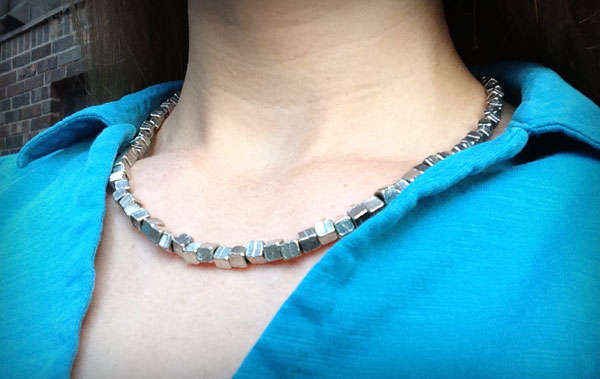
The necklace I ended up getting (the Cubed Necklace in Silver from Ten Thousand Villages, purchased at Global Gifts) is not nearly as minimalistic in design as my gold necklace, but it’s equally neutral (though it does actually sparkle quite a bit, which I didn’t expect for a necklace made of matte cubes). It’s adjustable in length, making it even more versatile.

Close-up of Julia wearing cubed silver necklace

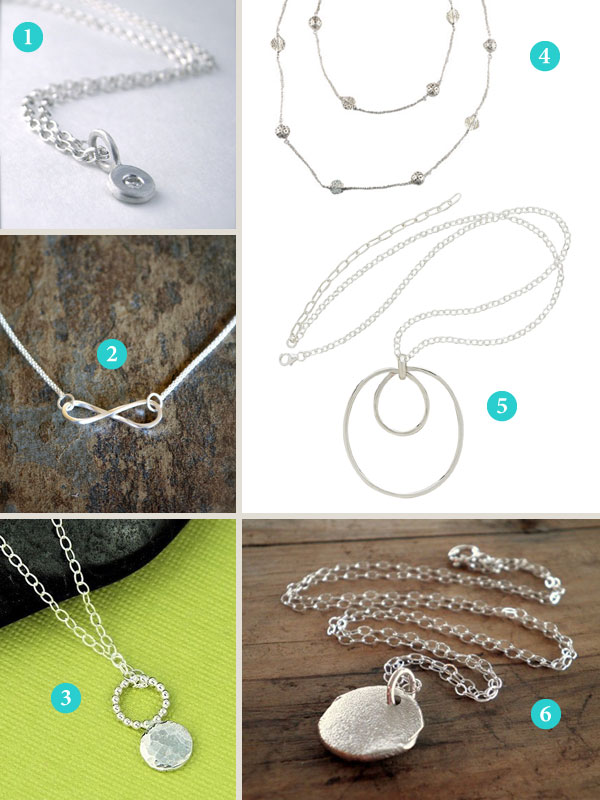
Even though I’m happy with this necklace and have already worn it a bunch, part of me still wants a more delicate silver necklace, for when the surprising bling of the cube necklace is a little much. I found some other ethical silver necklace options for your inspiration, and my potential shopping list:

Montage of simple silver necklaces

  1. Tiny Dot Sterling Silver Moissanite Pendant Necklace (Etsy) – Handmade in Tennessee with recycled silver and lab-created moissanite
  2. Silver Infinity Necklace (One World Fair Trade) – Handmade by fair trade artisans in Indonesia
  3. Silver Little Pebble Accent Necklace (Etsy) – Handmade in the U.S. with recycled silver
  4. Flat and Round Silver Necklace (Mira Fair Trade) – No specific artisan info is available for this product, but Mira Fair Trade is a Fair Trade Federation member and is a Green American Gold Certified Business
  5. Encircled Necklace (Ten Thousand Villages) – Handmade by fair trade artisans in Peru
  6. Fine Silver Dainty Disc Necklace (Etsy) – Handmade in Wisconsin with recycled silver

I’m drawn to number 3—it’s a completely odd little charm, and if you click through to the listing, you’ll see how super-tiny it is! Number 1 is pretty great too. What’s your favorite?

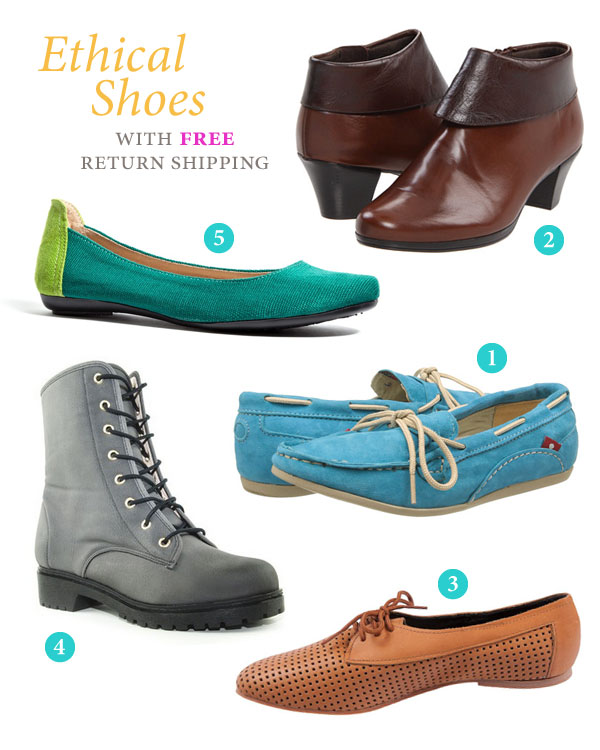
Ethical Shoes with Free Return Shipping

I’ve talked before about my love of free return shipping. For me it’s the key to a satisfying online shopping experience, especially for shoes. I’ll sometimes roll the dice on a shirt or dress without free return shipping, but never with shoes, since there’s a 70% chance I’ll have to send them back due to fit.

In the ethical shopping landscape, it can sometimes be hard to find free return shipping, as many retailers are small, independent companies. However, I’ve found several ethical shoe options that ARE available with free return or exchange shipping! From cute flats to rugged boots, these brands offer a wide variety of styles that you can order and try on without worry.

Ethical shoes with free return shipping - shoe images

1. Oliberte – This brand is the only shoe manufacturer Fair Trade Certified by Fair Trade USA. They offer rugged leather styles for both men and women. NOTE: Order through Zappos for free exchanges and returns. The Oliberte website only offers free exchanges.

2. Munro American – This made-in-USA brand skews more conservative in style, making them a great option for the office or for the more traditionally-minded fashionista. Order through Zappos for free exchanges and returns; the Munro American website offers neither.

3. American Apparel – A trendier made-in-USA option, with styles for both men and women. American Apparel offers free return shipping for all returnable items. NOTE: Sale items are not returnable.

4. Modavanti – This ethical storefront carries many different brands that are required to meet a minimum sustainability threshold. Exchanges and returns are free if you sign up for an account (also free).

5. The Root Collective – Each pair of flats from The Root Collective is handmade in Guatemala. Exchanges due to fit are free, but returns are not.

I have not personally worn shoes from any of these companies (though I did order and free-return a pair of shoes from American Apparel last year), as I tend to get most of my shoes at the thrift store. That’s another great ethical option with no shipping woes!

Have you tried any of the brands above? Do you know of any other ethical shoe brands with free return shipping?

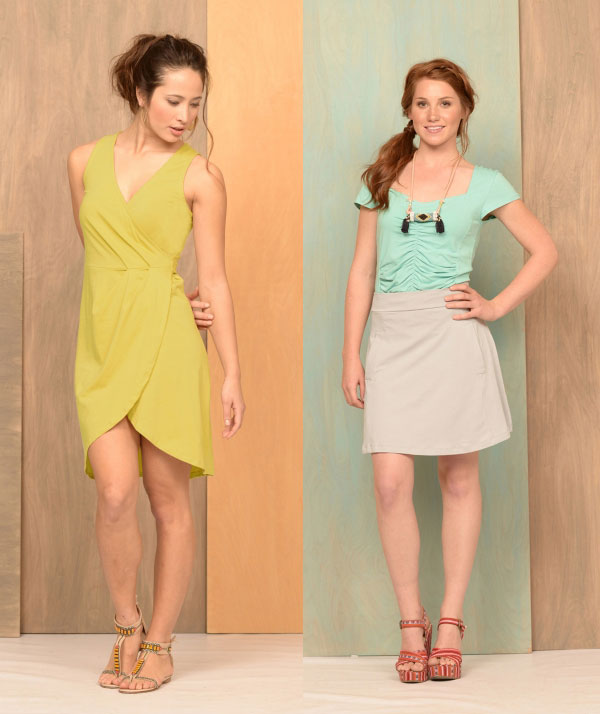
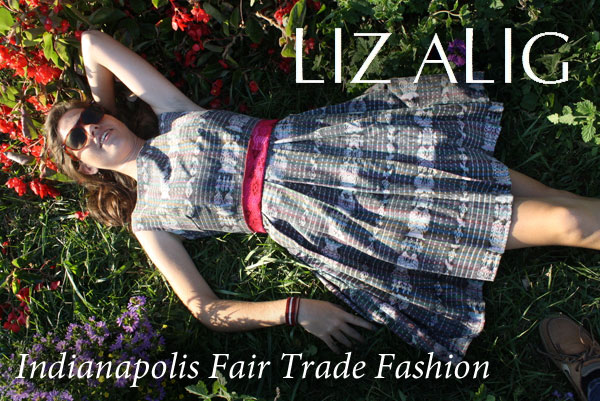
Liz Alig: Indianapolis Fair Trade Fashion

Liz Alig logo and dress

Sometimes I feel like I’m pretty on top of the fair trade game. Then I find out something like this: There’s a fair trade fashion line that is designed in Indianapolis that I knew nothing about! Mind = blown. Liz Alig is a clothing company committed to fashion-forward designs and ethical manufacturing practices.

I got in touch with founder Elizabeth Roney and she kindly answered my questions about how Liz Alig got started and what its mission and products are all about.

Tell us the story of how you started Liz Alig.

The starting of Liz Alig did not really happen overnight. I had the opportunity to visit several factories in developing countries where I first put a face behind the people who make our clothes.  This got me interested in fair trade and eco fashion, but as a designer I had trouble finding clothing that I wanted to wear that was made ethically. So, I decided to experiment recycling fabric (because fair trade fabric was hard to find) and designing my own very small line of dresses.

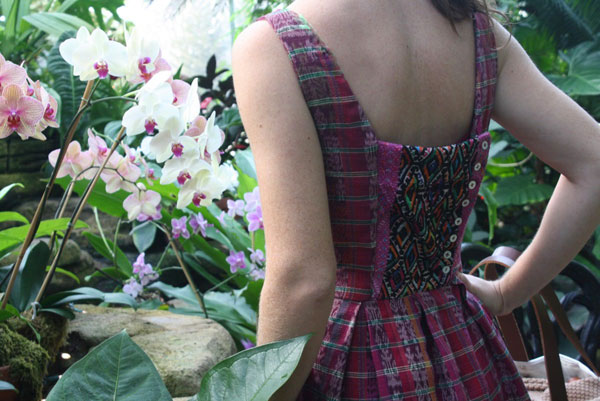
Isabella dress from Liz Alig

Describe your design process. Are your designs influenced by the upcycled fabrics you use? By the capabilities of your producer groups?

Some of the items I design are inspired by the fabrics and other times the design idea comes first, but absolutely the capabilities of the producer groups we work with come into play. The fabrics, machines, and skills of the groups we work come into play in every area of the design process. For example some groups do not have access to zippers so we have to get creative with other forms of closures.

What’s one of your favorite pieces from your most recent collection, and why?

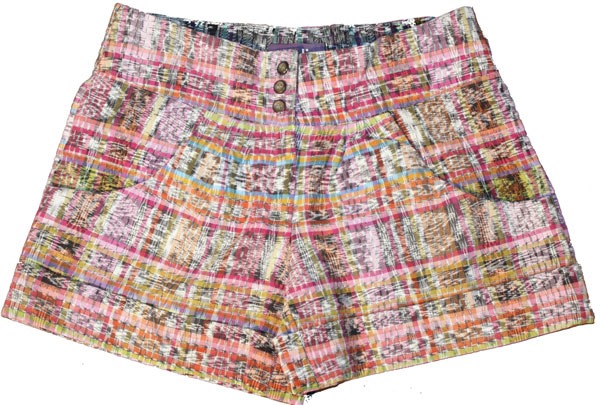
I love the ikat plaid fabric that is woven in Guatemala. Our Fall 2014 collection has some crop pants in this fabric. Look for the Andrea Pants this Fall!

Maggie shorts from Liz Alig

I loved reading the stories of your global partners. How do you manage your relationships with all of these groups and measure the positive impact you have on them?

The groups that we choose to work with each have their own social impact engrained in their mission. We could not do what we do without these groups, because we can not have a separate facility in all these locations. We manage our relationship mainly by email, but sometimes we visit the organization to help train them on new designs or techniques. Our orders help to sustain these groups as well as give them advanced training.

Chinna skirt from Liz Alig

How do people in Indiana usually react when you explain your business model? Have you encountered any fair trade skeptics, or are people generally supportive?

Most people are very supportive. There has been a growing interest for eco-based and giving back companies, this helps with the initial understanding of the idea. There is a little bit of a learning curve in understanding fair trade and what this means and why it is important.

Are you a member of any fair trade organizations or certifications?

Member of the Fair Trade Federation.

Pieced leggings from Liz Alig

What’s next for Liz Alig?

We are having conversations with a few big box retailers, which is exciting!  Also, we are considering expanding into an accessories market.

—

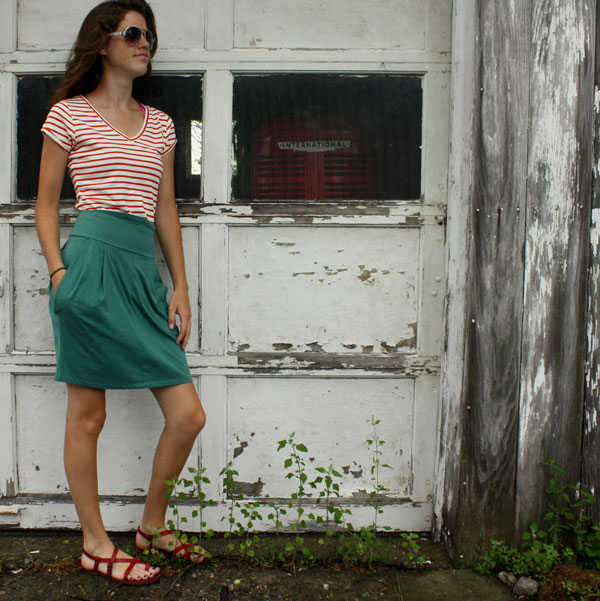
Liz Alig products are available on their website and at boutiques across the country. I’m excited to track down some of their stuff! (I love the teal skirt shown above. Pockets for the win!)

Thrift Store Score

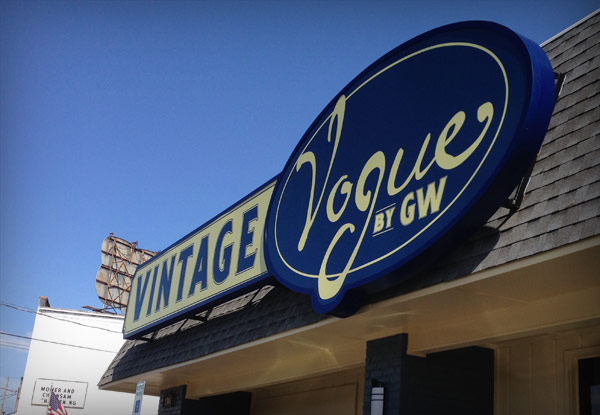
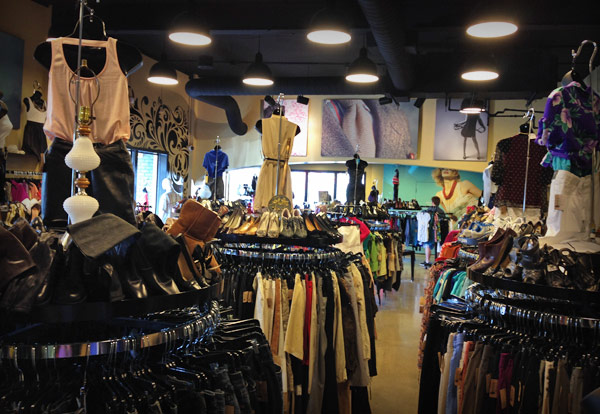
A few weeks ago I was running errands in the Glendale area of Indianapolis and saw a billboard for a new store called Vintage Vogue just around the corner. I can rarely resist the urge to explore anything labeled “vintage,” so I immediately went to check it out:

Vintage Vogue exterior sign

Before I went in, I pulled up their website to check that they were open and see if they were truly a vintage store, as opposed to a boutique that sells 90% new stuff (which is an irritating trend I’ve seen lately—boutiques trying to bill themselves as vintage when they’re not). I was surprised to find that this particular shop wasn’t truly vintage, either, but not in a shady way—it’s actually a new concept from Goodwill. You could call it “Goodwill: Just the Good Stuff.”

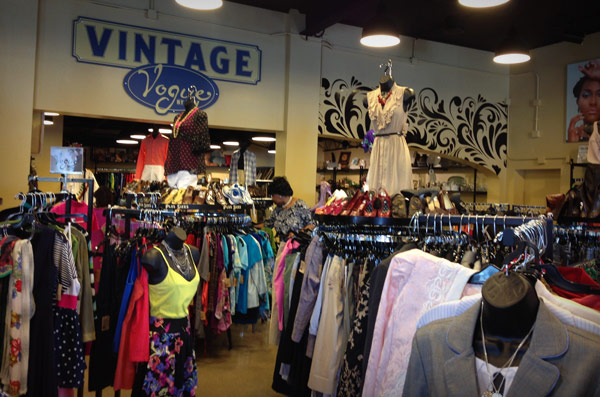
Sales floor of Vintage Vogue store

The shop sells used clothing such as what you’d find at a regular Goodwill, plus accessories and a handful of home decor items, but it’s filtered to include only the more fashionable and high-quality items. As you can see, the store itself is designed like a boutique, in contrast to the bare-bones look of other Goodwill locations. The items are at a slightly higher price point than regular Goodwill, but that didn’t bother me, since I saved time by not having to sift through a lot of out-of-fashion or poor-quality items.

Sales floor of Vintage Vogue store

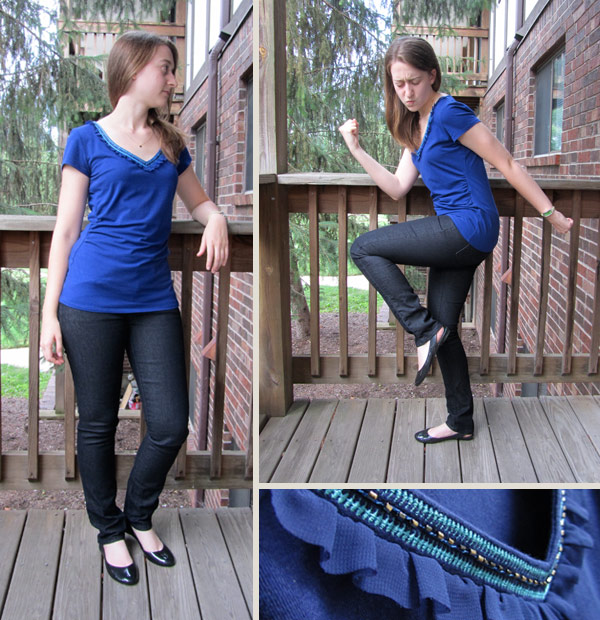
Following my thrift store shopping guidelines, I looked for a couple of specific items: versatile shirts I could wear to work and on the weekend, and black skinny pants. I found a White House Black Market shirt for $9 and black Forever 21 jeans for $7.50.

Photos of Julia in thrifted outfit

The top right photo is my “Yesssss I found what I wanted!” victory pose.

One concern that occurred to me as I shopped was whether this kind of store takes good items away from regular Goodwill stores. People who can’t afford the higher prices at Vintage Vogue should still have the opportunity to find high-quality items. My thought was that Goodwill’s donation volume is probably so high that pulling items for these stores wouldn’t make a huge difference in the overall selection. The Vintage Vogue website seems to confirm that assumption:

Vintage Vogue merchandise comes from select central Indiana Goodwill stores. These stores hand-pick a small portion of their upscale and vintage donations to send to Vintage Vogue. Special items and boutique merchandise can still be found at any of the more than 50 Goodwill locations in central Indiana.

It looks like Vintage Vogue is just a central Indiana concept right now, with this store in Indianapolis and another one in Bloomington. If you’re in the area and are looking for a gateway into shopping secondhand, I recommend checking it out!

Have you had any good thrift store finds lately? What are your favorite thrifting spots?

My Top 3 Thrift Shopping Tips

With all of the fair trade topics I have been covering lately, it’s been a while since I’ve mentioned my other approach to ethical consumerism: thrift shopping. While I tend to go fair trade when purchasing gifts for others, when I need something for myself the first stop is the thrift store. Thrift shopping reduces waste by giving old items a new life, and when you buy from a thrift shop, your money does not go to support the companies who produced the items using potentially exploitative practices.

Thrift shopping can be overwhelming, especially if you’re not used to the structure (or lack of structure) in your local resale shops. Here are my top three tips for finding items you will love and wear!

Infographic of top 3 thrift shopping tips

1. Have a specific item in mind

For several years, I viewed thrift stores as magical wonderlands full of treasures for me to discover, and I would go thrift shopping with no set agenda or list. This approach led to me having a closet full of interesting and eye-catching items that didn’t necessarily work together as outfits and weren’t practical for my everyday life.

Nowadays, when I hit the thrift store I look for one thing. Black pants. Comfortable flats. A tan cardigan. Having a specific item in mind helps me focus in the often overwhelming landscape. The time you save by not aimlessly wandering the aisles is time you can spend really evaluating at every available option that matches what you want.

2. Try things on

For me, one of the major benefits of thrift shopping over buying ethically-produced clothing online is the ability to try things on. I don’t have the patience for the song-and-dance of ordering something, it not fitting, and having to send it back. Thrift shopping is my answer to this problem. The clothes are right there! I can try on 10 pairs of pants immediately!

Before you start gathering things to try on, be sure to confirm that the store you’re at has a fitting room. Of the thrift stores near me, Goodwill has fitting rooms while Value World does not. If you’re at an independently-owned vintage or consignment shop, it could go either way, so be sure to look around or ask a clerk if you don’t immediately see one.

Stores without fitting rooms can still be worthwhile stops depending on what you are looking for. You can try on cardigans, jackets, shoes, and accessories without a fitting room, so if I’m looking for any of those things I include stores without fitting rooms in my lineup.

Rack of clothing at a thrift store

Photo credit: tome213 @ freeimages.com

3. If you don’t love it, don’t buy it

This is perhaps the hardest lesson to learn in thrift shopping. I used to buy anything that fit decently, regardless of whether I needed it or what condition it was in (other than major damage or holes). As a result I had a wardrobe that looked like it had already been through the wringer and again didn’t always cohere into good outfits.

Now I ask myself a series of questions before I buy something. Is it in like-new condition, or does it already look worn-out? (Cheap knit fabrics can wear out and pill easily, so check for wear even on current styles.) Do I feel good wearing it? Is it flattering on me? Would I buy this item new if I saw it in a regular store?

Those are my top three tips for successful thrift shopping. I’d love to hear yours—post ’em in the comments!