Thrift Store Score

A few weeks ago I was running errands in the Glendale area of Indianapolis and saw a billboard for a new store called Vintage Vogue just around the corner. I can rarely resist the urge to explore anything labeled “vintage,” so I immediately went to check it out:

Vintage Vogue exterior sign

Before I went in, I pulled up their website to check that they were open and see if they were truly a vintage store, as opposed to a boutique that sells 90% new stuff (which is an irritating trend I’ve seen lately—boutiques trying to bill themselves as vintage when they’re not). I was surprised to find that this particular shop wasn’t truly vintage, either, but not in a shady way—it’s actually a new concept from Goodwill. You could call it “Goodwill: Just the Good Stuff.”

Sales floor of Vintage Vogue store

The shop sells used clothing such as what you’d find at a regular Goodwill, plus accessories and a handful of home decor items, but it’s filtered to include only the more fashionable and high-quality items. As you can see, the store itself is designed like a boutique, in contrast to the bare-bones look of other Goodwill locations. The items are at a slightly higher price point than regular Goodwill, but that didn’t bother me, since I saved time by not having to sift through a lot of out-of-fashion or poor-quality items.

Sales floor of Vintage Vogue store

Following my thrift store shopping guidelines, I looked for a couple of specific items: versatile shirts I could wear to work and on the weekend, and black skinny pants. I found a White House Black Market shirt for $9 and black Forever 21 jeans for $7.50.

Photos of Julia in thrifted outfit

The top right photo is my “Yesssss I found what I wanted!” victory pose.

One concern that occurred to me as I shopped was whether this kind of store takes good items away from regular Goodwill stores. People who can’t afford the higher prices at Vintage Vogue should still have the opportunity to find high-quality items. My thought was that Goodwill’s donation volume is probably so high that pulling items for these stores wouldn’t make a huge difference in the overall selection. The Vintage Vogue website seems to confirm that assumption:

Vintage Vogue merchandise comes from select central Indiana Goodwill stores. These stores hand-pick a small portion of their upscale and vintage donations to send to Vintage Vogue. Special items and boutique merchandise can still be found at any of the more than 50 Goodwill locations in central Indiana.

It looks like Vintage Vogue is just a central Indiana concept right now, with this store in Indianapolis and another one in Bloomington. If you’re in the area and are looking for a gateway into shopping secondhand, I recommend checking it out!

Have you had any good thrift store finds lately? What are your favorite thrifting spots?

News Roundup: June 2014

Conestoga wagon with post title

Circle the wagons, it’s roundup time! To be honest, I didn’t spend a ton of time reading this month. I was too busy trying to get outside as much as possible! However, the stuff I did read was top-notch quality. Check out the links below!

You Don’t Have to Feel It —This post blew my face off with truth. It explores our motivations for doing good, and how emotion can’t be the only motivator we have. (Style Wise)

Dov Charney: the man who put the sleaze factor into American Apparel — American Apparel founder and CEO Dov Charney was ousted this month in relation to alleged misconduct (he’s a notorious creeper, to say the least). I love the manufacturing ethics of American Apparel but have always felt weird supporting them because of their over-sexualized photography and Charney’s grossness. Hopefully his removal means the brand can move in a less offensive direction. (The Guardian)

Benefit Corporations Look Beyond The Profit Motive — Basic overview of the concept of “benefit corporations” (commonly known as B Corporations). The quote below addresses what I think is one of the keys for social enterprise to really take off. Profit isn’t everything! (NPR)

There are legal protections when a state signs on: A shareholder can’t sue a benefit corporation for valuing the environment as much as profit.
— Benefit Corporations Look Beyond The Profit Motive

Greenpeace Reviews Major Food Retailers for Sustainable Seafood Purchasing — One of the best and easiest-to-understand articles I’ve seen about sustainable seafood. (Triple Pundit)

2014 Trafficking in Persons Report — This annual report ranks countries into tiers based on their efforts toward combating human trafficking. (U.S. State Department)

Reader Request: Ethical Jeans — In my post of pants recommendations for Sarah, I noted that ethical high-end jeans being pretty widely available. And what do you know, Jamillah coincidentally just wrote a post with ethical jeans recommendations! (Made to Travel)

Host a Clothing Swap! — Dominique shares helpful step-by-step instructions for organizing a clothing swap with friends—a great way to give old clothes a new home! (Let’s Be Fair)

Top 3 Resale Sites — Elizabeth reviews her favorite apparel resale sites with helpful notes on return policies and how to sell. (The Note Passer)

Did you read the Style Wise link at the top? Go do that now. Then have a great week!

Living Your Values at Your Job

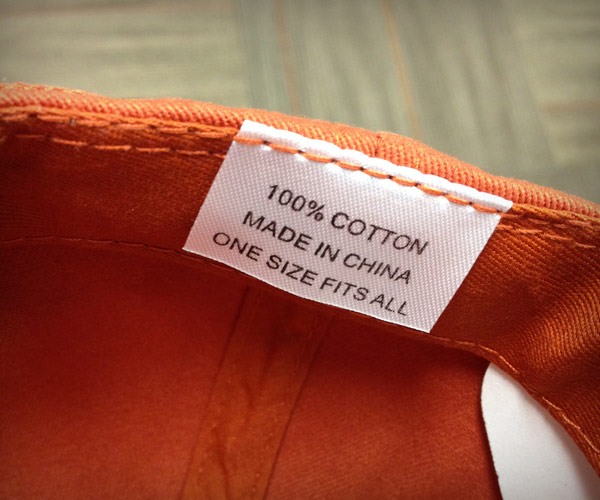
Image of tag inside baseball cap that reads "Made in China"
Over the years, I’ve defined a fairly rigorous ethical shopping process for my personal purchases. I do a lot of research into retailers’ labor practices; I look for used, recycled and made-in-USA options; and oftentimes I decide I don’t need what I’m shopping for at all. But I’ve realized that this process does not really carry over when I make purchases at work.

As a graphic designer, paper is one of the most common things I buy, and I do look for recycled and made-in-USA options. However, when it comes to other types of purchases, I tend to go with whatever my company has historically done. For example, my company has an event in May every year where we hand out baseball hats. This year the ordering of the hats fell to me, and I ordered them the same way we we’ve ordered them every year, which means they were custom-sewn in China.

There were many things I could have done to make sure our hat order was as ethical as possible:

  • I could have asked our vendor what she knew about the factory where the hats are produced.
  • I could have found pricing for hats made in the USA (though I had been informed that domestically-produced hats are much more expensive).
  • I could have looked at the hat options on Ethix Merch, a site I’ve known about for years that specializes in ethical promotional items like pens and branded apparel.

Why didn’t I do any of these things? One reason is that it can be scary to challenge the status quo, especially if you are suggesting that your company’s current way of doing things is unethical. It gets even trickier when you can’t prove their practices are unethical, even if in your opinion it’s highly likely that they are. I can’t prove that the hats we order from China are made in a sweatshop. But even investigating it would raise eyebrows.

I’m betting that a lot of individuals care on a personal level about human rights and the environment but don’t take action through their jobs. Raising questions of ethics at work is definitely a risk and, depending on the company culture, could cost someone their job. I’ve seen friends struggle through long-term unemployment, so I find it hard to blame anyone for not speaking up. The question is: how do we start to make it OK for ethics to be part of conversations and decisions in the workplace? What positive change could we realize if it wasn’t a risk for people to ask challenging questions?

We need to shift to a culture where the ethics of a decision or purchase can be weighed equally alongside other factors like cost and quality. Will the most ethical choice always win? Nope. But sometimes it would, and just having that conversation gives people permission to really think about the ethics and values of their decisions.

Have you experienced anything like this at your job? Do you find it difficult to live your values at work?

My Top 3 Thrift Shopping Tips

With all of the fair trade topics I have been covering lately, it’s been a while since I’ve mentioned my other approach to ethical consumerism: thrift shopping. While I tend to go fair trade when purchasing gifts for others, when I need something for myself the first stop is the thrift store. Thrift shopping reduces waste by giving old items a new life, and when you buy from a thrift shop, your money does not go to support the companies who produced the items using potentially exploitative practices.

Thrift shopping can be overwhelming, especially if you’re not used to the structure (or lack of structure) in your local resale shops. Here are my top three tips for finding items you will love and wear!

Infographic of top 3 thrift shopping tips

1. Have a specific item in mind

For several years, I viewed thrift stores as magical wonderlands full of treasures for me to discover, and I would go thrift shopping with no set agenda or list. This approach led to me having a closet full of interesting and eye-catching items that didn’t necessarily work together as outfits and weren’t practical for my everyday life.

Nowadays, when I hit the thrift store I look for one thing. Black pants. Comfortable flats. A tan cardigan. Having a specific item in mind helps me focus in the often overwhelming landscape. The time you save by not aimlessly wandering the aisles is time you can spend really evaluating at every available option that matches what you want.

2. Try things on

For me, one of the major benefits of thrift shopping over buying ethically-produced clothing online is the ability to try things on. I don’t have the patience for the song-and-dance of ordering something, it not fitting, and having to send it back. Thrift shopping is my answer to this problem. The clothes are right there! I can try on 10 pairs of pants immediately!

Before you start gathering things to try on, be sure to confirm that the store you’re at has a fitting room. Of the thrift stores near me, Goodwill has fitting rooms while Value World does not. If you’re at an independently-owned vintage or consignment shop, it could go either way, so be sure to look around or ask a clerk if you don’t immediately see one.

Stores without fitting rooms can still be worthwhile stops depending on what you are looking for. You can try on cardigans, jackets, shoes, and accessories without a fitting room, so if I’m looking for any of those things I include stores without fitting rooms in my lineup.

Rack of clothing at a thrift store

Photo credit: tome213 @ freeimages.com

3. If you don’t love it, don’t buy it

This is perhaps the hardest lesson to learn in thrift shopping. I used to buy anything that fit decently, regardless of whether I needed it or what condition it was in (other than major damage or holes). As a result I had a wardrobe that looked like it had already been through the wringer and again didn’t always cohere into good outfits.

Now I ask myself a series of questions before I buy something. Is it in like-new condition, or does it already look worn-out? (Cheap knit fabrics can wear out and pill easily, so check for wear even on current styles.) Do I feel good wearing it? Is it flattering on me? Would I buy this item new if I saw it in a regular store?

Those are my top three tips for successful thrift shopping. I’d love to hear yours—post ’em in the comments!

News Roundup: May 2014

Happy Wednesday! Another month has gone by, which means it’s time for another roundup of articles and links that caught my interest recently. Check out the links below for some great resources and thought-provoking insights!

Creating a Fair Wardrobe – A four-part blog series from For the Love of Justice

Rendering of solar roadways

Rendering of solar roadways

Solar Roadways: The Most Groundbreaking Innovation since the Internet (Modavanti)

Why Textile Waste Should be Banned From Landfills (Triple Pundit)

Modavanti has teamed up with Green Tree Textiles for our Modacycle Campaign! – Details on Modavanti’s new textile recycling initiative (Modavanti)

Shopping for shoes is a minefield – This article points out how athletic shoes lag behind other apparel sectors in transparency/sustainability. (Dynamic Business)

The Rise of Conscious Business Needs the Support of Conscious Consumerism — Who should lead the way in ethical consumerism: business or consumers? (Pro Bono Australia)

Free2Work Electronics Industry Trends 2014 – Report on efforts being made by electronics companies to address exploitation and forced labor in their supply chains (Free2Work)

10 Biggest Excuses For Not Paying a Living Wage (And Why They Suck) (Ecouterre)

Fashionably Informed: 5 Ethical Fashion Companies (College Fashion)

Can fair trade clothing prevent the next factory tragedy? (Humanosphere)

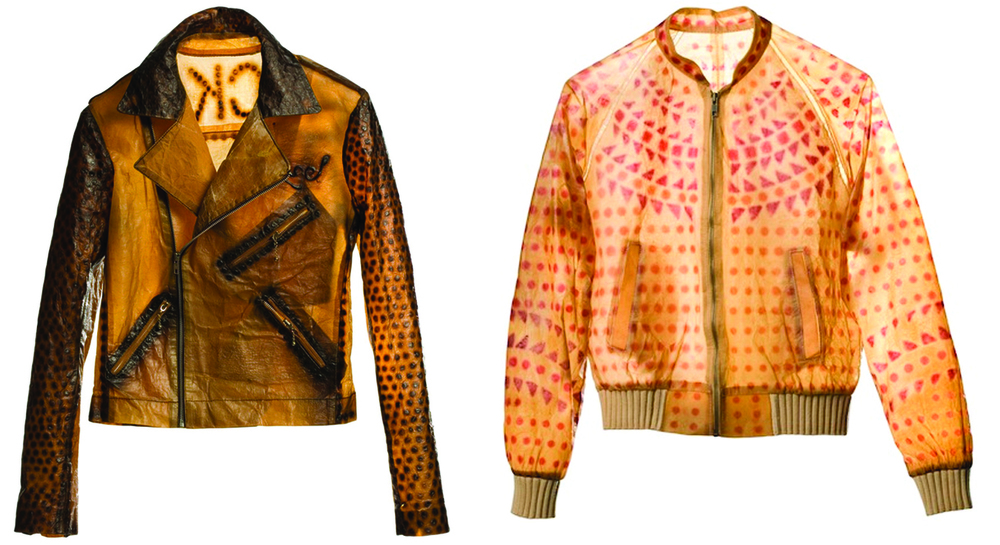
Fabric generated from bacteria from The Next Black documentary

Fabric generated from bacteria from The Next Black documentary

The Next Black – Review of a documentary about technology in the future of fashion (The Note Passer)

Youths Sue U.S. Government Over Climate Inaction (Al Jazeera America)

Ifixit – Website that provides resources for repairing items instead of replacing them, which helps reduce waste and unnecessary consumption

I’ll leave you with this excellent pin from Let’s Be Fair:


What have you been reading lately? Let us know in the comments!

Spring Dresses

On Saturday, I stepped out to Global Gifts with a friend to check out their World Fair Trade Day event. Global Gifts doesn’t typically carry clothing, but imagine my joy when I discovered they were having a special trunk sale with items from Mata Traders and Global Mamas! They had some tops and skirts, but I homed right in on the dresses. I am a sucker for dresses, especially in the spring and summer.

Fair Trade Spring Dresses

1: Flights of Floral Dress – Mata Traders
2: Keyhole Cutout Dress – Mata Traders
3: Retro Shirt Dress – Global Mamas

I’ve written previously about the Mata Traders dress I purchased last year, which I really like but required a lot of alterations to fit well. I was excited to try on some of their other styles to see what the fit was like.

The Flights of Floral dress fit me very well. The yellow and gray print that they had in the store was cute, but I wasn’t feeling it for myself personally—I felt kind of washed out in it. The red and purple version available online might make me feel more vibrant.

I was really excited about the print and style of the Keyhole Cutout dress. Unfortunately, it had the same fit issues that I had with the dress I already own. I think it would possibly fit someone longer-waisted or larger-chested, but for me the proportions were just too far off the mark. They do offer a peplum skirt in the same print, though, which would be just as fun to wear and easier to alter if the fit wasn’t perfect.

I also tried on a retro-style dress from Global Mamas. This photo is a little misleading; in person the blue and green were much closer in shade and the whole print had less contrast overall. It was cute and seemed to be proportional; however I was thwarted by their smallest size still being too big. My only World Fair Trade Day purchases ended up being a birthday card for my boss from Sanctuary Spring and a jar of Swazi Fire Sauce from Eswatini Kitchen.

So why am I telling you a story about dresses that didn’t fit? I think it’s important to be honest about the challenges of ethical shopping. Finding a dress that fits your shape and style and budget can be tough, and then to add your values into the mix? It’s tricky.

But is it worth it? Absolutely. We may not be able to be perfect all the time, but when I think about the experience of a woman sewing dresses for a fair trade company like Mata Traders versus the experience of a woman stitching in an unsafe and underpaying sweatshop, it is 100% worth the extra time to make the best effort I can to support companies who treat people well.

Everybody’s shape is different, so if you’re in the market for a spring dress, definitely check out the links above and see if they work for you. Have you found any great ethical dresses this spring? Share your successes (and failures) in the comments!