My Verdict on Handkerchiefs

Last month I interviewed Marion Poirier of handkerchief company TSHU, asking her all my skeptical questions about how much a hanky can really handle. She kindly provided me two handkerchiefs to try out, and after a month of use my verdict is in.

I’m officially a handkerchief convert. For me the most fun part is the feeling that blowing my nose on something that feels like clothes is somewhat rebellious. The first time I tried it, I thought someone was going to come up behind me and demand to know why I was besmirching a perfectly good piece of fabric. This is ridiculous of course, since people have been using handkerchiefs for hundreds of years longer than we’ve been using paper tissues. But I still get a thrill!

From a practical standpoint, the hankies hold up. They’re softer and stronger than paper tissues, with one handkerchief easily doing the work of several tissues. Once the handkerchief dries out (which it does quickly), whatever gunk fragments are left seem very insignificant compared to my load of laundry as a whole. The handkerchief material is thick enough that it contains moisture well, especially when it’s folded up. After each use, I fold my handkerchief so any moisture is on the inside, and then I put it in a little satin case I previously used to carry tissues. (TSHU makes a carrying case as well.)

Two handkerchiefs folded in small satin case

My handkerchief carrying case, originally made to hold a travel pack of tissues.

I used the handkerchiefs almost exclusively for blowing my nose. I had a backlog of disposable napkins in my lunchbox, so I didn’t really need to use a hanky to wipe my fingers after eating. Also, because I used my hankies for nose-blowing, I wasn’t in a big hurry to use them for other things and cross-contaminate. If I was going to use a handkerchief as a napkin, I would definitely want a separate handkerchief from my nose handkerchief.

I prefer the one-ply handkerchief to the two-ply. For me the two-ply is a little thick for general nose-blowing usage. It still works, but it feels a little bulky. I can see how it could be useful for wiping up spills or wet hands, though, or to use if you have a serious cold. Initially I was just going to try out a two-ply handkerchief, so I’m glad Marion sent me the one-ply as well!

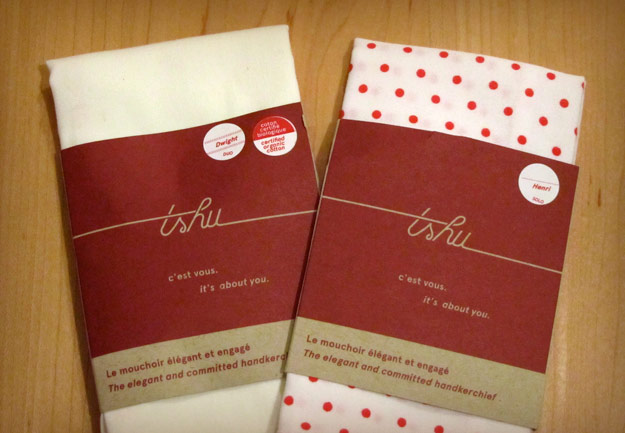
The one-ply polka-dotted Henri and two-ply Dwight handkerchiefs

The one-ply polka-dotted Henri and two-ply white Dwight handkerchiefs

The only downside of the experiment was that I didn’t have more hankies to rotate. Since I only had two, I used each one for several days longer than I probably should have. It wasn’t always easy to tell which parts of the hanky I had already used, which probably isn’t the greatest from a hygiene standpoint. I also kept forgetting to throw them in the laundry since I kept them in my purse. On the bright side, I discovered that they are very easy to hand wash and quick to dry.

TSHU just released a new organic hanky multi-pack (aptly named Hank) that could solve my problem of too few hankies. Having one for each day of the week would be ideal—I would use one for the day then throw it in the wash and get a fresh one for tomorrow, like a pair of socks.

Eight natural handkerchiefs with red corners

Note for my fellow Americans: TSHU’s prices are in Canadian dollars, so a three-pack of Hank hankies actually costs about $40, not $48. TSHU also offers free shipping on all orders worldwide.

I’m excited to continue using my handkerchiefs and eventually add to my collection!

Disclosure: TSHU gave me two handkerchiefs to try for free. All opinions are my own.

Let’s Start a Revolution

Fashion Revolution Day 24.04.15

Two years ago today, the Rana Plaza factory complex in Bangladesh collapsed, killing 1,133 workers and injuring over 2,500 more. Many of the victims worked making apparel for Western brands. This tragedy is commemorated with Fashion Revolution Day, a campaign to shine light on the people who make the clothes we wear, often in uncomfortable or downright dangerous conditions.

You can join the Fashion Revolution by asking your favorite brand “Who made my clothes?”

Take a photo of your clothing label and ask the brand on social media "Who made my clothes?"

I chose to call out athletic apparel brand Champion, since ethically-made activewear can be tough to find.

Members of the Ethical Writers Coalition are marking Fashion Revolution Day with posts on ethical fashion. Check out what my talented cohorts are saying:

I’m particularly excited about Alden’s petition for fashion retail websites to disclose the country of origin of their products. This small step toward transparency will help lead the way to more meaningful disclosures about supply chains and factories.

What brand are you calling out today?

Behind the Scenes of Fair Trade Fashion with Liz Alig

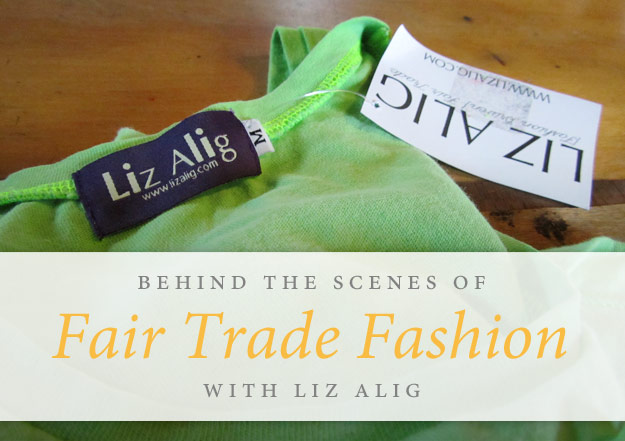
Liz Alig hang tag on a green shirt

In an old farmhouse at an orchard east of Indianapolis is a hidden fashion design studio you’d never know was there. It’s the headquarters of Liz Alig, and a couple of weeks ago founder Elizabeth Roney invited me to visit the studio.

I had never been behind the scenes of any kind of fashion business, let alone a fair trade fashion company, so I came with tons of questions and left with a head full of knowledge (along with a bunch of food I bought at the adjacent country store).

Here are the biggest things I learned:

1. A small team can have a big impact

The first thing I was impressed to learn was that Liz Alig is only a two-person operation. Elizabeth, as designer and operations manager, designs the collections and handles the logistics of communicating with the fair trade producers. Liz Alig is focused on wholesale distribution through boutiques around the country, so Elizabeth has a part-time sales and marketing associate help with that end of things.

It was encouraging to see a small team make such a big impact. Through the work of just two people, Liz Alig provides opportunity to fair trade producers in several developing countries and offers conscious consumers an ethical and fashion-forward clothing option.

2. Design is a small part of the process

Elizabeth told me that the design part of being a fashion designer actually only takes up a fraction of her time. Liz Alig releases two collections a year, fall and spring, and each collection takes about two weeks to design. It takes another two weeks to create the patterns the producers will use to make the orders.

After creating the patterns, Elizabeth will make a sample of each piece and send it to the producer group, or more often, she will send the group the pattern and have them make the sample themselves with a sketch to guide them. “That way they understand more how the piece is assembled,” Elizabeth says.

The rest of Elizabeth’s time is spent working with the producer groups to make and receive the orders, which I learned has its own set of unique challenges.

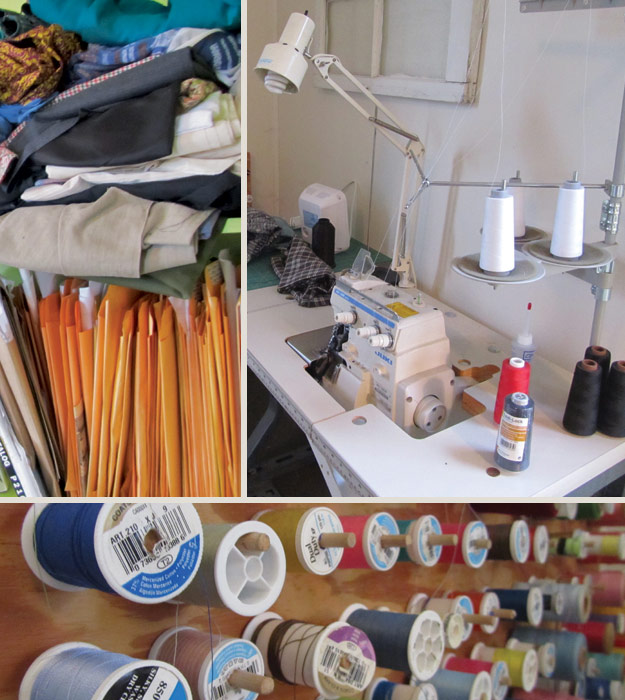
Pile of fabric, sewing machine, spools of thread

Supplies in the design studio: excess fabric, a pattern library, a rainbow of thread colors and Elizabeth’s sewing machine

3. Cultural miscommunication is a common occurrence

Liz Alig works with producer groups in Cambodia, India, Honduras, Haiti and more, and each group has different capabilities and resources. I asked about the language barrier, and Elizabeth said she frequently uses Google Translate to communicate with the different groups.

As well as speaking different languages, the producer groups also have different cultural ideas about what constitutes good fashion. Elizabeth said that many times she’s received a sample or shipment and been surprised by the colors used or the fit of the garments. One group used short zippers that didn’t work with how the garment was supposed to fit. Another group paired multiple bright colors together to make tops that were louder than what would be marketable in the boutiques where Liz Alig is stocked.

Quality can also vary depending on the producer group’s circumstances. The group Liz Alig works with in Haiti doesn’t have electricity, so they produce their garments using a foot-powered treadle sewing machine and by hand-sewing. “We want to give them more orders, but we need to get their quality up,” Elizabeth says.

I was heartened to hear this real story of the impact of fair trade relationships. A group without electricity would never be considered a viable option for fast fashion production, but by forming long-term relationships, fair trade offers this group in Haiti the opportunity to learn by doing, improve their skills and increase their capacity.

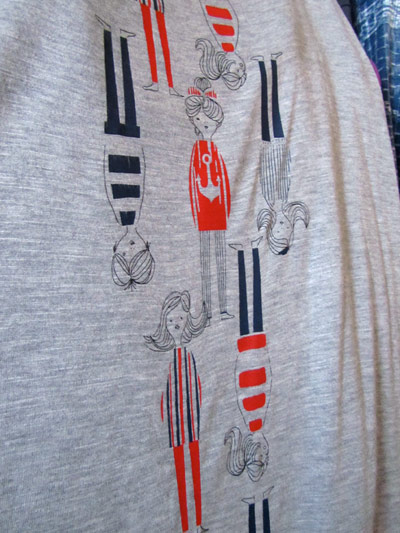
Close-up of screen printed design of illustrated people

Liz Alig recently introduced screen prints into their designs. Elizabeth’s designs are often inspired by motifs found in the producers’ culture, however this print, her favorite from the spring 2015 collection, was inspired by vintage fabric found at Goodwill.

4. Excess fabric is big business

Liz Alig makes several of their styles using factory excess fabric. I asked if factories are ever surprised when someone calls wanting their waste, and Elizabeth explained that the sale of excess fabric is actually a big industry. “People don’t realize how much waste there is in fabric production,” she said. Excess fabric can occur when the original purchaser orders too much, or if the color or design don’t match what the original purchaser wanted.

Liz Alig gets most of their factory excess fabric from El Salvador or Cambodia. The fabric is sold in warehouses or markets, sometimes in reams and sometimes just in wads. Elizabeth said that she tries to design garments using fabrics she knows will be abundant in the excess markets, such as gray jersey knit.

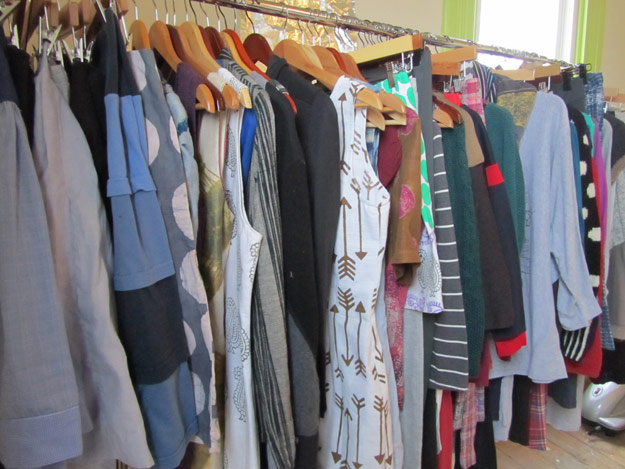
Rack of dresses, skirts and tops

Liz Alig produces small quantities of each garment, around 100-200 pieces, making each piece a truly unique investment. This is a sneak peek of their fall 2015 collection.

It was fascinating to learn the ins and outs of how a fair trade company actually conducts business, and to learn how clothing goes from a designer’s idea to a real garment hanging in your closet. Thanks to Elizabeth for letting me visit and for sharing her knowledge and the Liz Alig story!

Happy Fair Trade Birthday to Me!

In my family, we play it fast and loose when it comes to when birthdays are celebrated. “Within a six week period of the actual date?” we collectively ask. “Close enough!” So I don’t feel behind at all posting a recap of my fair trade birthday gifts only a month after I received them (at the celebration that was two weeks after my actual birthday).

I was my mother’s daughter this year and bought pretty much all of my presents for myself, wrapped them all, then sneakily accepted cash before we all ooohed and aaahed over my selections.

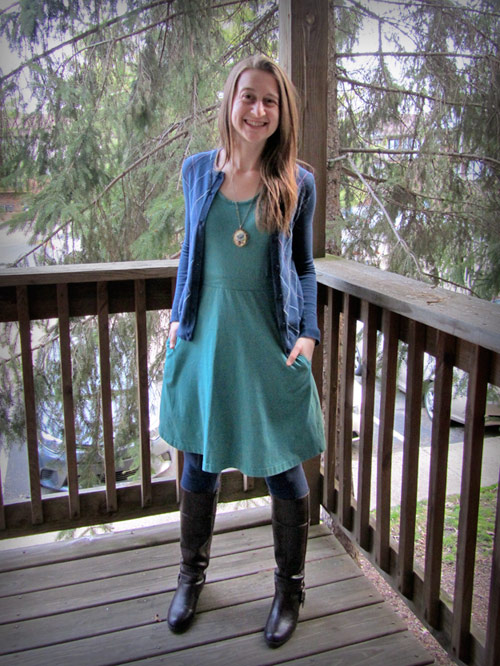
Dress: Liz Alig, made fairly in India

Julia wearing Regina Dress from Liz Alig

This dress is THE BEST. Pockets, cute color, work-appropriate length, wide straps (it’s sleeveless), and twirly! It’s on wicked sale and Liz Alig makes small quantities so you should probably buy one before they’re all gone. (This is not even a paid endorsement, I just love it this much.)

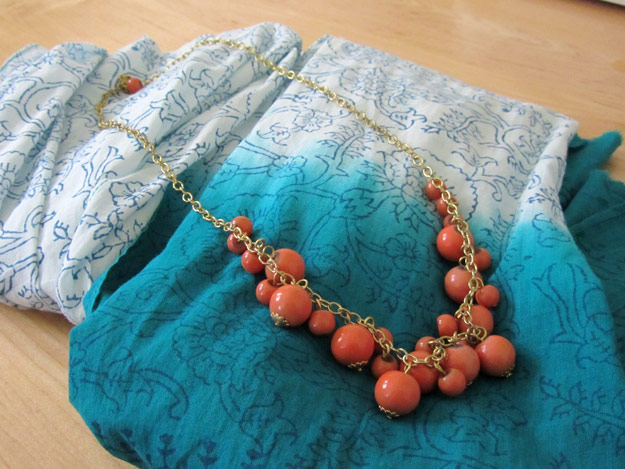
Scarf: Handmade Expressions via Global Gifts, made fairly in India

Necklace: Global Gifts, made fairly in India

Teal-to-white ombre scarf and coral beaded necklace

I’m wearing this scarf right now while I blog!

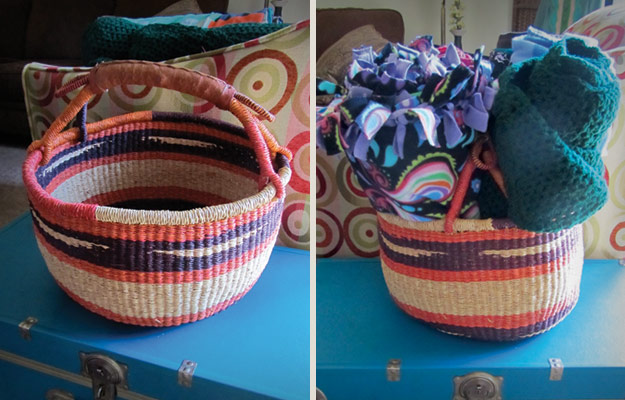
Basket: SERRV via Global Gifts, made fairly in Ghana

Basket with leather handles holding blankets

I had previously been keeping my throw blankets in a plastic tub. Major upgrade. I love the leather handle!

I’ve never had a basket as part of my decor before, but now that I have one, I can see myself becoming a basket lady. They look so much cooler than bins, and there’s no shortage of fair trade basket options, so I could collect them guilt-free! Bwahaha! (I can see the look of horror on my interior decorator sister’s face. Don’t worry, Paige, I don’t need any more storage… for now…)

Have you treated yourself to any new fair trade items lately? Does your family also celebrate birthdays willy-nilly? How many baskets is too many?

Handkerchiefs: An Eco Throwback

Handkerchiefs: An Eco Throwback over photo of two hankies

Handkerchiefs have never really been a thing during my lifetime. My experience with them is pretty much limited to what I’ve seen in historical dramas and Looney Tunes, and my vague understanding of hankies is that they’re non-disposable Kleenex, which seems kind of icky.

However, as people (including me) look to reduce their use of disposable paper products, handkerchiefs are making a comeback. I’m completely in favor of hankies in terms of reducing waste, but given my recent perception of handkerchiefs as basically snot rags, I was skeptical of their practicality and hygiene.

I reached out to Marion Poirier, co-founder and CEO of Montreal-based handkerchief company TSHU, with my questions about how well handkerchiefs can really work on an everyday basis.

Fair for All: What are some of the ways to use a handkerchief?

Marion Poirier: There are many different ways to use a handkerchief and funnily enough, lots of them don’t include blowing or wiping one’s nose!

A handkerchief is a very useful accessory to carry on one at all times and can come in handy in various situations. For instance, there is nothing like a soft, absorbent cotton handkerchief to wipe the sweat off one’s brow after an energetic workout, a bike ride or simply to deal with the heat or excessive sweating due to anxiety.

It’s also a great fix for oily hands after digging into finger food or wiping your child’s cheeks after a snack. Bearded and mustachioed men also find our hankies quite useful after enjoying a beverage! Crying or emotion can also be dealt with in style. Wiping your screen or your glasses with a handkerchief is also appropriate. Some of our clients even groom their pets with the handkerchiefs. And, for practical reasons, there is nothing like a cotton handkerchief to really blow your nose when practicing outdoor winter sports – without ending up with little debris of wet paper-tissues in your pockets.

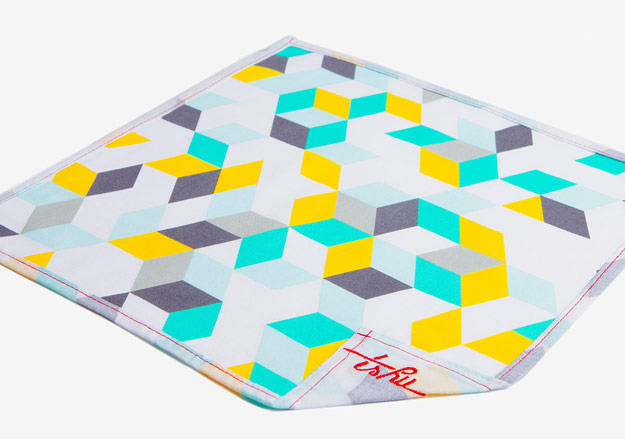
Teal, yellow and gray geometric patterned handkerchief

Are handkerchiefs a practical solution for people with serious nasal congestion, or are they only for those with a dainty nose drip?

Cotton handkerchiefs are definitely appropriate for real use! They are truly fantastic for people who suffer from seasonal allergies or severe colds as their noses are frequently irritated and their skin more sensitive due to excessive blowing. After all, hankies are way softer and more absorbent then regular paper tissues!

However one chooses to use their handkerchief is absolutely personal though. The idea is to try it and see what works for you! If germs are a concern for you, the same rules as using paper tissues apply: wash your hands often! And, for extra precaution, leave your handkerchief in our practical case (Casey) for hygiene and transport, wash both the handkerchief and case often and/or have a few hankies in stock as backup.

Personally, I can go through 5 or 6 two-ply hankies in a day when sick, or one every day or second day when healthy. I’ve seen people wash their hankies once a week though (or even less!) – so everything is a question of comfort and use!

How do you wash a handkerchief? If you use it to blow your nose, does it make your other laundry gross?

Caring for your handkerchief is extremely simple. Simply toss it in the machine with your laundry – cold water preferably, and lay flat or hang to dry. Bonus points for drying in the sun, as the sun naturally fades stains!

As per “contamination” with the rest of your laundry – again it’s a question of comfort. Most parents will agree that their loads have seen worse things than handkerchiefs…

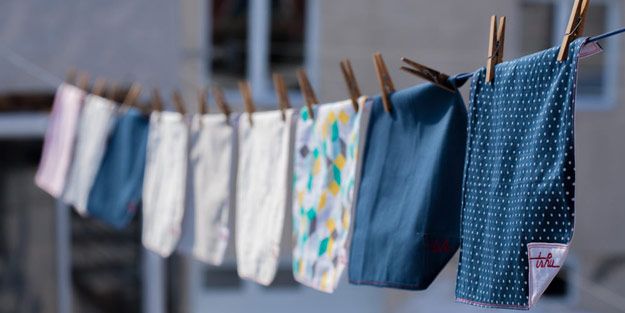
Several handkerchiefs hanging on an outdoor clothesline

How do you handle carrying around a dirty or wet handkerchief all day if you happen to use it early in the day?

How many times you use one handkerchief is really up to you! There are several tricks to get the most out of your hanky. For instance, you can fold it where it’s been used and move on to another section, piece by piece. The surprising thing about cotton handkerchiefs is that it “magically” dries in your pocket. So, the folded part of the hanky you were using this morning may be dry by late afternoon, the water having evaporated! If it’s beyond re-using, you can also use our little case to store your dirty handkerchief. It’s always good to have a backup handkerchief, too. There’s an old saying that I like to quote: “Always carry two handkerchiefs: one for show and one for blow.”

What are the differences between a handkerchief, a pocket square and a cloth napkin?

A handkerchief is usually made out of cotton and is particularly useful when soft and absorbent. A pocket square is often made from more delicate materials such as silk and wool and boast a hand rolled edge, which makes them more decorative than practical. Cloth napkins are usually way larger in size than handkerchiefs or pocket squares and are sometimes made with linen, which is not as soft on the nose.

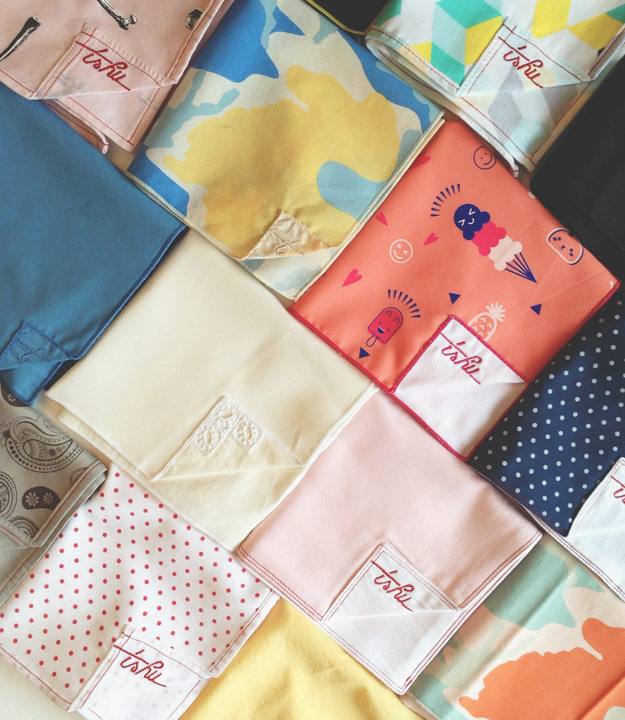
Assortment of colorful handkerchiefs

Do you carry multiple handkerchiefs, or is one usually enough?

Most people carry one or two (one for show, one for blow). I personally like to have at least one on me and I leave some everywhere for emergencies (the car, the office, my laptop case, in the pocket of the jacket I use to run, etc.).

Since starting to use handkerchiefs, how has your life improved?

In many ways! With three kids in the house, we waste considerably less. We’ve also converted to cloth napkins so we basically don’t use paper tissues or towels at all anymore.

Aside from the environmental impact, I’ve absolutely converted to the habit and don’t find the use of paper tissues to be agreeable any more. In comparison, they are way too thin & fragile and not as soft as our cotton handkerchiefs!

I’ve also found that having a TSHU on you is incredibly practical for every day life and use my handkerchiefs to deal with the unexpected frequently. I’m always proud to pull out a beautiful, colourful hanky to save a situation or politely refuse paper napkins at a deli when ordering a sandwich!

___

Marion sent me two TSHU hankies to try out: the one-ply polka-dotted Henri and the two-ply organic Dwight. TSHU handkerchiefs are handmade in Montreal, and the company plants a tree for each handkerchief adopted (TSHU calls each purchase an adoption—cute!).

Two TSHU handkerchiefs in cardboard sleeve packaging

As a cloth napkin user, I like the idea of a pseudo-napkin I can take with me anywhere. And with the weather (hopefully) warming up soon, it will be nice to have something to wipe the sweat off my face with after a run or a particularly energetic swing dance. I plan to use the hankies for at least 30 days, then I’ll report back about the practical ins and outs.

Have you ever used a cloth handkerchief? What was your experience?

Disclaimer: TSHU provided me two free handkerchiefs to review in a future post.

A Minimal Shoe Wardrobe

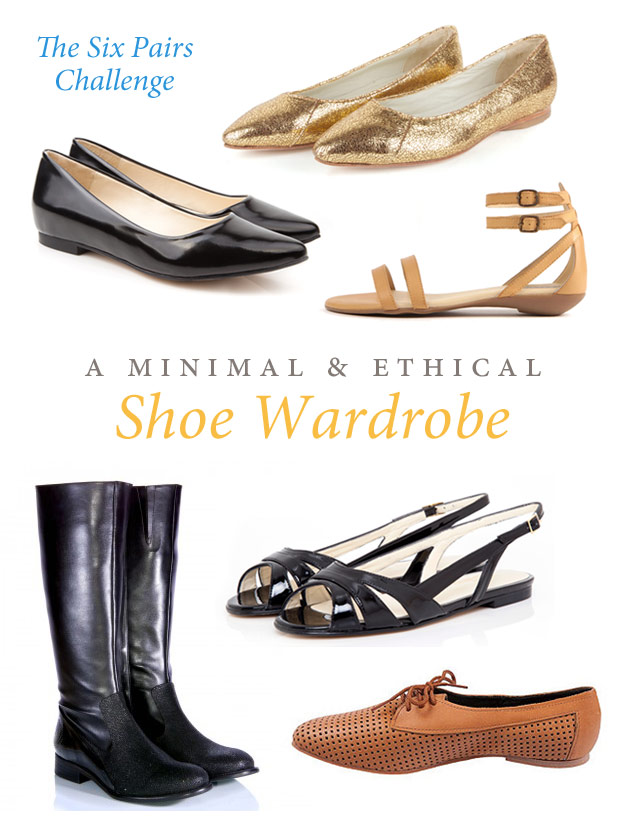
I’ve been thinking a lot about shoes lately. This is not really anything new, as shoes are fabulous and I am in no way immune to their wiles. But ever since reading this post about wardrobe staples on The Note Passer, I’ve been pondering what my own essentials would be, specifically in the footwear arena. I wondered, would it be possible to have a complete shoe wardrobe with only six pairs of shoes? (I have 30+ pairs currently.)

As I attempted to meet this challenge, I came up with a few non-negotiable characteristics to make sure my selections would be versatile, comfortable, and actually fit into my life.

  • I don’t do heels, so every style had to be flat.
  • I work in an office with a fairly stringent dress code, so most of my selections had to be work-appropriate.
  • I eliminated all suede shoes because I want shoes that are worry-free in all kinds of weather, including snow and rain. Its fuzzy surface is also inherently more casual, which makes it hard to dress up.
  • I decided not to include specialty shoes like snow boots, running shoes or dancing shoes. Those are harder to find ethically-made, so my strategy there is to buy quality shoes that are made to last, or buy secondhand.

After some serious sole searching (see what I did there??), I came up with the following selections for my dream minimal shoe wardrobe.

Minimal Ethical Shoe Wardrobe

I organized my search by thinking about four specific types of shoe that I felt needed to be represented no matter what. Once I had my options for each type, it was just a matter of mixing them together to make a balanced wardrobe.

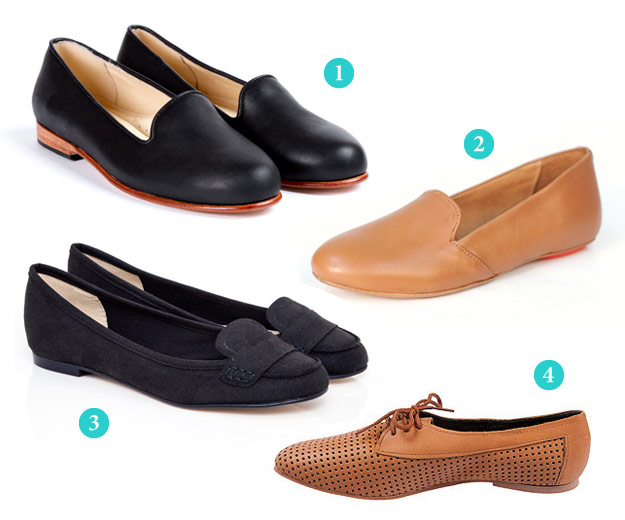
Loafers & oxfords

  1. Smoking Shoe in Noir from Nisolo
  2. Caramel Lalibella Loafer from Sseko Designs
  3. Joanie Faux Suede Flat from Beyond Skin
  4. Amanda Shoe from American Apparel

Ethical loafers and oxfords

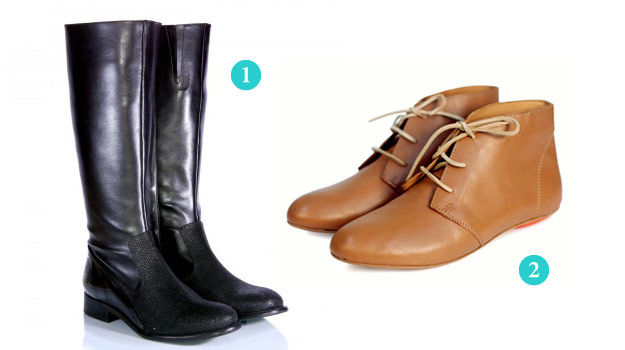
Boots

  1. Scout Boots from Bourgeois Boheme
  2. Caramel Nomad Bootie from Sseko Designs

Ethical boots

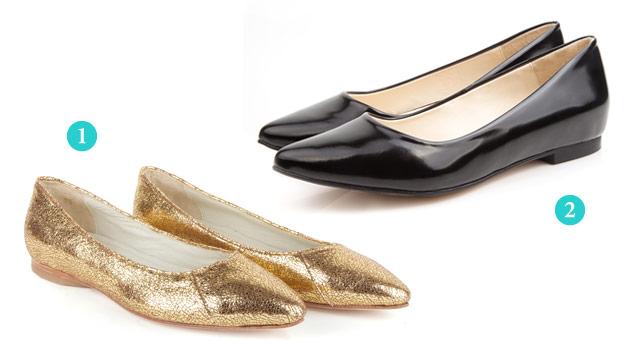
Flats

I had extra criteria for flats: a quiet sole and a slightly pointed toe. Clicky shoes are hard to dress down, and a round toe is hard to dress up.

  1. The Classic Point in Metallic Gold from Poppy Barley
  2. Shelley Flat from Beyond Skin

Ethical flats

Sandals

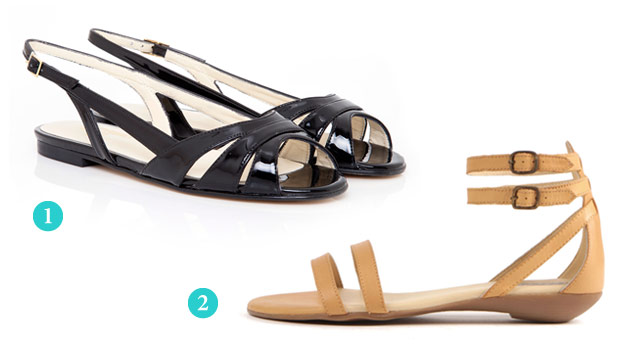
  1. Rose Sandal from Beyond Skin
  2. Delicias Sandal in Pale Honey from Nisolo

Ethical sandals

Lessons learned

One key lesson I learned during my search is that camel/nude shoes are the key to being able to wear brown clothes without having a plethora of rarely worn brown shoes. This was both a revelation and a buzzkill, because I love brown shoes and have several pairs. (Remember the surprise boots?) But from a practical standpoint, you can wear camel or nude shoes with a lot more things, and they can be dressed up more readily than brown shoes can.

Black shoes are of course the most versatile, especially if you work in an office and wear a lot of black and gray professional attire. Metallics can act as a neutral in many cases as well, but I would recommend only having one or two pairs of metallic shoes and sticking to black or camel or nude for the rest.

Another takeaway was the wonder of oxfords and loafers. I don’t currently own any oxfords or loafers, but I now realize they would solve much of my morning shoe anxiety. They’re appropriate for the office but still work with casual clothes, they fill the gap between flats and boots, and you can wear them pretty much all year-round. I prefer oxfords to loafers, but unfortunately there were fewer ethical oxford options to be found.

The ability to dress a shoe up or down is important as well. To avoid having formal shoes that you rarely wear, get your everyday shoes a little more on the dressy side so they can work for more formal occasions.

I’m not looking to chuck all my existing shoes and start over, but this exercise definitely gave me some things to look for the next time I do need to buy shoes.

Have you ever tried to pare down your shoe collection? What are your must-have types of shoes?

Get to Know Las Casas, Guatemalan Fair Trade

Las Casas table at the Manthan International Market

This summer I attended the Manthan International Market in downtown Indianapolis with the intent of sampling tasty foods of the world. Imagine my excitement when there turned out to be several fair trade vendors there as well! I was especially excited to meet David Durica of Las Casas, a vendor I’d never heard of before. I learned that Las Casas is fairly new to the Indianapolis fair trade scene and focuses specifically on sharing the beautiful culture of Guatemala.

I invited David to share more about Las Casas and the work they are doing in Guatemala and in the local Indy area.

Fair for All: Tell us about how Las Casas started.
Las Casas: My wife, Jenny, and I lived in Guatemala for a year, and while there we developed a deep respect for Guatemala’s people and culture. Towards the end of our time, we started brainstorming ways to sustain our relationships and maintain our commitment to the people long-term. After experiencing the struggles and issues throughout Guatemala – which include: lack of education and jobs, malnutrition, and a tragic history of oppression – we began identifying the existing strengths and skills among the people. We saw that the artisans were doing amazing work but they needed access to outside markets and fair wages. The need for Fair Trade was identified by realizing that if people matter, then the way we trade should matter.

Guatemalan artisan with table of jewelry

Describe your mission.
As a social enterprise, we seek to display cultural beauty, pursue fairness, and advocate for truth and reconciliation. We believe Fair Trade is a reconciled way of living for us as consumers. We view Las Casas as both a journey and a destination, a means and an end. The journey aspect is tangible by supporting fair trade and advocating alongside the indigenous artisans. This part of the mission puts fair trade merchandise into the hands of consumers. The destination is why we take part in the journey, which involves an intangible mission to reconcile trade by valuing people over product. Altogether, we hope to build a bridge with artisans living in a completely different reality.

What is it about Guatemala that makes that country so special to you?
We’ve always been drawn to Guatemala ever since our first short-term missions trip there in 2007. The country is vibrant with rich, cultural traditions and indigenous Mayan people who inspire us with their work ethic, commitment to family, and generous hospitality. More so than we’d experienced elsewhere, the indigenous population strive to maintain their ancient way of life, including their art of back-strap weaving, which is such a testament to their values.

During our time living there in 2011, we couldn’t help but get to know local artisans. We had nothing but respect for the work that they do, and were impassioned to co-develop an avenue of support with them, their families, and their community. Thus, we started this Fair Trade venture.

Guatemalan artisan weaving

The product that caught my eye the most at your booth at the market was the Guatop shoes. They are completely rad. Can you tell us more about how the design of the Guatops came to be, how they are made, and where people can get them?
You can’t miss the GuaTops, right?! These shoes are made of authentic indigenous patterns from Mayan villages throughout Guatemala. The textiles are back-strap woven, then hand-stitched into a pre-cut pattern to form the shoe. The fabric is then complemented by genuine leather, which is sourced from the coast of Guatemala.

Pretty unique, right? But we’re actually still in development of our GuaTops. Everything we’ve offered thus far was beta testing and samples. Because of the handmade dynamic, it’s been difficult to offer GuaTops anywhere other than in person, which is mostly at events in the Indianapolis area. We post some pictures of the shoes online, but don’t actually sell them online yet. The best way to get a pair would be to email us your general size and we can send you some pictures of our available inventory that would be in your approximate range. Then we’d connect somewhere so you can try them on!

GuaTops shoe

What’s your favorite product that you offer, or a new product you are excited about?
Part of our mission is to support a variety of indigenous artisan groups. With that being said, the groups and individuals we’re supporting come from varying levels. Some are paralyzed by poverty, so our work with them focuses on product development, creating savings, and long-term vision to lift their families out of poverty. Other groups are well equipped and have quarterly development workshops on their own.

So based on that, our newest excitement comes from a grassroots cooperative in Nahuala (a very rural village). Previously they were only making raw fabrics, so they’re brand new to the world of finished goods. Exclusively for Las Casas, they’re now making Snap Bags. These handy textile pouches feature a clasp made from a measuring tape…it naturally snaps back into place. We’re very inspired by their initiative and ability to develop concepts and product ideas.

Guatemalan artisans with Las Casas snap bags

Are your products available in any physical stores/locations, or just online?
Primarily, our products are sold at local events (farmer’s markets, craft shows, and festivals). We also list limited-inventory on our website with an online store. Throughout different times of the year we’ll also host house parties in central Indiana, offering hosts 50% off as our appreciation for the support to expand our market.

We’re developing a plan to open our own storefront. We project to be situated with a Grand Opening in 1-2 years.

Are you members of any fair trade organizations or certifications?
Las Casas is not certified through any fair trade organizations. However, half of the cooperatives we’re supporting have their own fair trade certification. The other half that we support represent family owned businesses or individuals that are not formally certified, nor have they had the resources to do so at this time…which is exactly why we’re working with them: to empower them and provide opportunities for development, such as certification.

What’s next for Las Casas?
We’re extremely excited for our brand new project called #BeReconciled. We were awarded our first-ever Community Action Grant in November 2014 to implement a local project in Indianapolis that will facilitate dialogue in diverse community settings resulting in a public art installation.

#BeReconciled title image

As we gear up for #BeReconciled, we’re also launching an Indiegogo campaign to fundraise support with the goal of opening the storefront venue where we’ll offer Las Casas fair trade retail merchandise alongside the #BeReconciled Art Gallery. Once this storefront is secured, we’ll build towards plans to introduce the third and final component to the business, a small Guatemalan café. Check out more details on “what’s next” on our campaign page.

Thanks to David for sharing the Las Casas story!